


Top 10 Ways to Make Flower Beds Look Fuller Without Buying Too Many Plants
April 17, 2026
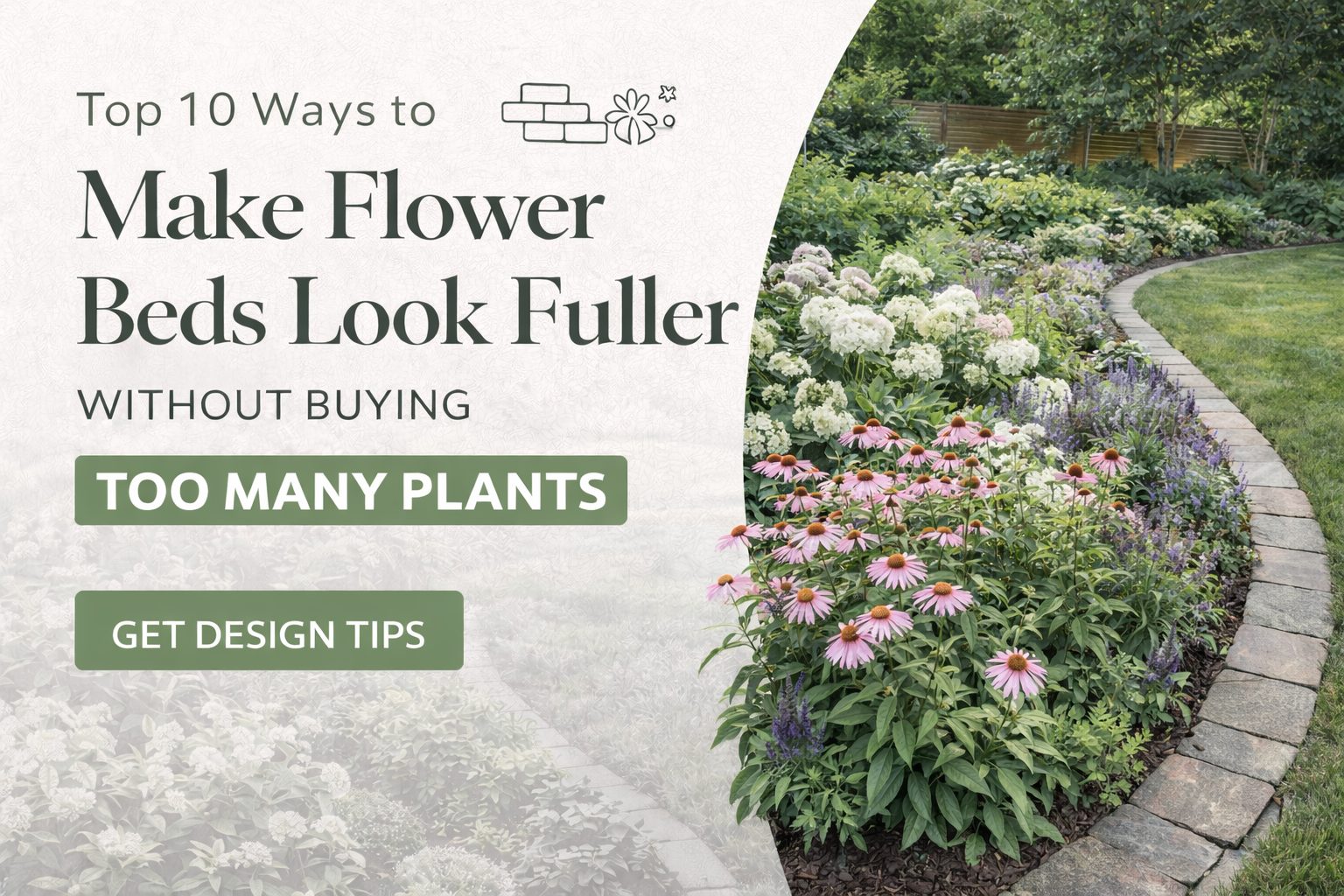
A flower bed does not need to be packed with expensive plants to look full, attractive, and well-designed. In fact, one of the most common mistakes homeowners make is buying too many plants too quickly. At first, the bed may look impressive, but as the plants grow, the space can become overcrowded, messy, and harder to maintain.
A fuller flower bed is usually the result of smart design, not just more plants. The right spacing, layering, edging, mulch, repetition, and a few visual tricks can make a flower bed look richer and more complete without requiring a large plant budget. This guide explains ten practical ways to make flower beds look fuller while keeping costs under control. These ideas are especially helpful in spring, when many homeowners want an instant refresh but do not want to overspend.
Why flower beds often look empty
Before fixing the problem, it helps to understand why flower beds sometimes look sparse even after planting. In many cases, the issue is not that there are too few plants. The issue is that the bed lacks structure, layering, repetition, or visual coverage. Small plants spaced correctly can still look thin if there is too much bare soil, weak edging, no backdrop, or no variation in height. On the other hand, a flower bed with only a modest number of plants can look full and intentional if the layout is done well. That means the goal is not simply to add more plants. The goal is to use the space better.
1. Use mulch to create a richer base
Mulch is one of the easiest and most effective ways to make a flower bed look fuller right away. Bare soil often makes a bed look unfinished, even when the plants themselves are healthy. A fresh layer of mulch instantly creates a darker, cleaner background that helps greenery and flowers stand out. Mulch also visually ties the whole bed together. It fills empty areas between plants, reduces the patchy look of exposed dirt, and makes the planting design appear more complete. Dark brown or black mulch often gives the strongest contrast, but the best choice depends on the overall style of the yard and the colors around it. As a bonus, mulch also helps with moisture retention and weed control, which makes the flower bed easier to maintain as the plants grow in.
2. Group plants in clusters instead of spacing them evenly
Many flower beds look thin because plants are spread out too evenly, with one plant here and another there. That kind of spacing often makes each plant look isolated, especially when they are still young. A better approach is to group plants in clusters or drifts. When the same plant is placed in small groups of three, five, or more, it creates a stronger visual effect and makes the bed feel fuller. Repetition also helps the eye read the planting as a larger, more established mass. This does not mean plants should be overcrowded. It simply means they should be arranged in ways that create impact rather than being scattered too far apart.
3. Add low-growing fillers between larger plants
If the main plants in your flower bed are still small or spaced for future growth, the bed can look empty in between. One of the best ways to fix this is by adding low-growing filler plants that spread gently and cover the gaps. These fillers do not need to be expensive. Groundcovers, compact annuals, trailing plants, and small mounding flowers can all help connect the larger plants and reduce the feeling of empty space. They work especially well near the front edge of beds and around the base of shrubs or taller perennials. The goal is to use them as visual bridges, not as competing focal points. When used well, fillers make the entire bed feel more settled and lush.
4. Layer plants by height
A flat flower bed almost always looks less full than a layered one. Even with the same number of plants, a bed that includes different heights will feel deeper and more complete. A simple way to do this is to place shorter plants in front, medium-height plants in the middle, and taller plants in the back. This creates a fuller view from every angle and helps cover more visual space. It also allows each plant to contribute to the overall design rather than disappearing into a flat line. Layering works especially well when you mix flowers, ornamental grasses, compact shrubs, and foliage plants together. The bed immediately feels more dynamic and substantial.
5. Repeat the same plants across the bed
Many people think variety will make a flower bed look fuller, but too many different plants can actually make it feel smaller and more fragmented. A bed often looks stronger when a few plant types are repeated throughout the design. Repetition creates rhythm and gives the eye something to follow. It also makes separate sections of the bed feel connected. For example, repeating the same flowering plant in three areas of the bed can make the planting look more generous than using three unrelated plants once each. This is one of the smartest ways to create a fuller appearance without increasing the plant count too much. It keeps the design simple and gives it more impact.
6. Use foliage plants, not just flowers
Flower beds are often planned around blooms alone, but foliage does a lot of the work when it comes to making a bed look full. Leaves provide volume, shape, and texture even when flowers are not blooming. Plants with bold, mounded, or spreading foliage can make a big difference in how dense a bed feels. In many cases, a flower bed with strong foliage structure will look fuller for longer than one that depends only on short bloom cycles. Try mixing flowering plants with foliage plants that offer silver, lime, deep green, purple, or variegated leaves. This adds interest and makes the bed feel planted out even between bloom periods.
7. Define the edges clearly
A flower bed can have healthy plants and still look underwhelming if the edges are weak or messy. Crisp edges help the bed feel finished and visually fuller because they define the space clearly. When the border between lawn and bed is blurred, the planting area can look smaller and less intentional. A clean edge immediately makes the bed stand out and gives the eye a clearer sense of where the design begins and ends. This can be done with a simple edging tool, stone border, metal edging, brick line, or even a carefully maintained trench edge. The stronger the outline, the more the whole flower bed feels designed rather than accidental.
8. Fill space with decorative elements while plants grow
If you are waiting for plants to mature, the bed does not have to look empty in the meantime. Simple decorative elements can help fill visual space without adding more plants. This might include:
- A large planter
- A birdbath
- A garden obelisk or trellis
- A decorative rock or boulder
- A small lantern or garden ornament
- A simple bench near the bed
The key is to use one or two thoughtful features, not too many. These elements can give the bed presence while young plants fill in naturally over time.
9. Mix plant textures to create density
A flower bed looks fuller when it has texture contrast. Even if the number of plants is limited, combining fine, bold, upright, and mounded textures makes the planting feel more layered and abundant.
For example, pairing ornamental grass with broad-leaf foliage and rounded flowering plants adds depth and visual complexity. The bed feels richer because the different forms occupy space in different ways.
Texture matters just as much as color in making a bed look full. A design that includes only one leaf type or one plant shape can look thin even when planted densely.
10. Give plants time and plan for mature size
Sometimes the reason a flower bed looks sparse is simply that the plants are still new. Many perennials, shrubs, and spreading fillers need a season or two to reach their full shape. Planting too heavily at the start may give instant fullness, but it often leads to crowding later.
A smarter long-term strategy is to plant for mature size, use mulch and fillers to improve the early appearance, and allow the bed to grow into itself over time. This creates a healthier and more balanced design.
Patience matters in gardening. A bed that looks slightly open in its first season can become beautifully full in the second or third if the layout was planned correctly.
Bonus tips to make flower beds feel fuller instantly
Along with the main strategies above, a few extra improvements can help right away.
Refresh tired plants
Trim damaged leaves, remove spent blooms, and cut back weak growth. Cleaner plants look stronger and make the whole bed feel fresher.
Add one focal point
A slightly taller flowering plant, compact shrub, or decorative planter can help anchor the bed and make it feel more substantial.
Stick to a simple color palette
Too many colors can make a bed look busy rather than full. Repeating two or three coordinated shades often creates a richer look.
Use curved bed shapes where possible
A softly curved bed often feels more generous and natural than a narrow, straight strip.
Avoid buying lots of single plants
If the budget is tight, a few grouped plants usually have more impact than many different singles.
Common mistakes that make flower beds look thinner
It also helps to avoid a few design habits that make beds feel emptier than they really are.
One common mistake is planting everything in a straight line. Another is relying only on seasonal flowers without enough foliage or structure. Some beds look sparse because plants are too far apart, while others look weak because they lack edging or mulch. In other cases, the problem is too much variety and not enough repetition.
A fuller bed is usually not about doing more. It is about making better visual decisions.
How iScape can help you plan a fuller flower bed
One of the reasons flower beds end up looking sparse is that it is hard to judge spacing, layering, and balance before planting begins. What seems full enough in your head can look very different once the plants are in the ground.
That is where the iScape app can help. Instead of guessing where to place flowers, fillers, shrubs, or edging, you can visualize the flower bed layout before buying too many plants. This makes it easier to compare groupings, test plant spacing, and see how hard edges, mulch, and focal points may work together in the actual space. Using a planning tool like iScape can help homeowners avoid overspending while still creating flower beds that look fuller, cleaner, and more intentional from the start.
Final thoughts
Making flower beds look fuller does not always require buying a large number of plants. In many cases, the better solution is to improve how the bed is designed and presented. Fresh mulch, stronger edging, plant groupings, layered heights, foliage variety, and low-growing fillers can all make a major difference.
The best-looking flower beds are rarely the ones with the most plants. They are the ones where each plant is placed with purpose and the overall design feels connected. When you focus on structure as much as blooms, your flower beds can look richer, healthier, and more complete without stretching your budget.
FAQs
How can I make my flower bed look fuller on a budget?
Start with mulch, strong edging, grouped plants, and a few low-growing fillers. These changes often improve the appearance more than simply buying many extra plants.
What kind of plants make flower beds look fuller?
Plants with spreading habits, mounded foliage, layered heights, and strong texture usually help flower beds look fuller. Groundcovers, ornamental grasses, compact shrubs, and filler annuals are often useful.
Is it better to plant flowers close together?
It depends on the mature size of the plants. They should be close enough to create impact, but not so crowded that they compete heavily as they grow. Grouping plants is usually better than overcrowding them.
Does mulch really make a big difference in flower beds?
Yes, it does. Mulch covers bare soil, helps plants stand out, and gives the bed a cleaner, more finished look. It is one of the easiest ways to improve the visual fullness of a flower bed.
Should I use more flowers or more foliage plants?
A mix of both is usually best. Flowers add seasonal color, while foliage plants provide lasting structure and volume. Beds that rely only on blooms can look thin when flowers fade.
How long does it take for a flower bed to fill in?
That depends on the plant types and growing conditions. Some annuals fill in quickly, while many perennials and shrubs need one to three growing seasons to reach a fuller look. Download iScape on the App Store or Google Play Store today and start designing today!
Try a free trial today at iScape!


