


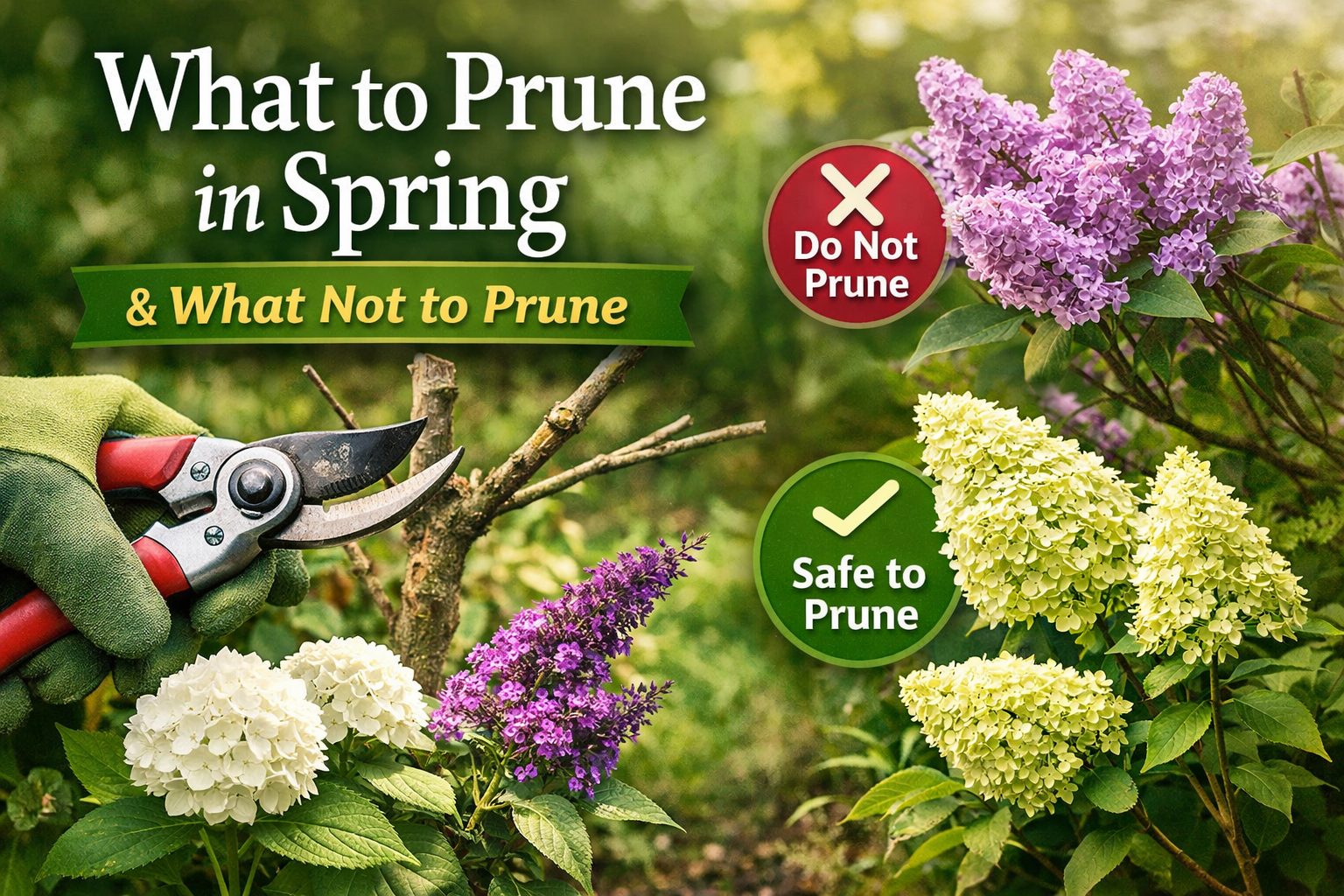
Spring is the perfect time to clean up winter damage, improve plant structure, and set your landscape up for strong growth. But it is also the easiest season to accidentally remove flower buds, stress trees, or trigger weak, messy regrowth.
The safest approach is to prune based on when a plant blooms and where it forms its flower buds:
- Old wood bloomers set buds last season (prune after flowering).
- New wood bloomers form buds on fresh growth (prune in late winter or early spring).
This guide gives you clear plant-by-plant directions, plus simple pruning techniques that keep your yard healthy and good-looking.
The simple rule that saves most flowers
1) If it blooms in early spring, do not prune it in early spring
Most spring bloomers (lilac, forsythia, azalea) already have next blooms sitting on the branches. Prune now, and you remove the flowers.
2) If it blooms in summer or fall, spring pruning is usually safe
Many summer bloomers (panicle hydrangea, butterfly bush) bloom on new growth. Spring pruning helps them push stronger shoots and better flowers.
3) Dead, damaged, or diseased wood is always safe to remove
That is “cleanup pruning,” and it is your first step on every plant.
Spring pruning quick chart
Prune in spring (recommended)
- Dead, damaged, or diseased branches
Prune anytime. Cut back to healthy wood. - Summer-flowering shrubs (bloom on new wood)
Prune in late winter to early spring. Thin crowded stems, reduce height, and shape naturally. - Most roses
Prune in early spring. Remove dead canes, open the centre for airflow, and shape for healthy structure. - Ornamental grasses
Prune in early spring. Cut old blades down before new growth gets tall.
Do not prune in spring (wait or avoid)
- Spring-flowering shrubs (bloom on old wood)
Do not prune in early spring. Prune right after blooming ends, focusing on light shaping and thinning. - Maples, birches, and walnuts
Avoid early spring pruning. Prune in mid to late summer to reduce sap “bleeding.” - Oaks in areas with oak wilt risk
Avoid spring pruning. If needed, prune during dormant season and follow local best practices. - New plantings
Avoid heavy pruning in the first year. Only remove broken branches and obvious damage.
Before you prune anything: do this 3-step check
Step 1: Identify what the plant is trying to do
Ask:
- Does it bloom in early spring or later in summer?
- Is it a shrub you prune for flowers, privacy, or shape?
- Is it blocking a walkway, window, or light?
Step 2: Start with “the 3 Ds”
Remove:
- Dead wood
- Damaged wood
- Diseased wood
Step 3: Decide the pruning goal
Most spring pruning falls into one of these:
- Health (remove dead, diseased,or rubbing branches)
- Structure (thin crowded stems, improve airflow)
- Size control (reduce height or width without ruining shape)
- Bloom improvement (timing matters most here)
What you SHOULD prune in spring
- Remove dead, damaged, and diseased wood from any plant
This is the safest spring pruning because it improves plant health, reduces pest and disease spread, and reveals the plant’s structure before full leaf-out. Dead wood is usually brittle and budless, damaged wood shows splits or cracks, and diseased wood often has cankers, blackened tips, spotting, or dieback. Make clean cuts back to healthy tissue or just outside the branch collar, and avoid leaving stubs since they heal poorly. If disease is present, wipe blades with rubbing alcohol between cuts to prevent spreading it.
- Prune summer flowering shrubs that bloom on new growth
Many summer bloomers set buds on fresh shoots, so early spring pruning helps them grow stronger and flower better without sacrificing blooms. This group often includes panicle hydrangea, smooth hydrangea, butterfly bush, and bluebeard. Focus on thinning crowded stems, removing weak growth, and reducing size with selective cuts rather than shearing the top flat. For the best shape, remove a few older stems at the base, then shorten remaining stems to outward-facing buds so regrowth stays open and natural.
- Prune most repeat-blooming roses once the worst cold passes
Spring pruning works best when it improves structure and airflow instead of aiming for perfect symmetry. Remove dead, weak, and crossing canes, open the centre to reduce disease, and shorten tall canes back to healthy growth and outward-facing buds. This encourages stronger flowering stems and cleaner growth through the season. Keep in mind that some climbers and once-blooming roses are better pruned after flowering, so avoid heavy cuts if you are unsure of the type.
- Cut back ornamental grasses and clean up many perennials
Ornamental grasses are usually cut down in early spring before new blades get tall, because late cutting can slice fresh growth and leave the plant looking rough. Many perennials can be cleaned up at the same time by removing dead stalks and collapsed stems, while adjusting timing if you prefer leaving stems longer for beneficial insects. The main goal is to clear old material that shades new shoots and reset the bed for tidy, even growth.
- Prune certain fruit trees during dormancy or early spring
Apple and pear trees are typically pruned while dormant in late winter to early spring because the branch structure is easier to see and cuts are less stressful before leaf growth begins. Prioritize removing dead wood, thinning crowded areas, and selecting strong scaffold branches rather than doing heavy size reduction, which can trigger weak, fast regrowth. If you are not confident, keep pruning lightly and avoid removing too much fruiting wood in one season.
Download iScape and map your landscape zones. You will prune less, waste fewer plants, and get a yard that looks intentionally designed.
What you should NOT prune in spring
1) Spring flowering shrubs (prune AFTER they bloom)
These bloom on old wood, so spring pruning usually removes flowers.
Common examples
- Lilac
- Forsythia
- Azalea and rhododendron
- Weigela
- Mock orange
- Many viburnums
- Bridal wreath spirea
- Flowering quince
- Magnolia (many types)
Best timing
- Prune right after flowering finishes, then stop. These plants set next year’s buds not long after.
2) Bigleaf hydrangea and oakleaf hydrangea (avoid hard spring pruning)
These often bloom on older stems, depending on the variety.
Bigleaf hydrangea (Hydrangea macrophylla)
- In spring: only remove dead stems and dead tips.
- Avoid cutting the whole plant down unless you accept fewer blooms.
Oakleaf hydrangea (Hydrangea quercifolia)
- Same rule: minimal in spring, shape after flowering if needed.
Hydrangea cheat sheet
- Panicle and smooth hydrangeas: usually spring-friendly.
- Bigleaf and oakleaf: usually do not hard prune in spring.
3) Maples, birches, walnuts (avoid early spring)
These can “bleed” sap heavily if pruned now. It is usually not fatal, but it is stressful and messy.
Better timing
- Mid to late summer for non-urgent cuts.
4) Oaks if oak wilt is a known issue in your region
Pruning oaks during certain periods can increase disease risk.
Safer approach
- Prune in dormant season if possible and follow local guidance.
5) Newly planted trees and shrubs
New plants need foliage to build roots. Heavy pruning slows establishment.
First year rule
- Only remove broken, dead, or rubbing branches.
- Save shaping for later.
6) Frost damaged growth too early
After a cold snap, plants can look worse than they are.
What to do
- Wait until new growth starts, then prune back to living tissue.
- This prevents you from cutting off sections that might recover.
How to prune correctly (the technique matters)
Thinning vs heading cuts
- Thinning cut: removes an entire stem or branch back to its origin.
Best for airflow, natural shape, and long term health. - Heading cut: shortens a branch.
Useful for size control but can cause bushy regrowth if overused.
Most homeowners get better results using more thinning cuts and fewer heavy heading cuts.
How much can you remove safely?
A safe general rule for many shrubs and trees is to avoid removing more than about one quarter to one third in one season unless you are renovating a shrub that tolerates it (and only at the right time).
Avoid these common mistakes
- Shearing flowering shrubs into boxes (reduces blooms, looks unnatural)
- Topping trees (creates weak regrowth and long term problems)
- Leaving stubs (invites pests and poor healing)
- Cutting into old wood on conifers (many will not fill back in)
Quick decision guide when you do not know the plant name
- Remove dead, broken, diseased parts now.
- If it bloomed early spring last year, prune after it blooms.
- If it blooms in summer, spring pruning is usually fine.
- If it is a conifer evergreen, prune lightly and avoid deep cuts into bare wood.
- If it is newly planted, prune minimally.
How iScape helps you prune smarter (and avoid over-pruning)
Most pruning problems start because the yard does not have a plan. A shrub gets too large for its spot, blocks sight lines, or crowds walkways, so it gets hacked back every spring. That cycle repeats.
iScape helps you break that cycle by planning first, then pruning with a clear target.
With iScape, you can:
- Upload a real photo of your yard and test how beds, shrubs, and trees look after cleanup.
- Preview better spacing, so plants have room to grow, and you do not need aggressive pruning every year.
- Try replacement ideas when a plant is simply the wrong size for the location (a common reason blooms disappear).
- Design cleaner lines around entry paths, driveways, windows, and porch areas so your spring pruning improves curb appeal, not just plant health.
- Create a simple zone plan (front entry, foundation beds, side yard) so you can prune consistently and keep the landscape balanced.
If you want spring pruning that looks intentional, use iScape to visualize the shape and spacing first. Then, prune to match the plan.
Want a cleaner front yard this spring? Use iScape to redesign your entry beds and then prune to match the look you actually want.
Spring pruning checklist you can follow every year
Early spring
- Remove dead, damaged, diseased wood.
- Cut back ornamental grasses before new growth gets tall.
- Prune summer bloomers that flower on new wood.
Prune most repeat blooming roses.
After spring flowering finishes
- Prune lilac, forsythia, azalea, viburnum, weigela, and similar shrubs.
- Shape lightly and thin for airflow.
Late spring into summer
- Pinch pine candles if needed.
- Do mid season touch ups only if growth is messy, avoid heavy pruning during heat.
Plan your spring pruning before you cut. Try iScape to preview bed shapes, shrub spacing, and sight lines using a photo of your own yard.
Download iScape on the App Store or Google Play Store and mock up your front-yard refresh on a real photo before you buy plants or materials
FAQs
What is the best time in spring to prune?
Prune once the worst cold has passed, but before aggressive new growth begins for spring-safe plants. For spring blooming shrubs, wait until after they flower.
Can I prune while leaves are coming out?
Light pruning is fine. Heavy pruning can stress plants and reduce flowering, especially for spring bloomers.
What hydrangeas can I prune in spring?
Panicle and smooth hydrangeas are usually spring-friendly. Bigleaf and oakleaf hydrangeas should typically only have dead wood removed in spring.
What happens if I prune lilacs in spring?
You usually remove the flower buds and reduce or eliminate blooms for that season.
Should I prune trees in spring?
You can remove dead branches anytime, but many structural tree cuts are best while dormant. Some trees, like maple and birch, bleed sap if pruned in early spring


.png)
