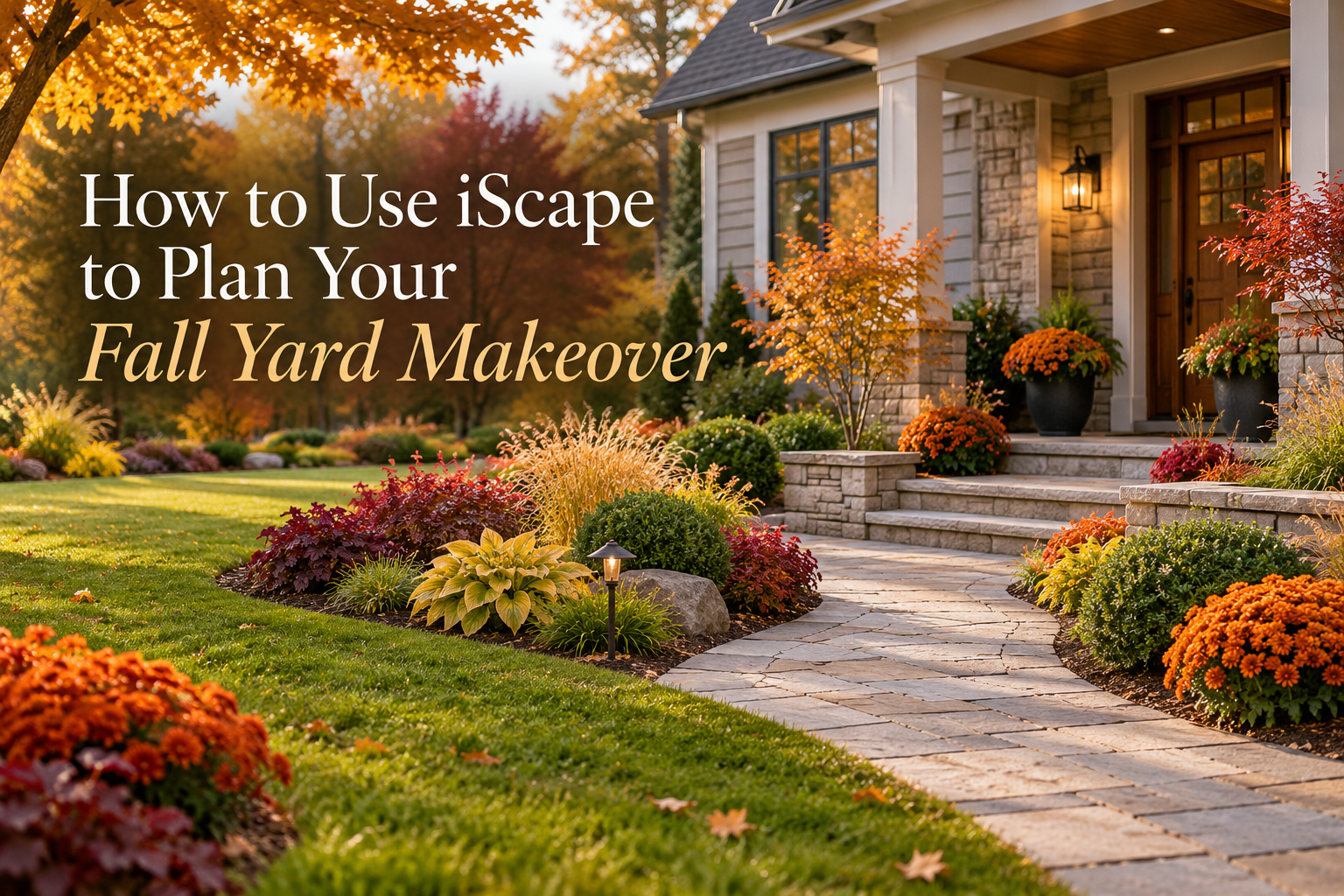
Landscape lighting may be one of the last things you see in a finished yard, but it should be one of the earlier things you plan.
If lighting is considered only after patios, walkways, retaining walls, trees, and planting beds are installed, your options become limited. You may need to lift pavers, trench through established beds, work around irrigation, or place fixtures where wiring can reach rather than where the light actually works best.
You do not need to choose every fixture before construction begins. You do, however, need to know where light will be useful, which features you want to highlight, how power can reach those areas, and how the landscape will change as plants mature.
Here is how to plan landscape lighting before plants and hardscape go in.
Start With the Landscape Plan, Not the Light Fixtures
One of the biggest mistakes is shopping for fixtures before deciding what the yard needs after sunset. Start with the overall landscape layout. Mark the approximate location of:
- Patios
- Walkways
- Steps
- Driveways
- Entrances
- Retaining walls
- Outdoor kitchens
- Seating areas
- Large trees
- Planting beds
- Gates
- Water features
Lighting should respond to these features.
For example, a pathway determines where guidance lighting might be useful. A patio determines where comfortable ambient lighting is needed. A mature tree may become a focal point worth uplighting.
If the overall hardscape and planting layout is still changing, finalize that relationship first. iScape's guide to combining hardscape and plants in one design explains why patios, pathways, planting beds, and plants should be designed as one system rather than separate additions.
1. Decide What Needs to Be Visible After Dark
Every light should have a purpose. Walk through the planned yard and ask what people will actually need to see after sunset. Start with functional areas such as:
- Steps and elevation changes
- Main pathways
- Entrances
- Gates
- Patio edges
- Frequently used outdoor spaces
- Routes between the house and yard
Once those areas are addressed, move to visual features. You may want to highlight:
- A mature tree
- A specimen plant
- Stone or brick texture
- A garden wall
- An architectural feature
- A sculpture
- A water feature
- A particularly attractive planting composition
This gives you two broad lighting categories: functional lighting that supports movement and accent lighting that creates atmosphere. Do not try to light every corner. A good nighttime landscape needs contrast between illuminated and darker areas.
2. Plan Hardscape Before You Finalize Lighting Locations
Permanent hardscape has a major influence on future lighting. Think about a patio. Once the base material and paving are installed, getting electrical infrastructure from one side to the other may become significantly more complicated. The same applies to:
- Concrete walks
- Stone paths
- Retaining walls
- Outdoor kitchens
- Raised patios
- Steps
- Driveways
If you expect lighting on both sides of a permanent hardscape feature, discuss routes, conduit, sleeves, or other appropriate provisions before construction closes the area.
The patio itself should also be sized and positioned around how people will use it. iScape's guide to creating a patio that fits your outdoor space covers movement, furniture, access, views, and planting relationships that should be resolved before permanent installation. Once those decisions are clear, lighting becomes much easier to place intelligently.
3. Break the Yard Into Lighting Zones
Instead of thinking of the property as one lighting project, divide it according to use.
Entry Zone
Include the front walkway, porch, house number, driveway transition, and entrance. The priority here is orientation. Guests should understand where to walk and where the entrance is.
Pathway Zone
Identify main travel routes through the yard. You do not necessarily need a fixture every few feet. The goal is to make the direction of travel and major changes in grade understandable.
Patio and Entertainment Zone
Lighting around dining and seating areas should feel comfortable enough for conversation, dining, and movement without becoming excessively bright.
Garden Zone
Use selective lighting to create depth by highlighting a few structural plants, trees, or garden features.
Background Zone
Do not forget what people see beyond the patio. A beautifully lit seating area surrounded by complete darkness can make the yard feel smaller. Highlighting one tree or planting group farther into the landscape can visually extend the space.
4. Plan Pathway Lighting With the Path Itself
Path lighting should be considered while the path location is being planned, not afterward. First ask:
- Where does the path begin and end?
- Where does it change direction?
- Are there steps?
- Does it narrow?
- Does it cross a planting bed?
- Will shrubs eventually grow toward it?
Fixture locations should support those conditions. Avoid automatically installing matching lights at identical intervals on both sides of a walkway. That can create an overly formal runway effect. Instead, focus light where it helps reveal:
- Changes in direction
- Steps
- Intersections
- Edges
- Entrances
If the pathways themselves are still being developed, iScape's guide to can help you think through movement and plant relationships before installation.
5. Think Carefully About Steps and Level Changes
Steps deserve more attention than decorative garden lighting because they affect how people move through the yard after dark. Depending on the design, lighting may come from:
- Step or riser lights
- Nearby walls
- Railings
- Low fixtures beside the stairs
- Adjacent structures
The important decision is not simply which fixture looks attractive. It is where the light needs to come from so that changes in elevation are easy to understand without creating glare.
If lights will be incorporated directly into masonry, stairs, or walls, coordinate them while those elements are being designed. Trying to retrofit integrated lighting after masonry work is finished can be much more disruptive.
6. Plan Around the Mature Size of Plants
This is one of the most overlooked parts of landscape lighting. A fixture placed beside a small one-gallon shrub may work perfectly during the first season. Two years later, the shrub may cover it completely.
Likewise, an ornamental grass can grow over path lights, while tree branches can change how uplighting reaches a canopy. For every major plant near a fixture, consider:
- Mature width
- Mature height
- Foliage density
- Growth direction
- Seasonal dieback
- Pruning needs
Leave room between plants and lights. When planning planting areas, use iScape's guidance on plant placement and mature growth to visualize how structural plants relate to paths and other landscape features.
7. Decide Which Plants Are Actually Worth Lighting
Not every flower needs a spotlight. Lighting usually has greater impact when it emphasizes plants with strong structure. Good candidates may include:
- Mature trees
- Multi-stem ornamental trees
- Sculptural shrubs
- Large ornamental grasses
- Plants with distinctive branching
- Evergreen specimens
- Plants with interesting bark
Seasonal flowers can still contribute to the nighttime garden, but they do not always need dedicated fixtures. Think about the landscape hierarchy.
If the daytime focal point is a beautiful tree, it may also deserve to become the nighttime focal point. Supporting plants can remain more subtle.
8. Coordinate Lighting With Irrigation, Drainage, and Utilities
Lighting rarely occupies the landscape by itself. Before trenches are dug, account for other systems such as:
- Irrigation pipes
- Drip irrigation
- Drainage lines
- Downspout extensions
- Electrical service
- Gas lines
- Communications or other utilities
Even when different contractors handle these systems, they should work from the same basic site plan. You do not want an irrigation line placed exactly where lighting infrastructure needs to run later.
Underground electrical installation must follow applicable electrical codes and manufacturer requirements. Where required, use qualified electrical or landscape-lighting professionals. The landscape plan should identify where infrastructure needs to travel before finished surfaces and planting make access harder.
9. Use Light to Create Depth, Not Just Brightness
A landscape illuminated evenly from front to back can feel surprisingly flat. Instead, create layers of light. Imagine standing on a patio. There might be:
- Soft illumination immediately around the seating area
- Lower path lighting leading into the yard
- A softly highlighted shrub midway through the garden
- One illuminated tree farther away
Your eye travels through those different layers. That makes the landscape feel deeper. The dark areas between them are just as important as the illuminated ones.
Think of lighting as another layer of landscape composition rather than a way to eliminate darkness.
10. Keep Glare Under Control
The fixture itself should not become the main attraction. Where possible, position and aim lights so people see the illuminated surface rather than staring directly into a bright source. Check important viewpoints such as:
- Patio chairs
- Dining seats
- Interior windows
- Neighboring properties
- Driveways
- Main pathways
A fixture may look perfectly positioned when standing beside it but become uncomfortable when viewed from a chair 20 feet away. Review lighting from where people will actually spend time.
11. Plan for Maintenance and Adjustment
Landscape lighting does not remain static because the landscape does not remain static. Plants grow. Trees expand. Shrubs are pruned. Beds are redesigned. Fixtures may eventually need to be:
- Re-aimed
- Raised
- Moved
- Cleaned
- Uncovered
- Repositioned after pruning
Do not bury fixtures inside dense planting simply because doing so hides the hardware on installation day. Allow enough access for future adjustment. A lighting design should be flexible enough to evolve with the yard.
12. If You Are Landscaping in Phases, Plan Lighting for the Final Yard
Perhaps you are installing the patio this year, plants next year, and another seating area later. Do not plan lighting only for phase one. Create the complete yard plan first.
Then identify infrastructure that needs to be installed now because it will become difficult to access later.
For example, if a future planting area will eventually need power on the far side of a patio, preparing the route during patio construction may save significant disruption later.
The Right Order for Planning Landscape Lighting
The exact construction sequence will vary by project, but the planning process should generally follow this order:
First, finalize the overall layout.
Decide where patios, paths, steps, planting beds, trees, seating areas, and major landscape features will go.
Next, solve grading, drainage, and infrastructure.
Understand what needs to happen below ground before decorative work begins.
Then plan lighting zones and power routes.
Determine what needs illumination and how lighting infrastructure can reach those locations.
Build the major hardscape.
Make provisions for lighting before permanent surfaces close access.
Install major trees and structural plants.
Add shrubs, flowers, grasses, and groundcovers.
Finally, aim and adjust the lighting.
Fine-tune fixture positions after the physical landscape is in place.
Planning early does not mean everything has to be permanently fixed early. It means you avoid making decisions that eliminate better options later.
Common Mistakes to Avoid
Treating Lighting as Decoration
Start with movement, steps, entrances, and usable spaces before accent lighting.
Installing Hardscape Before Considering Power Routes
Permanent surfaces can make later installation unnecessarily disruptive.
Planning Around Plants at Nursery Size
Always think about what will happen when shrubs and grasses reach mature size.
Lighting Every Plant
A few selected focal points usually create more visual depth than dozens of competing fixtures.
Placing Fixtures Where Plants Will Cover Them
Leave realistic growth and maintenance space.
Ignoring Future Phases
Plan infrastructure according to the final landscape, even when construction will happen gradually.
Forgetting to Evaluate Views From Inside
Landscape lighting is often visible through windows. Consider how the illuminated yard will look from kitchens, living rooms, bedrooms, and other frequently used interior spaces.
Plan the Nighttime Yard Before Construction Starts
A successful landscape should work after sunset as well as it does during the day.
That means considering lighting while you are deciding where the patio goes, how people move through the yard, where trees will mature, and how planting beds relate to pathways.
Start with the complete landscape. Decide what needs light. Protect future infrastructure routes. Then use lighting selectively to support movement, highlight important features, and create depth.
With iScape, you can visualize patios, pathways, planting beds, trees, and outdoor living areas before installation. That makes it easier to understand where lighting will eventually be needed before hardscape and planting make those decisions harder to change.
Plan first, install once. Use iScape to visualize the complete yard before plants, pathways, patios, and other permanent features go in.
FAQs
Should landscape lighting be planned before plants?
Yes. Plan lighting locations and infrastructure before planting, then make final fixture adjustments after the plants are installed. This reduces the chance of trenching through finished beds later.
Should landscape lighting go in before the patio?
At minimum, plan power routes and any necessary provisions before permanent patio construction. Integrated lighting should be coordinated with the hardscape design from the beginning.
How far apart should landscape lights be?
There is no universal spacing rule. Placement should depend on the fixture, beam spread, pathway design, surrounding plants, and amount of illumination required.
Do all trees need landscape lighting?
No. Lighting selected specimen trees usually creates a stronger composition than illuminating every tree.
Can lighting be added to an existing landscape?
Yes, but installation options may be more limited around established plants and permanent hardscape. Careful planning can reduce unnecessary disturbance.
.png)