Planning a garden one season at a time often leads to patchy results. A bed looks colorful in spring, then loses interest in summer. A border feels full in July, then looks bare in winter. Many homeowners keep adding plants to fix one short-term problem after another, but the garden still does not feel balanced through the year.
This is where a landscape design app becomes useful. It helps you plan seasonal garden changes before you spend money on plants, containers, edging, lighting, or labor. Instead of guessing what will work, you can build a clear visual plan for spring, summer, fall, and winter.
The real value of a landscape design app is not only that it shows how a yard may look. It also helps you think more clearly about layout, plant timing, structure, color balance, maintenance, and long-term growth. When used properly, it turns seasonal gardening from a reactive job into a planned system.
Why Seasonal Planning Matters In Garden Design
A garden should not look good for only one short part of the year. It should continue to offer shape, color, texture, and purpose as the seasons change.
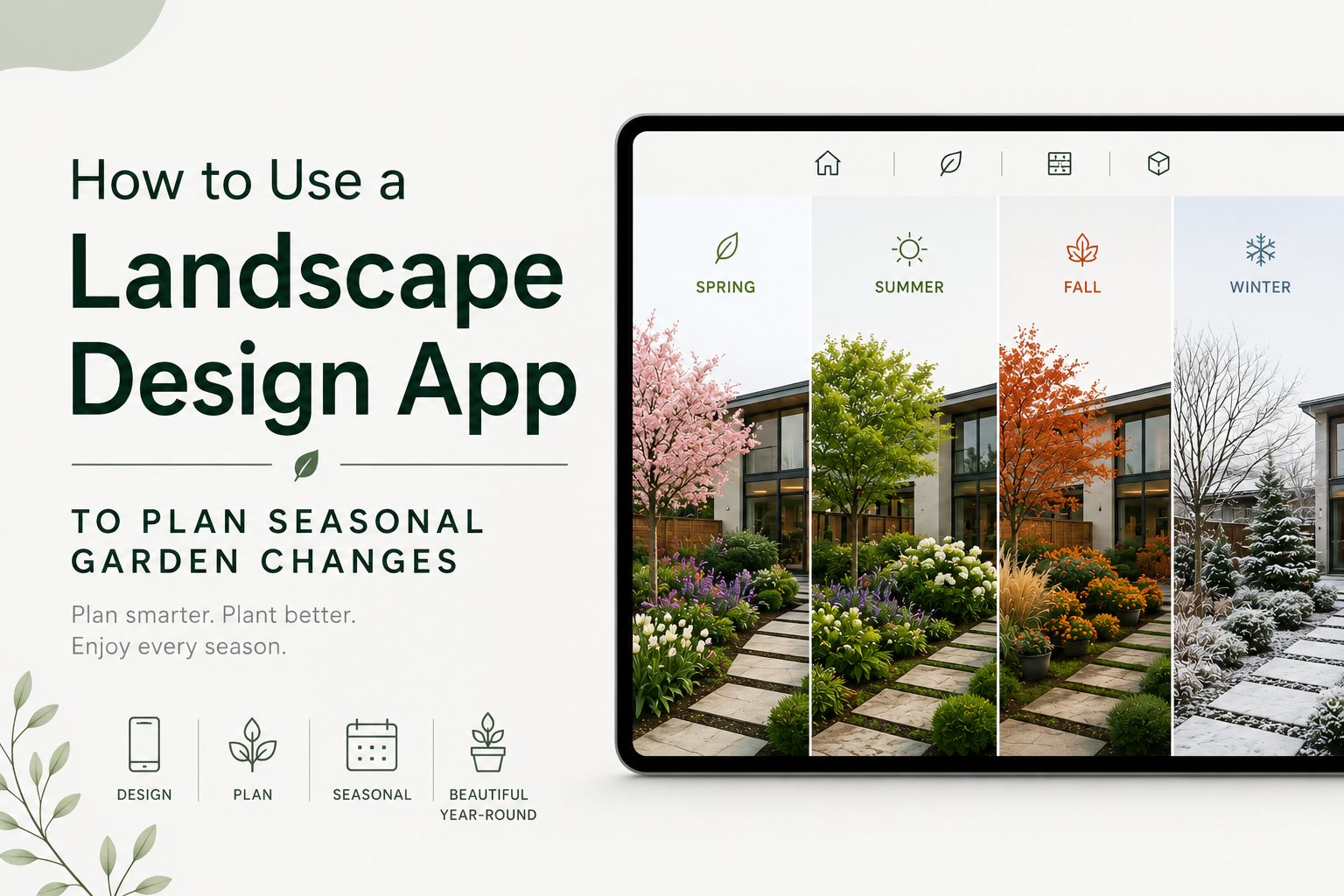
Each season creates different design needs:
- Spring brings fresh growth, early flowers, and renewed color.
- Summer adds fullness, strong foliage, and peak garden use.
- Fall introduces warm tones, seed heads, ornamental grasses, and texture.
- Winter depends on structure, evergreens, bark, clean lines, and hardscape.
Without a seasonal plan, many yards go through the same cycle. They peak once, fade quickly, and then need another round of buying and replacing. A landscape design app helps prevent that by letting you plan for the full year instead of planning only for what looks empty right now.
What A Landscape Design App Actually Helps You Do
A landscape design app helps you organize ideas in a visual and practical way. It gives you a better way to test changes before they happen on the ground. It can help you:
- Build a layout of your yard
- Test different bed shapes and planting zones
- Compare one design idea against another
- Plan seasonal planting updates
- Check whether the garden feels balanced through the year
- Identify areas that may look empty later
- Separate permanent features from flexible seasonal features
- Reduce waste from poor plant choices
This is especially helpful for people who find it hard to picture how a garden will look once plants grow, bloom, fade, or fill out.
Start With The Permanent Structure First
The biggest mistake in seasonal planning is starting with flowers. Flowers are important, but they should not be the first thing you place in the design. Start with the parts of the yard that stay in place all year. These permanent features create the structure that seasonal changes will work around. Plan These First:
- Lawn areas
- Pathways
- Patios or seating spaces
- Fences and boundaries
- Trees that will remain long term
- Raised beds
- Retaining walls
- Entry areas
- Large planters
- Water features
- Lighting zones
- Irrigation zones if known
Once these elements are in place, the garden has a stable framework. That makes it much easier to plan seasonal updates without creating a design that feels random or disconnected.
Study The Yard Before You Add Plants
A design app works best when your plan matches the real conditions in the yard. Before placing any plants, study how the site behaves.
- Check Sun And Shade
Observe which areas get full sun, morning sun, filtered light, afternoon shade, or deep shade. Sun exposure affects flowering, growth rate, watering needs, and plant survival.
- Check Drainage
Notice where water collects after rain and where soil dries out quickly. Poor drainage can damage roots, while dry zones may stress plants that need more moisture.
- Check Wind Exposure
Open yards, corner lots, raised areas, and uncovered patios can dry out faster and put more stress on delicate plants.
- Check Soil Conditions
Some areas may have loose soil, compacted soil, sandy ground, or heavy clay. Seasonal planting success depends heavily on what the roots are growing in.
- Check Temperature Differences
Walls, paved areas, shaded corners, and enclosed spaces can create warmer or cooler pockets. These small differences matter more than many people expect.
When you understand these conditions first, the app stops being just a visual tool. It becomes a planning tool that helps you make smarter plant and layout decisions.
Create A Base Plan Before Making Seasonal Versions
Do not build only one design. Build one strong base plan first, then create separate seasonal versions from that same layout. Your base plan should include:
- The permanent structure
- Major planting beds
- Anchor trees or shrubs
- Main circulation routes
- Functional zones such as seating, lawn, play, or entry
After that, create separate views for each season.
Spring Plan
Focus on early bulbs, fresh color, flowering shrubs, and areas that need visual lift after winter.
Summer Plan
Focus on fullness, larger foliage, stronger layering, and plant mass that supports the busiest outdoor season.
Fall Plan
Focus on warm tones, late bloom, texture, grasses, berries, and plants that hold interest beyond peak summer.
Winter Plan
Focus on evergreen structure, branch shape, bark texture, clean bed lines, hardscape, and visual balance when flowers are gone.
This method makes it much easier to see where a bed performs well and where it falls flat.
Plan Plants By Their Job In The Garden
A common planting mistake is choosing plants only because they look attractive at the time of purchase. Stronger seasonal planning comes from giving each plant a purpose. Every plant should do a job. Common Plant Roles Include:
- Early spring color
- Long bloom season
- Summer fullness
- Fall color
- Winter structure
- Screening
- Ground coverage
- Border softening
- Vertical accent
- Container display
- Pollinator support
- Focal interest near entries or patios
When you place plants in your design app, think about what each one contributes and when it contributes to it. This helps you avoid a garden that performs well for only a few weeks.
Use Layering To Build Better Seasonal Beds
Well-designed beds usually do not rely on one plant type alone. They use layers. Layering makes the garden feel deeper, fuller, and more stable through the year.
Anchor Layer
This includes the strongest structural plants. These are usually shrubs, evergreens, or long-term plants that keep the design grounded.
Mid Layer
This layer gives the bed body. It often includes perennials, mounding plants, and plants that repeat through the design.
Seasonal Color Layer
This is where you place plants that offer short-term bloom or changing seasonal interest.
Ground Layer
This layer softens the soil line, reduces bare patches, and helps beds look complete.
Vertical Accent Layer
This adds height, movement, and shape contrast. It is useful for avoiding flat-looking designs.
A landscape design app makes layering easier because you can check whether the bed looks too thin, too crowded, or too repetitive before planting.
Do Not Depend Only On Flowers
Flowers attract attention, but they are not enough to carry a garden through every season. A strong seasonal design also relies on form, contrast, and texture. Important Non-Flower Elements Include:
- Leaf size
- Plant shape
- Evergreen presence
- Branch structure
- Bark texture
- Ornamental grasses
- Seed heads
- Stone, edging, and pathways
- Decorative containers
- Raised bed forms
- Garden lighting
A garden with only bloom-based interest often looks weak once flowering slows down. A garden with texture and structure still feels designed even when color is limited.
Plan Seasonal Garden Changes With A Clear Process
Using a landscape design app becomes much easier when you follow a step-by-step system instead of making random changes.
Step 1: Recreate The Yard Layout
Start with the closest version of your actual outdoor space. Add lawn shape, bed lines, pathways, patios, fences, and major fixed features.
Step 2: Mark The Problem Areas
Identify what is not working right now.
Common Examples Include:
- Empty corners
- Weak entry beds
- Bare foundation planting
- Thin patio borders
- Areas that look flat after one season ends
- Beds that feel cluttered or overplanted
- Spaces with no winter interest
Step 3: Add Structural Elements First
Place anchor shrubs, trees, permanent containers, and other long-term features before seasonal color plants.
Step 4: Build One Season At A Time
Do not try to solve spring, summer, fall, and winter all in one pass. Work on each seasonal version separately.
Step 5: Compare The Designs
Review each version and ask practical questions:
- Does the bed still look full after spring flowers fade?
- Does summer growth block paths or windows?
- Does fall still feel attractive after summer color declines?
- Does winter leave the yard looking empty?
Step 6: Decide What Stays And What Changes
Separate permanent investment from flexible seasonal refreshes. This makes the design easier to maintain and easier to budget.
Step 7: Plan Installation In Phases
Start with structure and site correction first. Add seasonal layers after the foundation is strong.
What To Focus On In Each Season
Each season should solve a different garden problem. That is why each seasonal version in your app should have a clear purpose.
Spring: Restore Energy And Freshness
After colder months, many gardens look dull or empty. Spring should bring visible recovery. Focus On:
- Early bloom near entry points
- Fresh containers
- Bright accents around walkways
- Filling winter gaps
- Clean edging and refreshed bed lines
Spring planning should make the yard feel alive again without overcrowding it too early.
Summer: Strengthen Fullness And Function
Summer is when the garden is used the most and seen at its fullest. At this stage, the design should feel complete, not chaotic. Focus On:
- Plant mass and fullness
- Balanced height
- Comfortable shade near seating areas
- Strong foliage support
- Good spacing for airflow and maintenance
- Privacy where needed
This is also the season when overcrowding becomes obvious, so the app can help you test spacing before that problem happens.
Fall: Extend Interest Instead Of Letting The Garden Fade
A good fall garden should not feel like the remains of summer. It should feel intentional in its own way. Focus On:
- Warm leaf color
- Late-season flowers
- Grasses and movement
- Seed heads and texture
- Better contrast near pathways and entrances
- Containers that keep visual interest going
Fall planning is often overlooked, which is why many gardens look tired too early.
Winter: Depend On Structure And Shape
Winter reveals the truth about a garden design. If the garden only worked because of flowers, winter exposes that weakness fast. Focus On:
- Evergreen form
- Branch shape
- Bark interest
- Clear bed outlines
- Path and patio definition
- Hardscape visibility
- Simple, clean composition
A strong winter plan creates a yard that still feels intentional even when growth slows down.
Use The App To Manage Your Budget More Wisely
A landscape design app can help control cost because it lets you organize your priorities before buying. Break Spending Into Three Levels:
First Priority: Permanent Improvements
These include drainage fixes, edging, bed reshaping, soil preparation, irrigation, lighting, and anchor planting.
Second Priority: Returning Plants
These are the plants that support the design year after year and help multiple seasons feel complete.
Third Priority: Seasonal Refreshes
These include annual color, temporary container displays, and smaller decorative updates.
This approach prevents one of the most common mistakes in garden spending: using too much of the budget on short-term color before the structure is right.
Common Mistakes To Avoid
Even with a good design app, poor decisions can still happen if the planning is weak. Avoid These Mistakes:
- Planning for only one season
- Ignoring mature plant size
- Choosing plants without checking site conditions
- Overusing one color or one texture
- Filling every gap too quickly
- Forgetting winter appearance
- Copying a design that does not suit your yard
- Mixing too many styles in one space
- Treating containers as an afterthought
- Making seasonal changes without a clear base plan
The app should help you plan ahead, not simply make it easier to add more things.
How A Well-Planned Seasonal Garden Feels Different
When seasonal planning is done properly, the difference is easy to notice. The yard feels more balanced. Problem areas are handled earlier. Plant choices make more sense. Maintenance becomes easier. Money is spent with more purpose.
Most importantly, the garden stops feeling temporary. It starts feeling designed. That is the real benefit of using a landscape design app for seasonal garden changes. It helps you move from short-term fixes to long-term thinking.
Final Thoughts
A landscape design app is most useful when you use it as a complete planning system. Start with the permanent layout. Understand your site conditions. Build a strong base plan. Create a separate design for each season. Give every plant a purpose. Use layers for depth and structure. Separate permanent investment from seasonal updates.
When you work this way, your garden becomes easier to improve, easier to maintain, and more attractive throughout the year.
Seasonal changes feel much less overwhelming when you can see them clearly before you plant them. Download iScape on the App Store or Google Play Store today and start designing today!