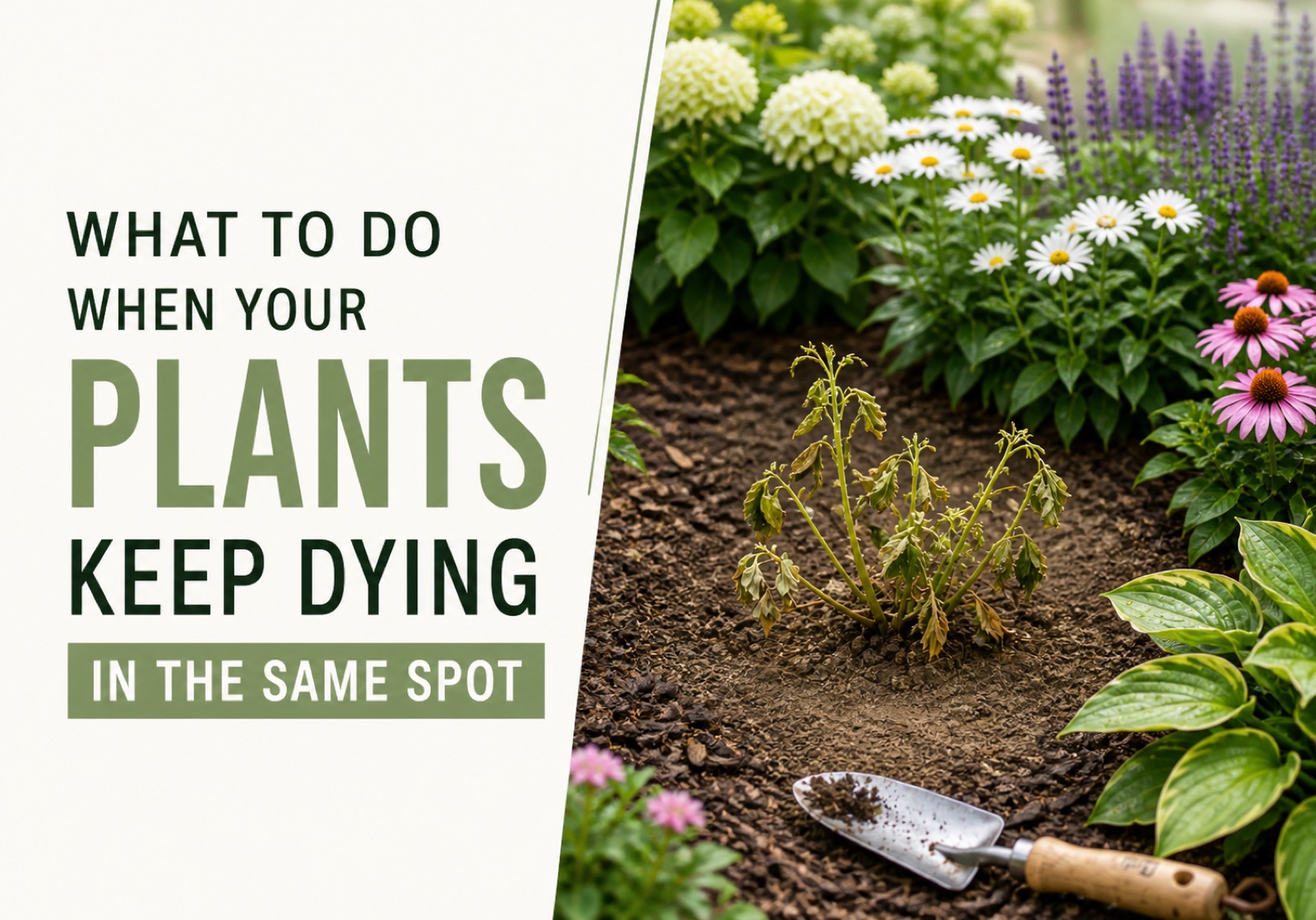
It is frustrating when you plant something, take care of it, water it, and still watch it die. It becomes even more confusing when the same thing happens again in the exact same spot. At that point, the problem is usually not the plant alone. The spot itself may have an issue.
When plants keep dying in one area, there is often something wrong with the sunlight, soil, drainage, roots, pests, disease, or nearby conditions. The good news is that you can usually find the cause by checking the area step by step. This guide explains why plants may keep dying in the same place and what you can do before planting again.
Do not replant immediately
The first mistake many people make is replacing the dead plant right away. It feels like the simple solution, but if the spot has a hidden problem, the new plant may die too. Before planting again, stop and study the area. Think of the dead plant as a warning sign. Something about that space may not be supporting healthy growth. Ask yourself:
- Did the plant die quickly or slowly?
- Did the leaves turn yellow, brown, or black?
- Did the soil stay wet or dry out too fast?
- Was the plant getting too much sun or not enough?
- Did nearby plants also struggle?
- Were there signs of insects, fungus, or root damage?
These answers can help you understand where to look first.
Check how much sunlight the spot gets
Sunlight is one of the most common reasons plants fail in the same area. A plant may look perfect at the garden center, but it still needs the right light after planting. Watch the area during the day. Do not guess based on how it looks once. A spot may get morning sun but deep shade in the afternoon. Another area may look partly shaded in spring but become extremely hot in summer. If the area gets six or more hours of direct sunlight, it is best for full-sun plants. If it gets only a few hours of soft light, choose part-shade plants. If it stays shaded most of the day, use shade-tolerant plants.
Signs of too much sun include scorched leaves, crispy edges, faded color, and wilting even when the soil is moist. Signs of too little sun include weak stems, slow growth, pale leaves, fewer flowers, and plants leaning toward the light. If sunlight is the issue, the solution may be simple. Either choose a plant that matches the light conditions or move your planting area to a better location.
Test the drainage
Poor drainage can kill plants even when you are not overwatering. If water sits in the soil for too long, roots cannot breathe. This can lead to root rot, yellow leaves, soft stems, and sudden plant collapse. A simple drainage test can help. Dig a small hole about 10 to 12 inches deep. Fill it with water and watch how long it takes to drain. If the water stays for many hours or is still there the next day, the area may have poor drainage. Common signs of poor drainage include:
- Soil that stays wet long after rain
- A sour or rotten smell in the soil
- Moss or algae on the surface
- Yellowing leaves
- Mushy roots
- Plants wilting even though the soil is wet
To fix drainage problems, mix compost into the soil, raise the planting bed, add organic matter, or choose plants that tolerate moist soil. In severe cases, you may need to redirect water away from the area.
Check if the soil dries too fast
The opposite problem can also happen. Some spots dry out too quickly, especially near walls, sidewalks, driveways, fences, large trees, or areas with sandy soil. A plant may receive water, but the soil may not hold moisture long enough for the roots to use it. This causes repeated wilting, dry leaves, stunted growth, and brown edges. To check, water the area deeply and then return a few hours later. Push your finger into the soil. If it is already dry, the soil may need improvement. Add compost, leaf mold, or other organic matter to help the soil hold moisture. Mulch can also help by slowing evaporation. If the spot is very dry, choose drought-tolerant plants instead of plants that need regular moisture.
Look for compacted soil
Compacted soil is hard, dense soil that blocks root growth, water movement, and air flow. This often happens near walkways, driveways, patios, play areas, or places where people and pets walk often. Plants in compacted soil may look weak because their roots cannot spread properly. Water may run off the surface instead of soaking in. Even if you water often, the roots may not get enough moisture. You can check this by pushing a garden trowel or screwdriver into the soil. If it is difficult to push in, the soil may be compacted. To improve compacted soil, loosen the area carefully and mix in compost. Avoid walking on the bed after preparing it. For badly compacted areas, raised beds or large containers may work better than planting directly in the ground.
Inspect the roots of the dead plant
If the plant is still in place, pull it out gently and look at the roots. Roots can tell you a lot about what went wrong.
Healthy roots are usually firm and light-colored. Unhealthy roots may be black, brown, mushy, dry, broken, or missing.
- If the roots are soft and smell bad, root rot may be the problem. This usually means the soil was too wet or poorly drained.
- If the roots are dry and brittle, the plant may not have received enough water or the soil may have dried too quickly.
- If the roots are missing or chewed, pests may be feeding below the soil. Grubs, rodents, or other underground pests can damage roots before you notice anything above ground.
- If the roots never spread beyond the shape of the nursery pot, the plant may have been root-bound or planted incorrectly.
Check for tree roots nearby
Large trees and shrubs can quietly cause problems for smaller plants. Their roots may compete for water and nutrients. This is common when plants keep dying under trees or near large hedges.
Even if the area looks open, the soil below may be full of roots. New plants may struggle because the established tree roots take most of the moisture first.
If you dig and find many fine roots, that may be the reason plants fail there.
In this case, choose tough shade plants, use containers, or create a raised planting area carefully. Avoid cutting large tree roots, as this can harm the tree.
Look for pests in the soil
Some pests attack plants from below, so you may not see the damage until the plant starts dying. Grubs, cutworms, nematodes, and other soil pests can damage roots and stems.
Signs of soil pests include:
- Plants suddenly wilting
- Roots that look chewed
- Stems damaged near the soil line
- Plants that pull out too easily
- Birds or animals digging in the area
- Repeated failure of young plants
Dig around the area and inspect the soil. If you find pests, identify them before treating the area. Different pests need different solutions. Avoid using strong chemicals without knowing the exact problem.
Consider plant disease in the soil
Some plant diseases can stay in the soil and affect new plants placed in the same spot. This is more likely if the same type of plant keeps dying there. For example, if several similar flowers, vegetables, or shrubs die in the same place with similar symptoms, the soil may carry a fungal or bacterial issue. Signs of soil disease may include:
- Wilting even when water is available
- Black or rotten roots
- Spots on lower leaves
- Stems turning dark near the soil
- White mold-like growth
- Repeated failure of the same plant type
If you suspect disease, remove dead plant material completely. Do not compost diseased plants. Clean your tools before using them elsewhere. Then avoid planting the same plant family in that spot for a while. You can also try replacing part of the soil or planting disease-resistant varieties.
Check the soil pH and nutrients
Some plants need specific soil conditions. If the soil pH is too high or too low, the plant may not absorb nutrients properly, even if nutrients are present. Signs of nutrient or pH problems may include yellow leaves, weak growth, poor flowering, and slow decline.
A basic soil test can help you understand what is happening. Many garden centers sell simple soil test kits. Local extension services may also offer more detailed testing depending on your area. Do not add fertilizer blindly. Too much fertilizer can burn roots and make the problem worse. It is better to test first, then add what the soil actually needs.
Look for hidden construction debris
Sometimes plants fail because the soil contains buried materials. This is common near homes, fences, patios, driveways, and newly built areas. Hidden problems may include:
- Concrete pieces
- Gravel
- Plastic
- Old landscape fabric
- Bricks
- Construction waste
- Poor fill soil
- Chemical residue
These materials can block roots, change drainage, or affect soil quality. Dig into the area and check what is below the surface. If you find debris, remove it and replace the area with better soil before planting again.
Check for heat from walls, fences, or pavement
Some planting spots become much hotter than the rest of the yard. Walls, driveways, patios, stones, and sidewalks can absorb heat during the day and release it around nearby plants.
This can dry the soil quickly and stress plants, especially young ones. Signs of heat stress include wilting, crispy leaves, leaf burn, faded flowers, and dry soil. If the spot gets reflected heat, choose heat-tolerant plants. You can also add mulch, improve watering, or move sensitive plants away from hard surfaces.
Make sure the plant was planted correctly
Sometimes the spot is not the only issue. The planting method can also cause failure. A plant may die if it is planted too deep, too shallow, or without loosening the roots. Planting too deep can suffocate the roots and cause stem rot. Planting too shallow can dry out the root ball.
When planting, the top of the root ball should usually sit level with the surrounding soil. Gently loosen tight roots before planting. Water well after planting so the soil settles around the roots. Also avoid adding too much fertilizer directly into the planting hole. This can damage new roots.
Improve the spot before trying again
Once you understand the likely cause, improve the area before planting again.
If the soil is poor, add compost. If drainage is bad, raise the bed or choose moisture-tolerant plants. If the area is too dry, use organic matter and mulch. If roots from nearby trees are causing competition, choose tougher plants or use containers. If pests or disease are present, treat the cause before adding new plants. Do not expect a new plant to fix a bad planting spot. Improve the spot first, then choose the right plant.
Choose a plant that fits the problem area
Some spots are naturally difficult. Instead of fighting the conditions, choose plants that can handle them.
- For dry, sunny areas, consider lavender, sedum, yarrow, ornamental grasses, coneflowers, or other drought-tolerant plants.
- For shaded areas, consider hostas, ferns, coral bells, astilbe, or shade-friendly ground covers.
- For wet areas, choose plants that can handle moist soil, such as iris, swamp milkweed, cardinal flower, or certain moisture-loving grasses.
- For areas near walkways or hot walls, use heat-tolerant plants and mulch well.
- The right plant choice can turn a problem area into a strong part of the landscape.
Use containers if the ground is difficult
If the same ground keeps causing trouble, containers may be the best solution. This is useful when the soil has heavy roots, poor drainage, contamination, or hard compaction.
Containers let you control the soil, drainage, and plant choice. They also make it easier to move plants if sunlight changes during the season. Use pots with drainage holes and fill them with quality potting mix. Do not use heavy garden soil in containers because it can hold too much water and become compacted. This is a practical option for patios, entryways, shaded corners, and areas where planting in the ground has failed several times.
Use iScape to rethink the planting area
If plants keep dying in the same spot, it may be a sign that the area needs a different design. Instead of forcing the same type of plant back into the space, think about the whole layout.
A landscape design app like iScape can help you test new ideas before you spend more money. You can visualize different plant types, bed shapes, containers, mulch areas, or hardscape options. This is helpful when you are deciding whether to replant, redesign, or use the space in a different way.
For example, a difficult spot may work better as a gravel feature, container garden, stepping-stone path, small seating corner, or shade-friendly bed. Planning visually can help you avoid repeating the same mistake.
When should you give up on that spot?
You do not always have to keep planting in the same area. If the spot has deep shade, heavy tree roots, standing water, poor soil, or constant heat stress, it may be better to change its purpose.
Instead of forcing plants to grow there, you could use mulch, decorative stone, a bench, a birdbath, containers, stepping stones, or a small hardscape feature.
A good landscape is not only about filling every empty space with plants. It is about using each area in a way that works.
Final thoughts
When plants keep dying in the same spot, do not blame yourself right away. The problem is often hidden in the location. It could be poor drainage, dry soil, too much shade, too much heat, compacted ground, pests, disease, buried debris, or the wrong plant choice.
The best solution is to diagnose the area before planting again. Check sunlight, soil, water, roots, and nearby conditions. Then improve the spot or choose a plant that can handle it.
A healthy landscape starts with matching the plant to the place. Once you understand what that problem spot needs, you can stop replacing dead plants and start building a garden that actually lasts. . Download iScape on the App Store or Google Play Store today and start designing. Try a free trial today at iScape!
FAQs
Why do my plants keep dying in the same spot?
Plants usually keep dying in the same spot because of poor drainage, bad soil, too much shade, too much heat, pests, disease, or nearby tree roots taking water and nutrients.
Should I replace the soil if plants keep dying there?
Yes, if the soil smells bad, stays too wet, is full of roots, or has old debris, replacing part of the soil can help. You can also mix in compost to improve the area.
How do I know if the spot has poor drainage?
After watering or rain, check how long the soil stays wet. If water sits for hours or the soil stays soggy the next day, drainage may be the problem.
Can too much shade kill plants?
Yes. Plants that need sun will become weak, pale, and slow-growing in heavy shade. Some may stop flowering and eventually die.
What should I plant in a difficult spot?
Choose plants that match the condition. Use shade plants for dark areas, drought-tolerant plants for dry spots, and moisture-loving plants for wet soil. If the ground is too difficult, use containers instead.