Patio vs. Deck vs. Gravel Seating Area: Which Fits Your Yard Best?
September 18, 2026
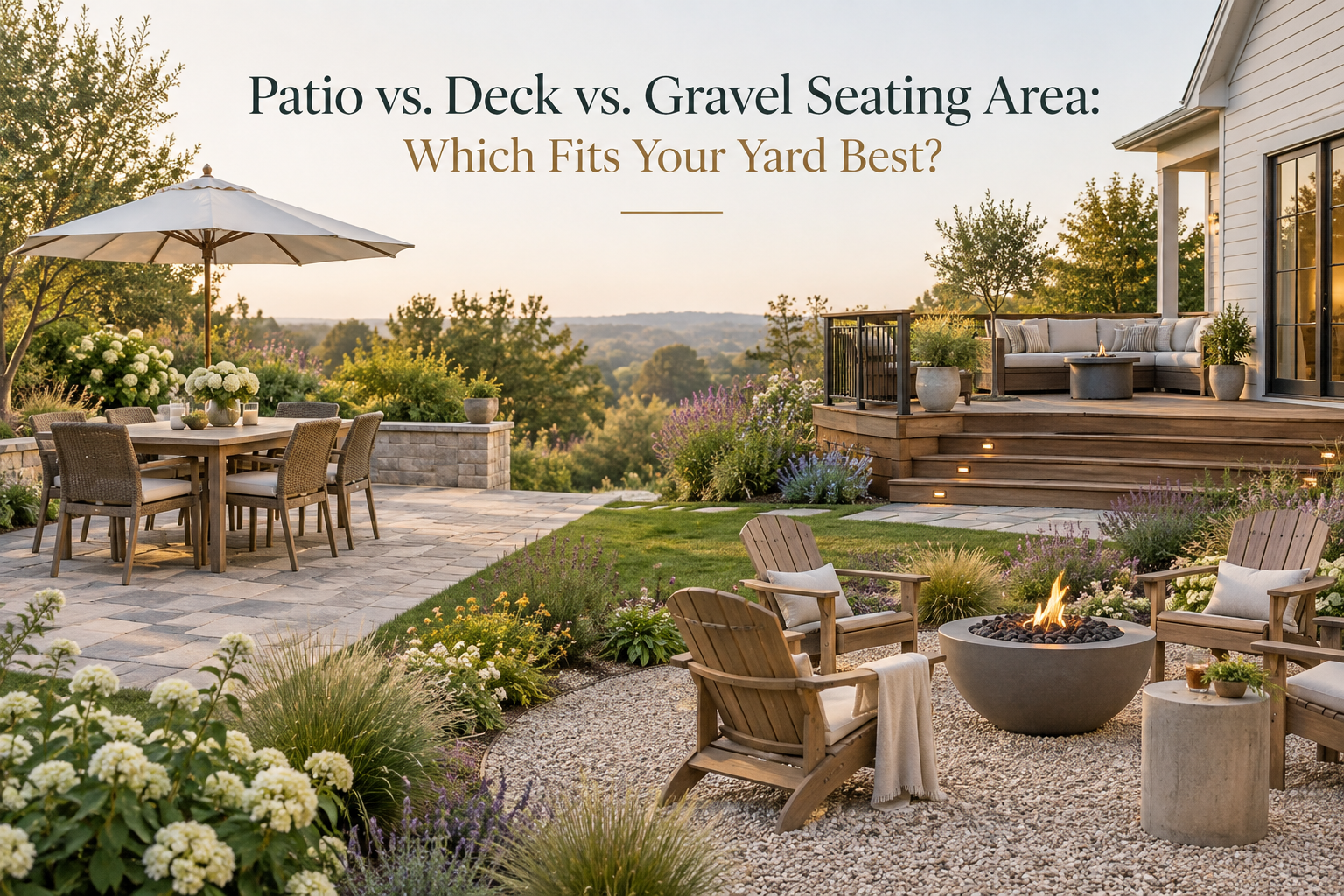
A patio, deck, and gravel seating area can all turn an unused part of the yard into a place for dining, relaxing, or entertaining. However, they solve very different landscape problems.
A patio usually works best when you want a durable, ground-level outdoor living area. A deck is often more practical when the house sits above the yard or the property slopes significantly. Gravel creates a simpler, more informal seating area that can work especially well as a secondary destination within the landscape.
The right choice depends on much more than appearance. Before deciding, consider the slope of the property, drainage, furniture, accessibility, maintenance, budget, and how the seating area will connect with the rest of the yard.
Start With the Yard, Not the Surface
It is easy to see a beautiful deck or stone patio and decide that you want the same thing at home. However, the property itself should guide the decision.
Look at the elevation outside the house, how the land slopes, where rainwater moves, how people enter the yard, and where the main views are located.
If the back door sits several feet above the lawn, a deck may create the most natural transition from indoors to outdoors. If the ground is already relatively level, a patio can provide a stable outdoor room without raising the seating area. If you simply want a quiet place farther into the garden, a gravel area may be enough.
Thinking about the complete landscape first also helps prevent the seating area from feeling disconnected. iScape's guidance on combining hardscape and planting explains why patios, pathways, planting beds, and vegetation tend to work better when they are planned as one composition rather than separate projects. The Best Way to Combine Hardscape and Plants in One Design
When a Patio Works Best
A patio is a ground-level surface typically made from concrete, pavers, brick, stone, or porcelain paving.
It is one of the most practical options for outdoor dining and entertaining because tables, chairs, grills, planters, and other furniture sit on a solid, stable surface.
Patios work particularly well when the ground is relatively level and the seating area needs to connect directly with the lawn or planting beds.
They can also visually extend the house into the yard when they are positioned close to frequently used indoor spaces such as the kitchen or living area.
However, patio size matters as much as patio material.
A patio may look large enough on a drawing but become crowded once a dining table, chairs, grill, planters, and circulation space are added. Before construction begins, test the furniture arrangement and make sure people can pull out chairs, walk behind seating, access doors, and reach the rest of the yard comfortably.
This is why iScape's guide to creating a patio that fits your outdoor space focuses on how furniture, movement, access, and yard proportions should influence the final footprint. How to Create a Patio That Fits Your Yard Better
A patio may be a good fit when:
You have relatively level ground, want a permanent outdoor living area, expect to use dining or lounge furniture regularly, or want a strong connection between the seating area and the surrounding garden.
The main limitations are site preparation and permanence. Poor grading or drainage can create problems later, and expanding or relocating a finished patio can involve significant additional work.
When a Deck Works Best
A deck is supported above the ground rather than resting directly on it.
That difference makes decks particularly useful when the house and yard sit at different elevations.
If the rear door is several feet above ground level, a deck can extend the indoor floor level outward before stairs lead into the rest of the landscape. On a sloping property, it can also create a level seating area without requiring as much grading as a ground-level patio might need.
Decks can work well for dining, lounging, and entertaining, especially when convenient access from the house is important.
However, a deck should be considered part of the architecture as well as the landscape.
Posts, stairs, railings, structural requirements, and the space underneath the deck all influence the final design.
Material selection also affects maintenance. Wood decking may require periodic cleaning and refinishing, while many alternative decking materials are designed to reduce some routine maintenance.
A deck may be a good fit when:
The house is elevated above the yard, the property has a noticeable slope, or you want an outdoor living area that connects directly to an upper interior floor.
The main tradeoffs are typically structural complexity, material cost, stairs, railings, and the need to plan what happens underneath the deck.
When a Gravel Seating Area Works Best
A gravel seating area is usually more informal than a patio or deck.
It can create a defined outdoor destination without requiring the same level of permanent construction.
Gravel works particularly well for secondary spaces located farther from the house. A few chairs beneath a tree, a small garden conversation area, or seating around a fire feature can often work comfortably on a properly prepared gravel surface.
It can also be useful when you want flexibility. If the landscape may change later, gravel is generally easier to modify than a large permanent patio.
The visual character is different as well. Gravel can blend naturally with planting and work well in relaxed, garden-oriented landscapes.
However, it does not provide the same stable surface as paving or decking.
Narrow furniture legs can sink or shift, gravel can migrate beyond its edges, and wheels or mobility devices may be more difficult to move across loose material.
A gravel area may be a good fit when:
You want an informal seating area, need a secondary destination in the garden, prefer a softer landscape character, or want a surface that can be changed more easily in the future.
It still requires proper preparation, edging, occasional weed control, and periodic raking or replenishment.
Which Works Better on a Sloped Yard?
For a significant slope, a deck often has an advantage because the supporting structure can create a level platform above uneven terrain.
A patio may still work, but creating a level area could require excavation, retaining walls, steps, or additional grading.
Gravel is generally better suited to level or gently sloping ground because loose aggregate can move on steeper grades.
The decision should therefore consider how much site work is required to create a safe and comfortable seating surface rather than looking only at the final material.
Which Is Better for Outdoor Dining?
A deck or patio usually works better for a primary dining area.
Dining chairs are moved frequently, people need to walk around the table, and food and drinks are carried between the house and seating area. A firm, level surface makes these activities easier.
Gravel can still support dining furniture, but furniture selection becomes more important. Heavy pieces or furniture with wider feet tend to perform better than narrow-legged chairs and tables.
If dining is the main purpose, start with the table and chairs and design the outdoor space around them rather than choosing the surface first.
What About Maintenance?
None of the three options is completely maintenance-free.
A patio may need occasional joint maintenance, cleaning, or repairs if areas settle.
A wood deck may require cleaning, staining, sealing, or replacement of weathered boards depending on the material.
A gravel area may need raking, weed removal, edging maintenance, and occasional replenishment.
The better question is not simply which option requires the least maintenance. Consider which type of maintenance you are most willing to manage over the long term.
Think About Accessibility
Accessibility can significantly change which surface makes sense.
A properly designed patio provides a smooth and predictable walking or rolling surface.
A deck can also provide good accessibility when it connects directly with the house, although access to lower parts of the property may require appropriately designed stairs or ramps.
Loose gravel is generally more difficult for wheelchairs, walkers, strollers, and anyone with limited mobility.
If the yard needs to work for different ages and abilities, accessibility should be considered before the surface is chosen.
Do You Have to Choose Only One?
Not necessarily.
Different surfaces can serve different purposes within the same yard.
A deck outside the kitchen might provide convenient dining space, while a lower patio creates a larger conversation area. A smaller gravel space farther into the garden could provide quieter seating around a fire feature.
What matters is how these areas connect.
Paths, stairs, planting, repeated materials, and sightlines can make separate spaces feel like parts of one landscape. The same principle is explored in iScape's guide to connecting a deck, patio, and lawn into one cohesive yard. How to Connect a Deck, Patio, and Lawn Into One Yard
Avoid adding several seating areas simply because there is available space. Each one should have a clear function.
A Simple Way to Choose
Choose a patio when you want a permanent, stable, ground-level outdoor room that works well for dining, entertaining, or larger furniture.
Choose a deck when elevation or slope makes a raised surface more practical or when you want a direct connection between an elevated interior floor and the backyard.
Choose a gravel seating area when you want a more informal, flexible, garden-oriented space that does not require the permanence of a full patio.
Then check that choice against drainage, shade, furniture, accessibility, maintenance, and how the area connects with the rest of the yard.
Visualize the Options Before You Build
The differences between a patio, deck, and gravel seating area become much easier to understand when you can see them within your own landscape.
With iScape, you can explore different outdoor layouts, experiment with patios and planting, test furniture placement, and see how different landscape elements work together before construction begins. The app is designed for both homeowners and landscape professionals who want to visualize and plan outdoor spaces before making permanent changes.
Try different locations and sizes before committing to one layout. Pay particular attention to how people will move between the house, seating area, lawn, pathways, and planting.
Ready to plan your outdoor space? Download iScape and visualize your yard before you build.
Download iScape on the App Store or Google Play Store today and start designing today. Try a free trial today at iScape!
Final Takeaway
There is no single best choice between a patio, deck, and gravel seating area.
A patio offers a durable ground-level outdoor room. A deck can solve elevation and slope challenges while creating a direct extension of the house. Gravel provides a more flexible and informal option for garden seating and secondary gathering spaces.
The best choice is the one that fits how your property works.
Evaluate the grade, drainage, furniture, accessibility, maintenance, and connection to the rest of the landscape first. Once those practical decisions are clear, choosing the right surface becomes much easier.