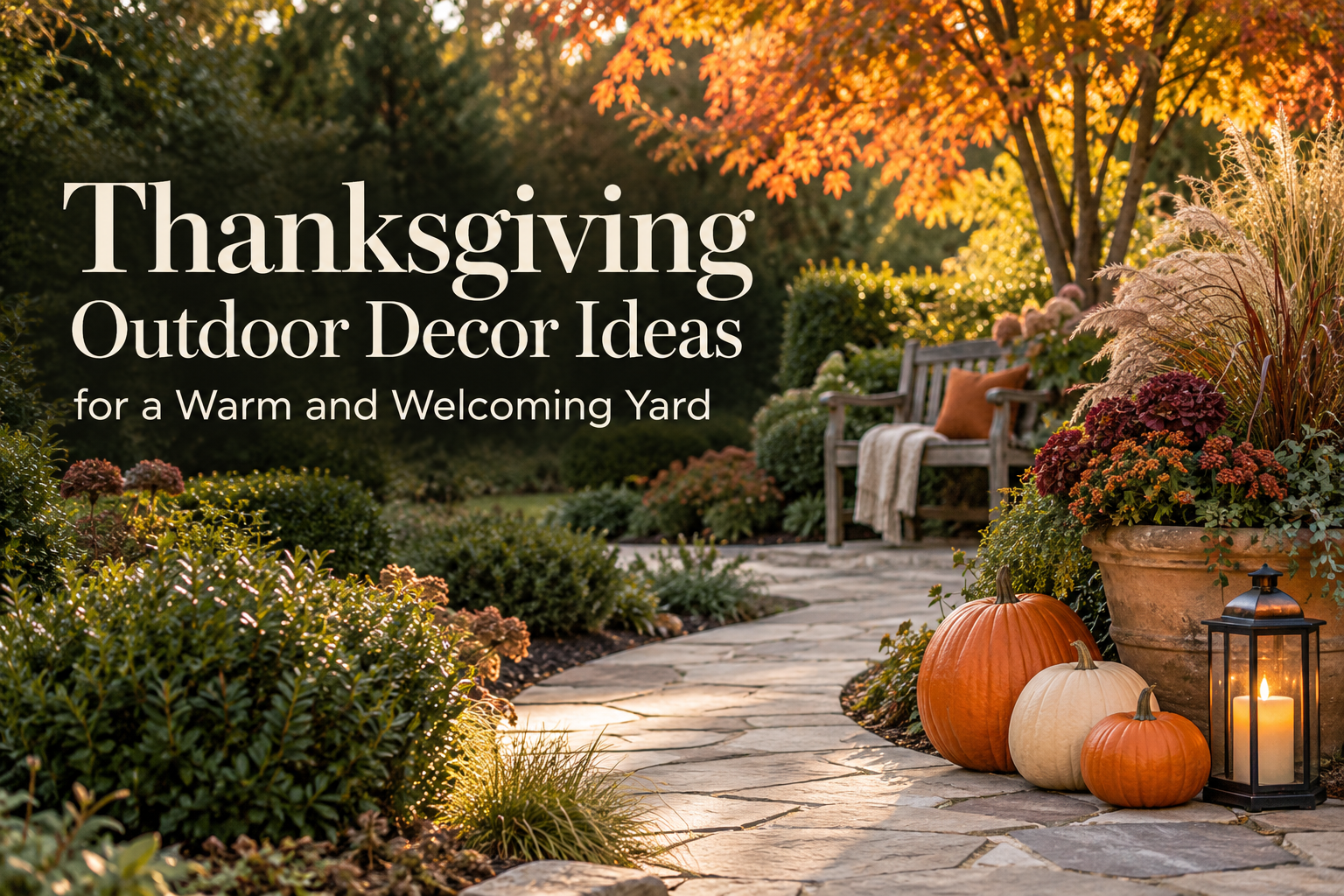
Once Thanksgiving dinner is over, a little fresh air can be welcome. Some guests may want to take their coffee outside, while others are happy to settle into a chair and keep talking. A patio or porch gives everyone another place to gather, especially when the house is full for the weekend.
The challenge in late November is comfort. A sunny patio can turn chilly after sunset, chairs can feel cold, and a decorated table may leave too little room for plates and drinks. Paying attention to these details helps you create an outdoor space people will enjoy using.
Here is how to prepare your yard for Thanksgiving afternoon, evening conversations, and the quieter days that follow.
1. Plan Around the Hours You Will Spend Outside
Decide what you want to do outdoors before arranging furniture. Hosting Thanksgiving dinner requires a different setup from serving coffee, sharing dessert, or spending an hour outside with visiting family.
Check the hourly forecast for your gathering, including wind, rain, and the temperature after sunset. The afternoon high does not tell you how comfortable the patio will feel later.
Visit your proposed seating area at roughly the same time you expect to use it. Sit down for a few minutes and notice whether the spot catches the wind, loses sunlight early, or feels damp underfoot.
In colder areas, outdoor dessert before sunset may work better than a long evening meal. In milder climates, you may have more flexibility. Keep an indoor place ready for everyone so guests can move inside easily if conditions change.
2. Choose a Sheltered Spot Near the House
An existing patio, deck, or covered porch is often the easiest place to prepare. Look for a level, dry surface with a clear route to the kitchen and bathroom.
A nearby fence, wall, or established planting can offer some shelter from wind. Watch the area in use, though. A corner that looks protected may still catch a strong breeze.
Before placing furniture, sweep away wet leaves, remove loose branches, and check for puddles or slippery surfaces. Move hoses and gardening tools out of the walking route. Avoid setting chairs on soft lawn where their legs could sink or wobble.
If guests use mobility aids, choose the most direct, stable route available. Think about door thresholds, steps, and room to turn as well as the seating area itself.
Keep furniture and foot traffic out of planting beds. A convenient shortcut across damp soil can damage plants and leave guests with muddy shoes.
3. Arrange Seating for Conversation and Easy Movement
Count the people likely to sit outside at the same time. If the outdoor area is mainly for coffee after dinner, you may only need a small group of comfortable seats.
For conversation, angle chairs toward one another and place a small table within easy reach. Give guests somewhere to put a mug or dessert plate without having to lean across another person.
A few layout choices help:
- On a small porch: Use two comfortable chairs and one compact side table, keeping the doorway clear.
- On a narrow patio: Place seating along the edges while preserving a direct walking route through the space.
- On a larger patio: Create two smaller conversation groups so guests can talk comfortably.
- Around a dining table: Allow chairs to pull out fully without hitting planters, railings, or nearby furniture.
Test the arrangement before guests arrive. Pull out the chairs, open the door completely, and carry a tray between the kitchen and seating area. Adjust anything that makes the route awkward.
4. Add Warmth Where Guests Will Sit
Start by making the seating comfortable. Dry cushions and blankets are useful additions, particularly on chairs that feel cold to the touch.
If you use a patio heater, check whether the space can accommodate all the clearances in its instructions. These include space above the heater and around nearby furniture, walls, umbrellas, and decorations.
Place the heater on a stable surface and keep it out of doorways and walking routes. Propane patio heaters belong outdoors and should never be used inside an enclosed tent or room because of carbon monoxide risk. Keep operating heaters attended and turn them off when everyone goes inside. These precautions follow the Technical Standards and Safety Authority’s patio heater guidance.
An existing fire pit can provide another place to gather. Check local restrictions and follow the equipment’s instructions for placement and use. Position seats where guests can talk without leaning toward the fire, and keep blankets and dried decorations clear.
Plan for shorter outdoor visits if the weather is cold. Guests should be able to enjoy a drink outside and return indoors whenever they prefer.
5. Keep Cushions, Blankets, and Rugs Dry
Soft furnishings help people settle in, but damp fabric quickly becomes uncomfortable. Keep blankets indoors until shortly before guests arrive and bring them back in each evening.
Washable throws are practical for a busy weekend. Place clean blankets in a dry, sheltered basket and keep a separate spot for used ones. That makes it easier to refresh the seating between gatherings.
Use cushions suited to outdoor conditions, and allow wet cushions to dry thoroughly before putting them back on chairs.
An outdoor rug can make a seating area feel more defined, provided it lies flat and stays secure. Check the corners and edges before guests arrive. If the rug becomes slippery or creates a raised edge along a walking route, remove it.
6. Light the Route Before Adding Decorative Lighting
Check your outdoor lighting after dark. Begin at the house and follow the route guests will use to reach the seating area.
Make sure doorways, steps, changes in level, and the edges of walking surfaces are visible. Then check whether people can see their food and drinks at the table.
Once those needs are covered, add softer lighting around the gathering area. Warm-white string lights or outdoor lanterns can help make a patio feel inviting. Position lights so they illuminate the space without shining directly into seated guests’ eyes.
Battery-operated LED candles are useful for table decorations, especially near fabric or dried foliage. Choose products rated for the conditions where you will use them, and keep cords out of walking routes.
For a more permanent update, explore how to plan landscape lighting before plants and hardscape.
7. Make Food and Drinks Easy to Serve
Keep the serving area close to the kitchen so dishes can be brought out, refilled, and cleared without repeated trips across the yard.
If the patio is small, serve the main meal indoors and use the outdoor table for drinks or dessert. This leaves more room for guests to sit comfortably.
For a drink station, group mugs, napkins, spoons, and a small waste container together. Use stable surfaces and keep hot drinks away from table edges. Covered containers help protect snacks from wind and outdoor debris.
Food needs the same temperature control outdoors as it does inside. USDA guidance recommends:
- Keeping hot foods at 140°F or above.
- Keeping cold foods at 40°F or below.
- Limiting time out of temperature control to two hours, or one hour when the temperature is above 90°F.
- Discarding perishable food that has exceeded those time limits.
Use a food thermometer to check holding temperatures. A cool November day does not make an outdoor table a reliable refrigerator. Bring out smaller portions and replenish them from properly held food as needed.
8. Add Seasonal Details Without Using Up Table Space
Thanksgiving decorations work well when they leave room for the gathering. Choose a few accents that suit the colors already present in your furniture, paving, and plants.
A small pumpkin arrangement beside a planter, a simple wreath, or a low centerpiece can provide enough seasonal detail. On dining tables, keep decorations low enough for guests to see one another and compact enough to leave room for dishes.
Reuse healthy fall plants and uncarved pumpkins where possible. Check plant labels for suitable temperatures before buying anything new, since a display that looks good at the store may not last outdoors in your climate.
Keep loose decorations out of paths and away from heating equipment. For more ideas, read Thanksgiving outdoor decor ideas for a warm and welcoming yard.
9. Let the Setup Change Through the Weekend
Your outdoor space may serve several purposes over Thanksgiving weekend. Choose furniture and accessories that are easy to rearrange.
On Thanksgiving Day, you might need extra places for guests to sit before dinner. The next morning, two chairs and a small table could be enough for coffee. Later in the weekend, the same area could host a card game or an afternoon snack.
Keep a small table available for games, drawing supplies, or drinks. Place active games farther from the dining area so people carrying hot food do not have to cross through play.
You can also remove extra chairs once the main gathering is over. A lighter arrangement leaves more room to move and makes the patio easier to tidy between visits.
10. Prepare Early and Check the Space Each Day
Finish the practical work before Thanksgiving morning so you have time to notice anything missing.
A few days before: Clean the main surfaces, inspect furniture, test lighting, and check any heating equipment according to its instructions. Wash blankets and confirm where everything will go.
The day before: Arrange seating, clear walking routes, and test the setup after sunset. Prepare your indoor backup area at the same time.
Before guests arrive: Put out dry cushions and blankets, check the forecast again, and set up food and drinks close to serving time.
Each evening: Bring in textiles, clear food and dishes, switch off heating equipment, and secure lightweight accessories.
A quick morning check helps keep the space ready through Sunday. Remove wet leaves, wipe down tables, and replace any damp cushions before using the area again.
Preview Your Thanksgiving Setup With iScape
If you are unsure where seating or planters should go, start with a photo of your outdoor space. iScape lets you visualize landscape ideas on an image of your yard and explore the placement of elements such as furniture, plants, and hardscape.
Compare a few arrangements before moving heavy pieces or buying new items. You might find that shifting a planter opens a better route to the table, or that a smaller seating group leaves the patio easier to use.
Confirm furniture dimensions, walking space, and equipment clearances in the actual yard before setting up.
Frequently Asked Questions
How can I make a small patio cozy for Thanksgiving?
Start with a few comfortable chairs, one useful table, dry blankets, and warm lighting. Keep the route to the house open and place seasonal accents beside the seating area. Serving food indoors can free up valuable patio space.
What should I prioritize on a limited budget?
Use the furniture and decorations you already own. Clean the area, improve the seating arrangement, and check that guests have enough light and somewhere to put a drink. Borrowing extra chairs or side tables may cover what you need for the weekend.
What if it is too cold to eat Thanksgiving dinner outside?
Keep dinner indoors and use the outdoor space for a shorter gathering during the warmest part of the day. Coffee, a brief conversation before dinner, or an afternoon visit the following day may be more comfortable.
Can I leave blankets and cushions outside all weekend?
Bring blankets inside overnight and whenever rain or heavy dew is expected. Follow the care instructions for outdoor cushions, and store them in a dry place when needed. Check everything before offering it to guests.