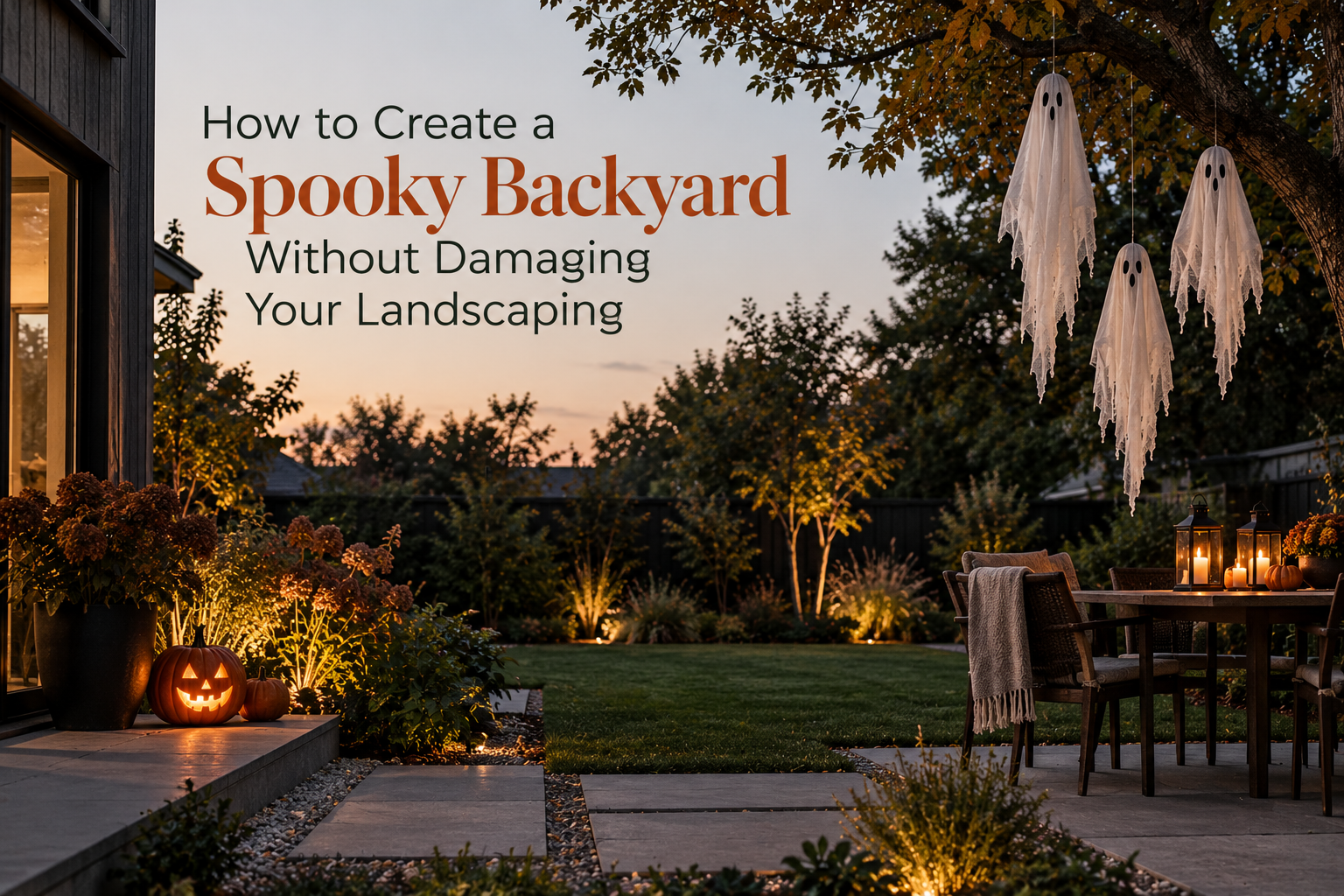
Halloween decorating can change a yard quickly, but it can also make an otherwise attractive landscape feel crowded. A dozen plastic props, bright orange lights, artificial webs, and decorations competing for attention may look festive for a night, yet they often hide the parts of the yard that already look good. A more polished approach is to treat Halloween as a temporary layer over your landscape, not as a replacement for it.
Use the structure that is already there: trees, planting beds, pathways, ornamental grasses, shrubs, stone, lawn, and outdoor lighting. Then introduce pumpkins, lanterns, darker foliage, and a few Halloween details in places where they strengthen the overall design. The result can still feel unmistakably Halloween, but it will look more considered and be much easier to transition into the rest of fall.
1. Build Around a Refined Fall Color Palette
Traditional orange and black immediately signal Halloween, but using only those two colors can make an outdoor display feel harsh. A more sophisticated palette combines Halloween colors with shades already found in an autumn landscape. Consider burnt orange, burgundy, deep green, bronze, cream, charcoal, muted gold, and natural brown.
For example, you could pair orange pumpkins with cream-colored pumpkins, burgundy foliage, bronze planters, and dark lanterns. Black can still appear in small amounts through planters, lighting fixtures, or decorative accents without dominating the yard.
This approach also makes the display easier to maintain after October 31 because most of the palette still works throughout November. For ideas that transition beyond Halloween, iScape also has a guide to fall front yards that remain attractive after the holiday. Fall Front Yard Ideas That Look Good Beyond Halloween
2. Use Pumpkins as Part of the Landscape
Pumpkins are most effective when they are treated almost like planting elements rather than scattered decorations. Instead of putting one pumpkin in every available space, arrange them in small clusters beside existing landscape features. A group near an ornamental grass, along a stone wall, or beside a planter feels much more intentional than pumpkins spread randomly across the lawn.
Mix sizes and colors to create variation. Traditional orange can be combined with white, green, pale peach, and striped varieties. Keep most pumpkins uncarved if you want the arrangement to last longer, then add a few jack-o'-lanterns closer to Halloween.
Useful locations include porch steps, walkway turns, the base of a mature tree, large containers, and the edge of a planting bed. The landscape should still be visible around the pumpkins. If the decorations completely cover the planting underneath, you have probably added too many.
3. Let Ornamental Grasses Create the Halloween Mood
You do not necessarily need obvious Halloween props to create atmosphere. Ornamental grasses already have many qualities that suit an autumn landscape. Their tall seed heads, soft movement, golden coloring, and shadows can make planting beds feel dramatic as the season changes. Use them behind pumpkins, next to lanterns, or near a pathway where low lighting can emphasize their texture after dark.
Grasses also introduce height, which prevents fall displays from becoming a row of decorations sitting at ground level. If you are adding new grasses rather than decorating around existing ones, pay attention to mature size. A grass that looks compact at the garden center may eventually reach several feet in both height and width. The idea is to use natural plant form to provide seasonal character, so you need fewer artificial decorations.
4. Replace Bright Halloween Lights With Layered Landscape Lighting
Lighting can have a larger impact on a Halloween yard than almost any decoration. Instead of outlining every roof edge, shrub, and pathway in orange lights, create several layers of warm illumination. Start with practical lighting that makes steps, entrances, and walkways easy to see. Then add accent lighting around one or two landscape features. You might uplight a mature tree, place lanterns among pumpkins, illuminate ornamental grasses from below, or use a restrained spotlight on one Halloween focal point. The contrast between illuminated areas and naturally darker sections of the yard creates depth. Lighting everything equally tends to flatten the landscape.
Permanent landscape lighting also continues providing value after Halloween. If you are making larger changes, it is worth planning fixtures and power routes before planting and hardscape make installation more difficult. How to Plan Landscape Lighting Before Plants & Hardscape
5. Create One Strong Halloween Focal Point
Stylish landscaping usually has hierarchy: one element attracts attention first, while everything else supports it. Halloween decorating should work the same way. Rather than installing several equally large displays, decide where you want people to look first. This might be the front entrance, a mature tree, a garden bench, a small graveyard, or one section of the walkway. A simple focal point could include a large pumpkin cluster, two substantial planters, several lanterns, and one restrained Halloween element such as a skeleton or decorative raven.
Keep nearby areas simpler. This gives the main feature enough visual space to stand out and prevents the yard from turning into a collection of unrelated scenes.
6. Work Halloween Decor Into Existing Planting Beds
Garden beds provide a natural framework for seasonal decorating. Because shrubs, grasses, perennials, mulch, and edging already establish boundaries, a few Halloween details placed within them tend to feel much more integrated than props standing alone in the lawn.
Try placing a lantern beside an evergreen shrub, adding pumpkins between ornamental grasses, or positioning a subtle decoration partially behind foliage. Avoid covering plants with synthetic spiderweb material or placing heavy objects directly on delicate growth. Decorations should support the landscape rather than damage it.
You can also use darker plants and existing foliage to create mood without adding anything obviously spooky. Burgundy leaves, deep green evergreens, bare branches, and dried seed heads already provide many of the textures associated with late October. This is particularly effective in landscapes that combine permanent evergreen structure with seasonal flowering plants.
7. Use Natural Materials Instead of Too Many Plastic Props
One of the easiest ways to make Halloween landscaping look more polished is to reduce the number of obviously artificial materials. Natural materials blend more easily with outdoor spaces and usually age better through the season. Consider using:
- Pumpkins and gourds
- Bare branches
- Dried grasses
- Wood
- Stone
- Pinecones
- Fallen leaves
- Woven baskets
- Natural-looking wreaths
A container filled with branches and dried grasses, for example, can create height beside an entrance without needing a large Halloween prop. You can still add ghosts, skeletons, bats, or other themed pieces, but keeping those elements limited makes them more noticeable. Think of Halloween decor as the accent, while landscape materials create the setting.
8. Make the Walkway Atmospheric Without Blocking It
Walkways are naturally strong design lines, making them excellent places to create a Halloween experience. The temptation is to line both sides with dozens of decorations. A cleaner approach is to use repetition selectively. For example, place several lanterns at wider intervals, then add pumpkins at one or two key points rather than beside every paving stone.
This creates rhythm while preserving visual breathing room. The walking surface itself should remain clear. This is particularly important when children and other visitors may be using unfamiliar paths at night. Keep extension cords, small props, and decorations away from areas where people step. Make changes in elevation and stairs easy to see. A stylish Halloween landscape still needs to function like a well-designed yard.
9. Give Trees a More Dramatic Role
Mature trees can create some of the best Halloween atmosphere in a landscape without much decoration at all. Their trunks, branches, shadows, and autumn foliage already provide scale and structure. Use those characteristics rather than trying to cover the tree. A subtle uplight can emphasize the trunk and canopy after sunset. A restrained grouping of pumpkins around the base can establish a seasonal focal point. Lightweight hanging decor may also work when it can be installed without damaging branches or bark.
Avoid covering the entire canopy with lights, synthetic webs, or excessive hanging decorations. The tree itself should remain visually important. If you have a particularly attractive autumn tree, sometimes lighting it well is enough to create more impact than another large Halloween prop.
10. Design the Yard So Halloween Can Be Removed in Minutes
One of the best tests of stylish seasonal landscaping is to imagine the yard on November 1. Remove the skeletons, ghosts, bats, carved pumpkins, and obvious Halloween signs in your mind. Does the yard still look complete? Ideally, the answer is yes.
Your base should consist of fall elements such as ornamental grasses, seasonal plants, natural pumpkins, containers, lanterns, foliage, and warm lighting. Halloween-specific pieces then sit on top of that foundation temporarily. For example, an October display might include dark planters, grasses, pumpkins, lanterns, and a skeleton. After Halloween, remove the skeleton and carved pumpkins while leaving everything else.
You have instantly transitioned from Halloween to a general fall landscape without redesigning the yard. If your existing landscape needs more than seasonal decorating, start by addressing the underlying yard first.
Keep the Landscape Visible
The difference between a stylish Halloween yard and a crowded one usually comes down to restraint. You can still use carved pumpkins, skeletons, lanterns, ghosts, or other recognizable Halloween elements. The goal is simply to give them a clear place within the existing landscape.
Use plants to provide texture. Let trees create scale. Keep paths open. Concentrate decorations into a few strong areas instead of filling every empty space. Use lighting to highlight what matters after dark. Most importantly, leave some areas undecorated. When the underlying landscape remains visible, Halloween feels like part of the yard rather than something temporarily covering it. Download iScape on the App Store or Google Play Store today and start designing today. Try a free trial today at iScape!