


Why Do My Shrubs Look Dead In Spring, And How Do I Know If They’ll Recover?
March 10, 2026
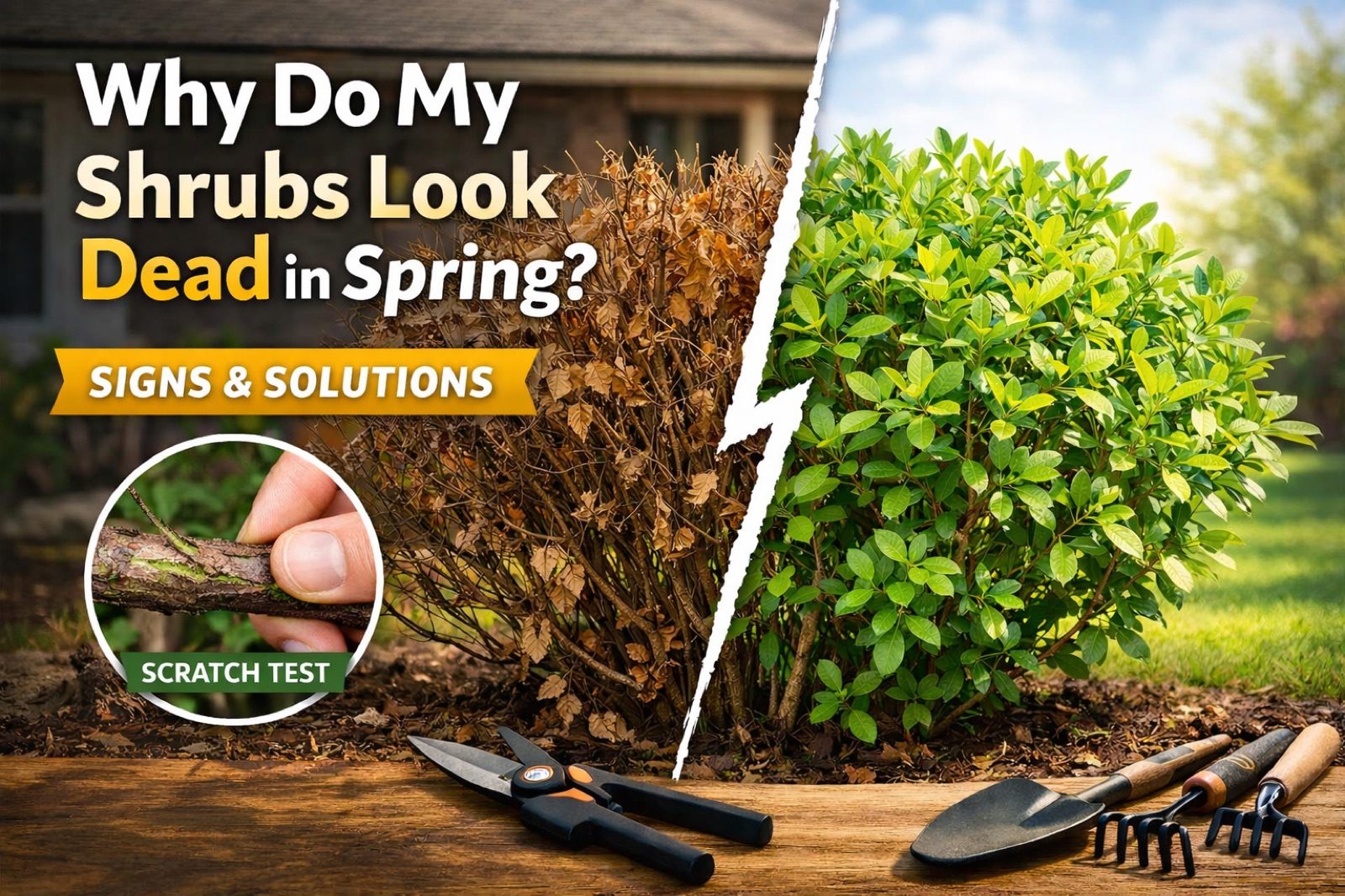
Few things are more frustrating in spring than walking outside, looking at your shrubs, and thinking, Everything is dead. Branches look bare. Leaves are brown or missing. The plant feels lifeless while everything else in the yard is starting to wake up.
The good news is that a shrub that looks dead in spring is not always dead. Delayed dormancy break, winter burn, freeze damage, transplant stress, soggy roots, and site-related stress can all make a healthy or partially healthy shrub look much worse than it really is. Extension guidance also notes that some woody plants simply leaf out later than others, and cold spring weather can delay growth even more.
Why Shrubs Can Look Dead in Spring Even When They Are Still Alive
One of the biggest reasons homeowners misjudge shrubs in spring is timing. Plants do not all wake up on the same schedule. Dormancy break is tied to temperature patterns, winter chilling, soil warmth, and the shrub’s own growth habit. A shrub may look bare long after nearby plants have leafed out, yet still be alive and simply running on its normal schedule.
Some shrubs are especially known for making people nervous in spring. Crapemyrtle often lags behind many other shrubs and may not leaf out until sometime in May. Rose-of-sharon is another famously late starter; Iowa State notes that in its climate it may not leaf out until late May or early June. Butterfly bush can also die back heavily in winter, especially in Zones 5 and 6, then regrow vigorously from lower stems or from the base once spring warmth settles in.
Hydrangeas can be confusing for a different reason. Some hydrangeas bloom on old wood, so winter may damage flower buds even when the shrub itself is still alive. That means you can have a plant that survives and leafs out, but blooms poorly or not at all that season. Cornell’s guidance also notes that old-wood hydrangeas may need spring cuts only after buds swell enough to show which stems were injured.
Whether you are a homeowner or a landscape pro, iScape helps you visualise the final look faster, reduce rework, and move from idea to install with more confidence.
Download iScape on the App Store or Google Play Store today and start designing today!
The Most Common Reasons Shrubs Look Dead After Winter
1. Winter Burn
Winter burn is one of the most common causes of brown, lifeless-looking shrubs in early spring, especially on broadleaf evergreens such as holly, rhododendron, cherry laurel, and some boxwoods. It happens when winter sun and wind cause the leaves to lose moisture while frozen soil prevents the roots from replacing that water. The result is foliage that turns yellow, bronze, or brown, often on the windward or sun-exposed side of the plant.
This kind of damage looks dramatic, but brown leaves do not always mean the branch itself is dead. Extension guidance from New Hampshire notes that evergreen shrubs may still have live buds and recover once the ground thaws and root uptake resumes. Wisconsin also notes that if stem or bud tissue is still green, buds may still break and form new foliage.
2. Freeze Damage After Early Growth Starts
Another common problem is a warm spell followed by a hard late frost. Dormant shrubs usually handle cold much better than shrubs that have already started pushing soft new growth. Iowa State notes that freezing temperatures often do not harm fully dormant plants, but they can damage emerging foliage and swollen buds. Symptoms typically include blackened or shriveled leaves, limp new growth, browned buds, and dropped foliage.
This kind of damage is often worse on flowering shrubs because flower buds are usually more cold-sensitive than stems or leaf buds. That is why a shrub may survive but bloom poorly that year. Minnesota Extension specifically notes that flower buds are often more susceptible to winter injury than stems, and Alabama Extension adds that early spring bloomers may show reduced or no bloom after freeze injury even when the plant remains alive.
3. Root Stress, Poor Drainage, or “Wet Feet”
Sometimes the problem is not winter alone. If a shrub sits in poorly drained soil, roots can suffocate or rot, and the plant may fail to leaf out properly in spring. Purdue warns that improper planting and trapped water in heavy soils can lead to root failure, while Wisconsin notes that root and crown rot often shows up above ground as stunting, wilting, thinning canopy, poor vigor, and dieback. When roots are examined, the tissue is often soft and brown.
This is especially important if the shrub was planted recently. Newly planted shrubs often suffer transplant shock because they have a limited root system and are more vulnerable to drought, temperature swings, and establishment problems. Purdue notes that poor growth, small leaves, and reduced shoot extension can persist for more than one season after planting.
4. Site Stress and Winter Exposure
Sometimes the shrub is technically hardy, but the exact spot where it is planted works against it. Exposed wind, reflected heat, compacted soil, limited root space, dry conditions before winter, de-icing salt, and rapid temperature swings can all contribute to decline. University of Maryland notes that poor site conditions can lead to browning, branch dieback, or overall decline, while Minnesota Extension points out that salt, winter wind, lack of snow cover, and root-zone cold injury can all stress shrubs.
That is why two shrubs of the same variety in the same yard can behave very differently. A plant near a driveway, corner wind tunnel, south-facing wall, or under roof eaves may be far more stressed than one planted in a protected location. Washington State also notes that microclimate matters, and a shrub may appear dead in spring but still resprout later from roots that survived.
How to Tell If a Shrub Will Recover
Before digging anything out, slow down and inspect the plant carefully. In many cases, the top growth is damaged but the lower stems, crown, or root system is still alive.
Start With the Scratch Test
The scratch test is the most reliable quick check for woody stems. Gently scratch a small section of bark on a twig or branch with your fingernail or a knife. If the tissue underneath is green and moist-looking, that part of the stem is still alive. If it is brown and dry, that section is dead. Michigan State, Wisconsin, and New Hampshire Extension all recommend this approach for checking delayed or winter-damaged stems.
Do not stop at one branch. Test the outer tips, then move farther inward, then lower on the shrub near the crown. Many shrubs die back from the top first but still have living tissue lower down. If the upper stems are dead but the base is green, recovery is still possible. Butterfly bush is a classic example of this pattern in colder zones.
Check Buds, Not Just Leaves
A shrub can be alive even if it has no leaves yet. Look closely for swollen buds, tiny leaf nubs, or small green shoots forming at branch joints or near the base. Wisconsin notes that green bud tissue can still break and produce foliage, even when the shrub looks rough overall.
Also remember that lost blooms are not the same as a dead plant. If flower buds were damaged over winter, the shrub may still leaf out normally. This is common with some hydrangeas and spring-blooming shrubs.
Bend a Few Twigs
Live wood is usually somewhat flexible. Dead wood is often brittle and snaps cleanly. This is not as reliable as the scratch test, but it is still useful. If every stem is brittle from top to bottom and no green tissue can be found anywhere, the outlook is poor. If lower stems bend and show green under the bark, the plant still has a chance.
Look at the Crown and Root Zone
If the shrub still has no signs of life by late spring, inspect the base. Is the crown firm and solid, or blackened and mushy? Are roots pale and firm, or brown and soft? Root rot often creates soft brown tissue and a generally weak, thin canopy above ground. If the problem is soggy soil, you need to fix drainage or the replacement plant may fail too.
Signs Your Shrub Is Likely to Recover
A shrub usually has a fair chance of recovery when you find green tissue on at least part of the stem system, see bud swelling, notice new shoots emerging from the base, or observe live wood lower on the plant even if the outer tips are dead. Many winter-injured shrubs do begin to recover as spring shifts into early summer, although some may look thin or uneven for a while. North Carolina Extension notes that recovery from heavy winter damage can take a long time, and in some cases a shrub may need more than one season to look normal again.
Signs It May Be Time to Replace It
Replacement becomes more likely when you find no green tissue anywhere, the crown is dead, the roots are mushy or rotted, the entire shrub stays brittle well into the season, or the plant shows no sign of regrowth by the time similar shrubs in your area are fully active. Wisconsin advises that if an entire evergreen is brown, recovery is unlikely. Iowa State also notes that once late-leafing shrubs like rose-of-sharon fail to break dormancy far beyond their normal schedule, winter death becomes much more likely.
Even then, timing matters. A shrub can appear dead in spring and still push growth from the roots later. Washington State specifically warns against deciding too early because root injury and delayed regrowth can take time to reveal themselves.
What You Should Do Right Now
The best first move is patience. Do not rip the plant out at the first sign of brown foliage. University of Georgia recommends waiting until you can clearly see new growth, then pruning back only to healthy live buds. Alabama Extension similarly advises holding off until spring growth begins, because dead-looking woody plants may still be alive.
Once new growth starts, prune out only what is clearly dead. Cut back to live wood, a healthy lateral bud, or a proper branch union. Random topping cuts are not helpful. Michigan State specifically advises pruning back to a live bud or branch union rather than making arbitrary cuts.
Watering matters more than many homeowners realize. Shrubs recovering from freeze or winter injury often need consistent moisture through summer, even if they are normally considered drought tolerant. Washington State notes that injured plants may need proper watering during summer because later heat can expose damage that was not obvious in spring.
Be careful with fertilizer. This is where a lot of homeowners make things worse. North Carolina Extension warns that spring fertilization of winter-damaged shrubs can push top growth faster than injured roots can support it. Georgia also advises waiting to fertilize until there is no threat of cold weather and the plant has significant new growth.
How to Prevent the Same Problem Next Year
The best prevention starts before winter, not after damage shows up. Shrubs enter winter in better condition when they are properly sited, watered well going into dormancy, mulched correctly, and not pushed into tender late-season growth by heavy pruning or nitrogen late in the year. Wisconsin recommends proper mulching and avoiding late-season fertilization on evergreens, while Minnesota recommends watering before the ground freezes and using mulch to reduce root injury and frost heaving.
If a shrub repeatedly struggles every spring, the deeper issue may be plant selection. A variety that is only marginally hardy for your area, or that is planted in an exposed, windy, salty, or soggy site, may never perform reliably. In those cases, replacing it with a shrub better suited to the location is usually smarter than trying to nurse the same plant along every year.
Plan Better Planting Choices With iScape
If a shrub does need to be replaced, it helps to plan before planting again. iScape landscape design tools make it easier to visualize where shrubs, trees, and beds will look best before you start digging.
Using a landscape design app can help homeowners test spacing, shape, and layout ideas so plants are placed in more suitable spots. Whether you want a simple garden design app for planning beds or are comparing tools that feel like free landscape design software, iScape helps make landscape decisions more visual and practical.
Final Thoughts
A shrub that looks dead in spring is not always dead. In many cases, it is simply delayed, winter-damaged, or recovering from stress. The most important thing is to inspect the plant before making a decision.
Check for green tissue, look for swelling buds, inspect the base, and give slow shrubs enough time. A little patience can save a plant that only needs warmer weather and a bit of care. If you want curb appeal upgrades that look right the first time, download iScape on the App Store or Google Play Store today and start designing today!
FAQs
Can a shrub lose all its leaves and still be alive?
Yes. Freeze damage and winter burn can cause severe browning and even defoliation, but stems may still be alive underneath. That is why the scratch test matters more than leaf appearance alone.
How long should I wait before removing a shrub?
Wait until you have checked for green tissue and given known late leaders enough time. Some shrubs do not show reliable regrowth until late spring or even early summer, depending on the species and climate.
Why is my hydrangea alive but not blooming?
Winter injury may have damaged flower buds, especially on hydrangeas that bloom on old wood. The shrub may still leaf out but skip flowers that season.
Should I fertilize a shrub that looks dead?
Usually not right away. Extension guidance warns that fertilizing damaged shrubs too early can push weak top growth before the roots are ready to support it.
What if only the top is dead?
That often means dieback, not total plant death. If the base or lower stems are alive, the shrub may resprout and recover, although it may need pruning and time to regain shape.


