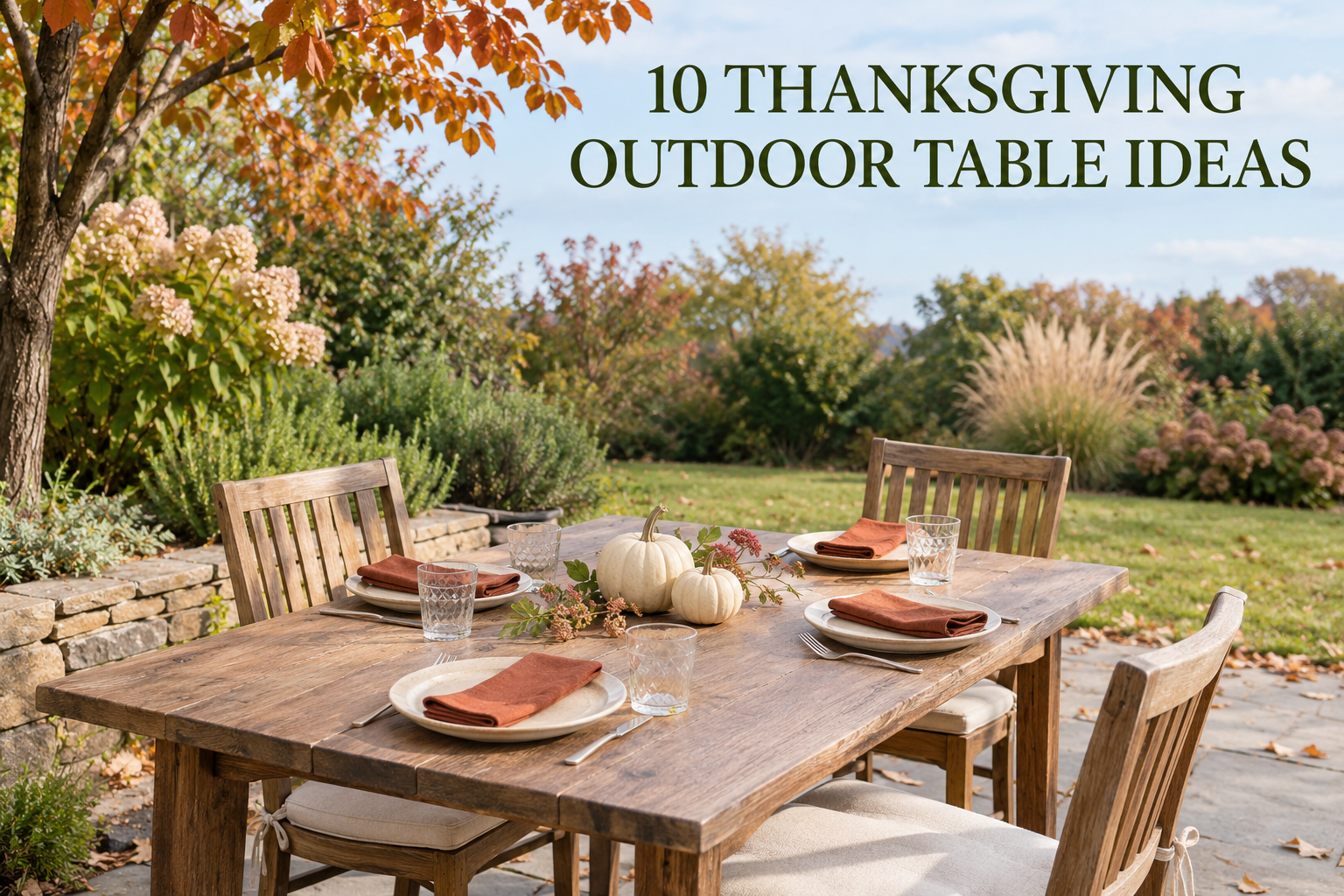
Thanksgiving is over, the guests have gone home, and your backyard may still have a few signs of the celebration. There might be crumbs under the table, leaves on the patio, or a patch of grass flattened by extra chairs.
The good news is that getting your outdoor space back in shape does not have to take all weekend. Start with food and fire safety, then work your way through the furniture, lawn, and decorations. This checklist will help you clean up while keeping your yard ready for the weeks ahead.
Start With the Essentials
Before you begin, gather a trash bag, recycling container, gloves, a broom, a soft cloth, and a bucket of mild soapy water. Check the care instructions for your furniture and patio materials before using any cleaning product.
If you cannot do everything at once, collect food scraps and secure the cooking area first. Save deeper cleaning and organizing for the next day.
1. Clear Away Food and Drinks
Walk around the dining area and pick up plates, cups, napkins, and leftover food. Look under the table, between chair cushions, and along the edges of the patio, where scraps can easily be missed.
Bring perishable leftovers inside promptly. Refrigerate them within two hours, or within one hour if the temperature is above 90°F. Discard food that has been left out longer.
Wipe up spilled drinks and food before they dry. This makes surfaces easier to clean and helps keep pests away from your outdoor dining area.
2. Sort Trash, Recycling, and Compost
Separate waste as you clean rather than collecting everything in one bag. Check local recycling rules for disposable plates, cups, and packaging because accepted materials vary by location.
If you have a home compost pile, plain fruit and vegetable scraps and dry leaves can usually go in. Keep meat, bones, dairy, and greasy food out of a typical backyard compost pile because they can attract pests. Check local collection guidelines if your community accepts food waste separately. Tie trash bags securely and place them in a covered bin.
3. Clean the Grill or Outdoor Cooking Area
Once the grill is cool enough to handle, remove food residue from the grates and clean the grease tray according to the manufacturer’s instructions. Empty disposable grease containers safely, and never pour grease down a drain or onto the ground.
For a charcoal grill, let the coals cool completely before handling them. Place cooled ashes in a metal container with a tight-fitting lid, away from the house and other combustible materials.
Finally, wipe down the cooking surfaces and nearby counters. Cover the grill only after it is clean and completely cool.
4. Check the Fire Pit and Candles
Make sure all candles are extinguished and the fire pit is completely out. Ashes and embers can remain hot after the flames disappear, so follow the fire pit manufacturer’s instructions for cooling and disposal.
When everything is cool, collect used matches, candle holders, and other small items. Store firewood in a dry place away from direct contact with the ground, and bring indoor-only blankets and accessories back inside.
5. Wipe Down the Outdoor Table and Chairs
Remove crumbs and wipe the table, armrests, and chair seats with a soft cloth. For most surfaces, mild soap and water are a useful starting point, but always follow the manufacturer’s care instructions. Avoid harsh cleaners or stiff brushes that could damage the finish.
Check underneath furniture for sticky spills or damp leaves. If chairs were placed on the lawn, move them back to the patio so the grass has room to recover.
6. Clean and Store Cushions and Blankets
Shake crumbs and loose leaves off cushions, pillows, and throws. Treat any stains according to the care label, and allow everything to dry fully before storing it.
Keep cushions in a dry, ventilated storage area or a suitable outdoor storage box. Packing them away while damp can lead to mildew and unpleasant odors.
If you plan to use your outdoor seating through winter, keep the items you need within easy reach and store the rest.
7. Sweep the Patio, Deck, and Walkways
Use a broom to clear food crumbs, leaves, and loose dirt from the places guests used most. Pay attention to steps, corners, and spaces around furniture legs.
Wet leaves can make walkways slippery, so clear them from paths and entrances. For spills, start with a gentle cleaning method suitable for your surface. Test any cleaner in a small, hidden area first, and avoid washing soapy water or grease into storm drains.
For more ideas on making these areas work together, read How to Connect a Deck, Patio, and Lawn Into One Cohesive Yard.
8. Give the Lawn a Break
Extra tables, chairs, and foot traffic can leave grass flattened, especially when the ground is wet. Move furniture and decorations off the lawn after the gathering and avoid walking on muddy areas until they have dried.
Lightly flattened grass may stand back up on its own. If an area remains bare or heavily worn, make a note to repair it during the right growing season for your grass type and location. Timing depends on your climate.
For future gatherings, consider moving furniture between locations or using an existing patio for the busiest activities.
9. Check Garden Beds and Plants
Look around flower beds and shrubs for napkins, food wrappers, or decorations that may have blown into the planting. Remove anything tied to branches, and check that stakes, cords, and temporary signs have not damaged plants or irrigation lines.
If mulch was pushed aside by foot traffic, gently spread it back over bare soil. Keep mulch a few inches away from plant stems and tree trunks. Avoid digging in wet soil, which can compact easily.
You do not need to cut back every plant for a tidy look. Some seed heads and stems can add winter interest and provide habitat for wildlife.
10. Pack Away Decorations Carefully
Sort decorations into items you can reuse, compost, recycle, or discard. Wipe and dry reusable pieces before packing them away.
Remove ribbons, wire, paint, and other non-compostable materials from natural decorations before deciding whether they can go into your compost. If a pumpkin is painted, treated, or beginning to rot, check local disposal guidance.
Label storage containers so it is easier to find your decorations next fall. If you are keeping a few pieces outside, make sure they are secure and do not block a walkway.
11. Check Outdoor Lights and Cords
Turn off and unplug temporary lights before removing them. Check cords for cuts, loose connections, or other damage, and stop using damaged items.
Coil dry cords loosely and store them indoors. If you are keeping outdoor lights up for the next holiday, make sure they are rated for outdoor use and positioned where they will not create a tripping hazard.
12. Notice What Worked and What Did Not
Once the yard is clean, think back to how everyone used the space. Did guests have enough room to move around the table? Did the lawn become muddy? Was there a convenient place for food, drinks, and trash?
These small observations can help you make future gatherings easier. You might need a clearer path between the house and the patio, a more durable place for extra seating, or a better spot for an outdoor serving table.
Our guide to 8 Landscape Design Mistakes That Make a Yard Harder to Use can help you identify changes that make your space more practical.
A Quick After-Thanksgiving Cleanup Checklist
- Bring leftovers inside promptly and collect food scraps.
- Sort trash, recycling, and suitable compost materials.
- Check that the grill, fire pit, and candles are safely out.
- Clean cooking equipment after it has cooled.
- Wipe down tables and chairs.
- Clean, dry, and store cushions and blankets.
- Sweep the patio, deck, steps, and walkways.
- Move furniture off the lawn and check for worn areas.
- Remove litter and decorations from garden beds.
- Pack away dry decorations, lights, and cords.
- Note any improvements for your next gathering.
Plan an Easier Outdoor Gathering With iScape
Cleaning up after Thanksgiving can show you how your outdoor space works when friends and family visit. If the dining area felt cramped or guests had trouble moving between the house and yard, a small layout change may make a difference next time.
With iScape, you can explore landscape ideas and visualize changes to your outdoor space before you begin. Try different layouts for seating, paths, and planting to create a yard that works for everyday life and special occasions.
Ready to plan your next outdoor update? Try iScape for free and start designing your space.
Download iScape: Available for iPhone and iPad on the App Store and Android on Google Play. The app supports homeowners and landscape professionals who want to plan and visualize outdoor projects before installation.
Frequently Asked Questions
How soon should I clean up after an outdoor Thanksgiving meal?
Collect food, bring leftovers inside, and check cooking equipment as soon as the gathering ends. You can tackle sweeping, furniture storage, and other tasks the following day.
What should I do if outdoor cushions get wet?
Follow the care label and allow them to dry completely before storage. Place them in a well-ventilated area and avoid packing them while damp.
Can Thanksgiving food scraps go in a backyard compost pile?
Plain fruit and vegetable scraps can usually be composted at home. Keep meat, bones, dairy, and greasy foods out of a typical backyard pile. Local food-waste collection programs may accept different items.
How can I help flattened grass recover after a party?
Remove furniture and limit foot traffic, especially while the ground is wet. Give the grass time to recover, and plan any needed repairs for the appropriate growing season in your area.
Should I remove every fallen leaf from my yard?
No. Clear leaves from walkways and areas where thick, wet piles cover the lawn. You can leave some in suitable garden beds or use them in compost, where they can support the soil and wildlife.