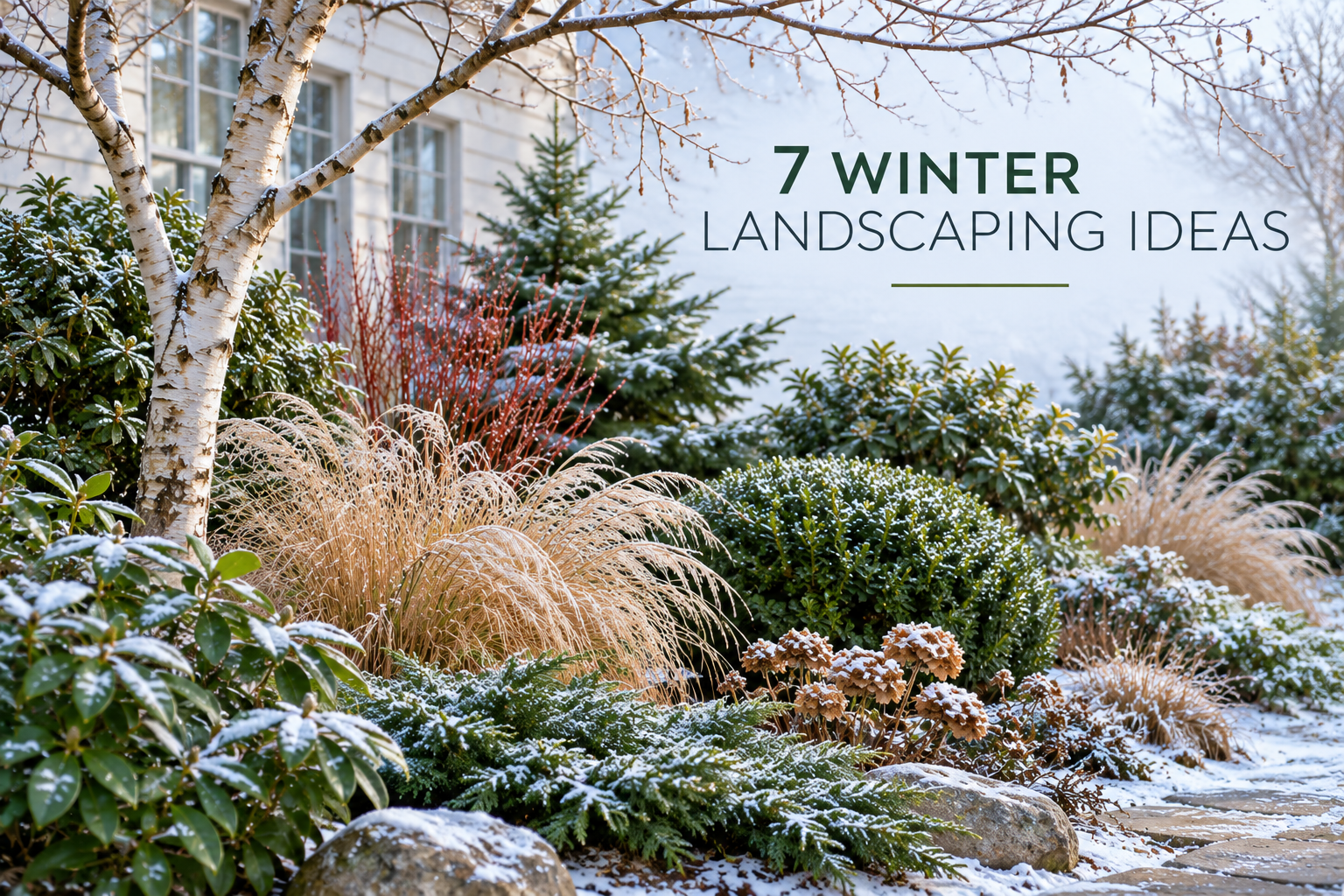
The best way to judge your yard in winter is from the places where you actually see it. Stand at your kitchen window, look down the front walk, or step onto the patio. With summer foliage gone, you may notice a bare patch beside the path or a garden bed that blends into the lawn.
Winter landscaping can give those views more shape and color. Evergreens, interesting branches, outdoor planters, and well-placed lights can all make the space look cared for when fewer plants are flowering. These seven ideas include changes you can make this season and planting choices to plan for a suitable time in your area.
1. Use Evergreens to Give the Yard Structure
Evergreens keep their foliage through winter, making them useful in areas that feel empty after other plants lose their leaves. They can frame an entrance, soften a fence, or provide a backdrop for smaller plants. Start by looking for gaps rather than filling every available space. A small evergreen near the corner of a garden bed may give the area a focal point. A group of shrubs beside a patio can make the space feel more connected to the rest of the yard. Depending on your location, options may include junipers, arborvitae, hollies, and dwarf conifers. Their shapes and colors vary, so you can mix a rounded shrub with an upright plant or pair fine needles with broader leaves.
Before buying, check:
- How tall and wide the plant is expected to grow.
- Whether it suits your local winter temperatures.
- How much sun and water it needs.
- Whether it will have room beside paths, windows, and the house.
A plant labeled “dwarf” still grows, so check its expected size rather than judging by the pot at the nursery. For more help arranging plants that look good across seasons, read how to mix evergreen and flowering plants for a more balanced yard.
2. Add Color With Berries and Bright Stems
Flowers are not the only way to bring color into a winter garden. Some shrubs stand out because of their berries or the color of their bare branches. Winterberry holly, for example, loses its leaves in fall and can display bright berries on its branches. Red-twig dogwood offers another kind of color, with stems that become more noticeable after the leaves drop.
Think about what sits behind the plant. Red stems may stand out against a pale fence, while a berry-producing shrub can add a bright detail in front of darker evergreens. If you are considering winterberry, ask your nursery about pollination before buying. Female plants need a compatible male winterberry that blooms at the same time to produce berries. The berries can also provide food for birds.
Choose shrubs that suit your soil, sunlight, and local climate. If the ground is frozen or waterlogged, use winter to plan the location and wait for a suitable planting period in your area.
3. Leave Selected Grasses and Seed Heads Standing
A garden bed does not have to be full of green plants to look attractive in winter. Dried grasses and seed heads can bring height and texture to the yard after the growing season ends. Ornamental grasses can soften the edges of a path or stand behind lower shrubs. Seed heads from plants such as coneflowers can add detail to a garden bed and provide food for birds.
Look at the plants you already have before cutting everything back. Choose healthy stems that remain upright and look good from the house or a frequently used path. Remove diseased material, and keep plants from blocking walkways or entrances.
When it is time to cut plants back, follow guidance for the individual species. You can also leave some stems or leaf litter in less-used parts of the garden to provide cover for wildlife. If you are adding grasses later, check their mature size and choose varieties suited to your region. Position them where they have room to spread without leaning into paths.
For ideas on combining different plant heights, see Layered Planting 101: How to Arrange Trees, Shrubs, and Flowers.
4. Create a Winter Container Display
A container is a simple way to improve a winter view without changing an entire garden bed. Place one near the front entrance, beside a patio, or outside a window you use often. You can create a display with a living evergreen or arrange cut evergreen branches with a few sturdy twigs and pinecones. Choose a container that suits your outdoor conditions and is stable enough for the location. For a simple arrangement, use:
- Evergreen foliage for a full base.
- Upright branches to add height.
- A few natural accents, such as pinecones, for texture.
Keep the display compact enough that it does not block a door or narrow walkway.
If you are keeping a living plant in a pot, pay attention to its roots. Pots provide less insulation than the ground, so a plant that survives winter in a garden bed may need extra protection in a container.
As a general guide, University of Illinois Extension suggests choosing perennial plants rated for temperatures about two hardiness zones colder than your local zone when they will spend winter outdoors in pots. Your location, container, and plant still affect the result.
Check drainage and watering needs, and ask a local nursery or extension office whether your plant and container need a sheltered location.
5. Refresh Garden Beds Without Overdoing Cleanup
A clear edge and a tidy layer of mulch can make a garden bed look more defined, especially when surrounding plants have lost their leaves. Start by removing weeds, broken branches, and any diseased plant material. Then check the mulch already in place. If it has shifted, you may only need to spread it over bare patches rather than add a completely new layer.
For many tree and shrub beds, a total layer of roughly two to three inches of organic mulch is a useful starting point. Keep mulch several inches away from trunks and plant stems instead of piling it against them. This leaves space around the base of the plant and helps avoid moisture problems.
You do not need to remove every fallen leaf from every garden bed. Leaves in suitable areas can provide cover for small wildlife. Focus cleanup on walkways, drainage areas, and parts of the lawn where thick, matted leaves have collected. A quick improvement: Stand back after tidying and look at the bed from the house. A clean edge, one evergreen, and a few standing grasses may be enough to give it a finished look.
6. Make Paths and Patios Part of the Winter View
When flowers fade and trees lose their leaves, the shape of a path or patio becomes easier to notice. These features can help the yard look organized throughout the year. Start with what you already have. Sweep leaves from steps and walkways, move unused furniture out of the way, and make sure the route to the entrance is clear.
If you live where snow and ice are common, think about where shoveled snow will go. Avoid piling snow mixed with deicing salt on garden beds. Salt can damage plants, and sand can provide traction where appropriate, although it does not melt ice. Follow local guidance and product instructions when using deicers.
Winter is also a useful time to notice where the layout needs work. You might see a muddy shortcut between the gate and patio or realize that an existing path leads away from the area you use most.
Make a note of those problems for a future project. You can explore ways to connect a deck, patio, and lawn into one cohesive yard before making permanent changes.
7. Use Lighting to Highlight What Looks Good After Dark
Winter days are shorter, so a yard that looks appealing at noon may be difficult to see by early evening. Thoughtful lighting can help you enjoy the landscape after sunset while making important routes easier to follow. Start with practical areas: the front walk, steps, entrances, and the route between the house and any outdoor space you use.
Then choose one or two features to highlight. A soft light near a small tree, textured wall, or evergreen can give the yard a focal point without making the whole space overly bright. Warm-white outdoor lights can create a welcoming look. Direct them toward the area you want to see, and avoid placing fixtures where they shine directly into windows or guests’ eyes.
Choose products rated for outdoor use and follow their installation instructions. If you are planning a larger project, consider where lighting and power will go before installing new paths or garden beds.
Learn more in how to plan landscape lighting before plants and hardscape.
How to Plan a Winter Yard That Works for Your Climate
A winter landscape in a snowy region will not look the same as one in a mild climate. Instead of copying a picture exactly, start with the conditions in your own yard. Take photos from the front entrance, a main window, and any outdoor area you use regularly. Then ask:
- Which areas look bare once seasonal flowers fade?
- Where could an evergreen or an interesting shrub improve the view?
- Do paths stay clear and usable in wet or icy weather?
- Which plants already provide attractive winter color or texture?
- Are there spots that need better lighting after sunset?
Choose one or two priorities. You might add a container near the entrance now and plan a larger planting bed for the next suitable season. With iScape, you can use a photo of your yard to explore the placement of plants, paths, and other landscape features before making changes. Compare different arrangements, then check actual measurements and plant requirements before buying or installing anything.
Ready to plan a yard that looks good beyond one season? Start your free trial with iScape and explore your winter landscaping ideas.
Frequently Asked Questions
What are the best plants for winter landscaping?
Evergreens, winterberry, red-twig dogwood, ornamental grasses, and some perennials with attractive seed heads can add winter interest. The right choices depend on your local climate, sunlight, soil, and available space.
How can I improve my winter yard without buying new plants?
Tidy paths, redistribute existing mulch where needed, arrange evergreen cuttings in a container, and highlight an attractive tree or garden feature with outdoor lighting. You can also leave healthy grasses and seed heads standing for texture.
Should I cut back all my plants before winter?
No. Some healthy grasses, seed heads, and stems can remain attractive through winter and offer food or cover for wildlife. Remove diseased material and follow plant-specific advice for pruning.
Can I plant trees and shrubs in winter?
It depends on your climate and the plant. Avoid planting when the ground is frozen or waterlogged. A local nursery or extension office can help you choose a suitable planting window.
How can I make a small yard look good in winter?
Focus on a few features you can see from the house. A compact evergreen, one container, and a light near the entrance can add color and structure without making a small space feel crowded