If your yard looks great when everything is blooming but suddenly feels bare a few months later, the problem may not be your plant choices. It may be the way those plants are being used. A balanced planting plan needs two things at the same time: plants that keep the yard visually grounded throughout the year and plants that make it change with the seasons.
Evergreens can hold the shape of a planting bed, screen an unwanted view, frame an entrance, or keep the area around your home from looking empty after seasonal flowers disappear. Flowering plants bring the other half of the design: color, fragrance, movement, pollinators, and seasonal character.
The useful question is not, “How many evergreens should I plant?” It is: Which parts of my yard need permanent structure, and where will seasonal color have the greatest effect? Answer those two questions first, and building the rest of the planting plan becomes much easier.
Start With the Areas That Need Structure All Year
Before visiting the nursery, look at your yard when very little is flowering. Which areas feel unfinished?
The corner of a house may need an evergreen shrub to give it more visual weight. A patio might benefit from taller evergreen planting for privacy. A long bed may need several permanent shrubs to keep its shape when perennials die back. Evergreens work particularly well when they have a clear purpose. Use them to anchor important areas, establish a background, provide screening, or maintain the outline of a planting bed.
You do not need them everywhere. Too many similar evergreens can make a yard feel heavy and repetitive. A handful of well-positioned plants usually creates more useful structure than filling every open space. If your existing beds feel flat or disconnected, our guide on how to fix a front yard that looks empty and uneven explains how structure, repetition, and planting layers can make a yard feel more complete.
Put Flowers Where They Will Have the Most Impact
Not every section of the yard needs the same amount of color. Think first about where you spend time and what you see most often. The front entrance, a patio, the main walkway, or a bed outside the living-room window may deserve a stronger flowering display than a side boundary that is rarely viewed. This gives flowers a purpose instead of treating them as filler.
A mostly green foundation bed, for example, can make a group of white or purple flowers near the entrance feel far more noticeable. Around a patio, a simple evergreen background can allow flowering plants closer to the seating area to become the focus. Leaving some areas quieter also prevents the landscape from becoming visually exhausting.
Build Groups Instead of Buying One of Everything
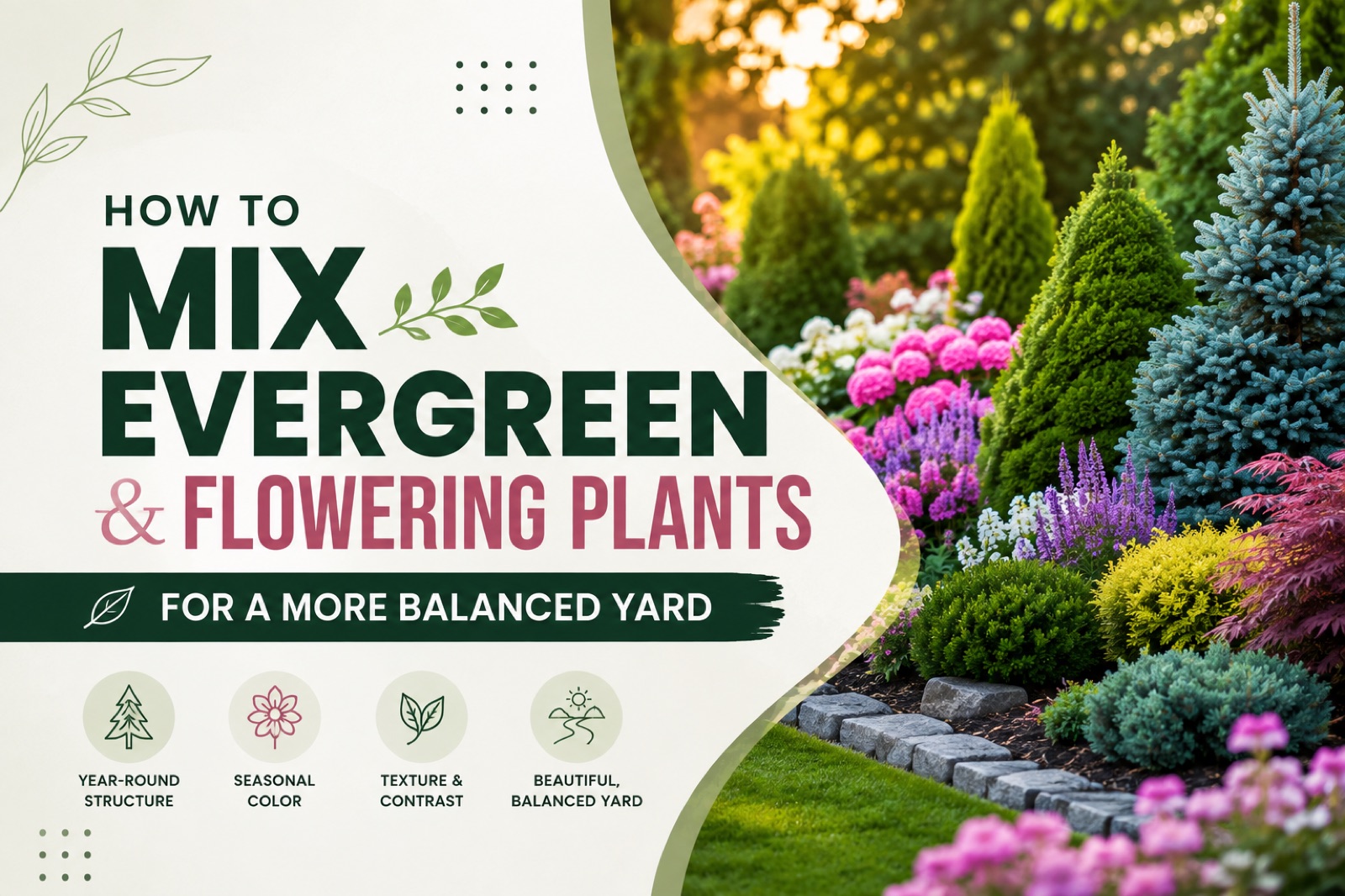
A common planting mistake happens before anything goes into the ground. You visit a garden center, see six attractive plants, and buy one of each. Every plant may be beautiful individually, yet together they can make a bed feel like a collection rather than a design. Try building small plant groups instead. A useful combination could be:
- One evergreen shrub for structure
- A small group of flowering perennials or a flowering shrub
- A lower plant or groundcover to soften the edge
Then repeat one or two parts of that combination elsewhere. You do not need identical groups. Repeating the evergreen, flower color, foliage texture, or overall plant shape is enough to connect different sections visually. This idea becomes especially useful in larger planting beds. The Layered Planting 101 guide goes deeper into arranging trees, shrubs, flowers, grasses, and lower plants so different heights work together instead of competing for space.
Use Height to Create Depth, Not Perfect Rows
The familiar advice to put tall plants at the back and short plants at the front is a useful starting point, but following it too literally can make a garden look staged. Think in loose layers. Larger evergreen shrubs or small trees can create the background. Flowering shrubs and taller perennials can fill the middle, while lower flowers and groundcovers soften the front. Then break up those layers slightly.
Bring a few medium-height plants forward. Allow a lower plant to spread around the base of a shrub. Let plants overlap visually instead of creating three obvious horizontal rows. Plant form matters too. An upright evergreen beside a wide flowering shrub creates more contrast than two rounded plants of similar size. Fine foliage can balance broad leaves, while spreading plants can soften the edge between mulch and a walkway.
Choose Flowering Plants for Their Leaves Too
A plant may bloom for a few weeks, but you could be looking at its foliage for months. That makes leaves an important part of the design.
Look beyond flower color and compare the foliage. Broad leaves can contrast beautifully with fine evergreen foliage. Blue-green or silvery leaves can break up large areas of deep green. Glossy foliage can sit beside softer textures and make an otherwise simple planting feel more layered.
Try mentally removing the flowers from your planting plan. Would the bed still have different shapes, textures, and shades of green? If yes, you are building a garden that can remain interesting beyond its peak flowering period.
Keep the Flower Palette Connected
A colorful yard does not need every color. For many homes, repeating a smaller palette creates a more cohesive result. You might work mainly with white, lavender, and purple, or use warmer combinations of cream, yellow, and orange. You can still introduce occasional accent colors. What matters is that the same colors appear again somewhere else. If purple flowers appear near the front door, repeating a similar shade beside the patio quietly connects the two areas. Evergreen foliage creates the neutral space between these flowering moments, giving stronger colors room to stand out.
Spread Interest Across the Growing Season
A garden can contain dozens of flowering plants and still have long periods without much happening if everything blooms together. Before buying, check approximately when each plant flowers in your climate. If several shrubs already provide spring color, consider adding perennials that perform later rather than buying another spring bloomer.
You can also look beyond flowers. Berries, ornamental grasses, seed heads, changing foliage, interesting bark, and evergreen structure can all extend the garden's visual interest. The goal is not to force the yard to flower constantly. It is to avoid building a landscape that peaks once and then feels forgotten.
Choose Plants That Suit the Same Conditions
Two plants can look excellent together in a photograph and perform terribly together in your yard. Plant compatibility comes first. Compare sunlight, moisture needs, drainage, soil conditions, mature size, and your local climate before placing plants together.
A sun-loving perennial could eventually struggle if the evergreen next to it grows large enough to cast significant shade. Likewise, combining a plant that prefers consistently moist soil with one that performs best in dry conditions can make watering unnecessarily difficult.
If you are unsure what your site can support, read How to Choose the Right Plants for Sun, Shade, Soil, and Space before making your plant list.
Leave Room for the Yard You Will Have Later
One of the hardest parts of planting a new bed is accepting that it may look slightly empty at first. That is usually better than overplanting.
The small evergreen in a nursery container may eventually become several feet wide. The flowering shrub that seems lost today might fill a large part of the bed after a few growing seasons. Check mature height and width rather than designing around the size you purchase. Giving plants adequate space helps them keep their natural form, improves airflow, reduces competition, and can make future maintenance considerably easier. You can use mulch or temporary annuals to cover open areas while permanent plants establish.
Think About Native and Ornamental Plants Together
Evergreen versus flowering is not the only choice you need to make. Your planting list may include native species, traditional ornamentals, or a combination of both.
Native plants can be especially useful when you want species suited to local growing conditions and wildlife, while ornamentals can offer particular colors, forms, evergreen foliage, privacy, or other design characteristics. Rather than treating it as an either-or decision, evaluate what each plant contributes to your specific yard. Our guide to native plants vs. traditional ornamentals covers their differences in maintenance, water needs, wildlife value, and design flexibility.
See the Your Yard Before You Start Planting
It is much easier to understand all of this on paper than it is to picture a finished landscape while standing in front of an empty bed. That is where visual planning helps.
With iScape, you can experiment with plants and other landscape elements in your outdoor design before making permanent changes. This makes it easier to compare layouts, decide where evergreen anchors are needed, and see whether one part of the yard is carrying too much flower color.
Before finalizing the design, try one last test: picture the yard without its flowers. If the major beds still have definition and the landscape still feels connected to the house, your evergreen structure is probably doing its job. When flowers return, they should add another layer rather than be responsible for rebuilding the entire look. That is ultimately what creates balance: enough permanent structure to hold the yard together, with enough seasonal planting to keep it changing.
See Your Planting Ideas Before You Dig
Not sure whether your yard needs another evergreen, more flowers, or simply a better arrangement? Try iScape for free and start visualizing different planting combinations before you buy, move, or plant anything. The app is free to download with limited free access, and eligible new users can also explore a Pro trial.
Plan it. Compare it. Then build the yard you actually want. Download iScape on the App Store or Google Play Store today and start designing today. Try a free trial today at iScape!
Frequently Asked Questions
1. How Many Evergreens Should I Use in a Flower Bed?
There is no fixed ratio. Use enough evergreens to anchor the bed and maintain some structure when flowering plants are dormant, but leave enough room for seasonal plants to bring color and change.
2. Can Evergreen and Flowering Shrubs Be Planted Together?
Yes, provided their sunlight, soil, moisture, climate, and spacing requirements are compatible. Combining the two can give the bed both year-round structure and seasonal interest.
3. How Do I Keep a Mixed Planting Bed From Looking Too Busy?
Limit the number of plant varieties, repeat key plants or colors, vary foliage texture, and give stronger flowering displays some quieter evergreen space around them.
4. Should I Choose Evergreen or Flowering Plants First?
Start with the plants that provide long-term structure. Once you know where the yard needs screening, anchors, height, or year-round foliage, choose flowering plants to fill the remaining areas and create seasonal focal points.