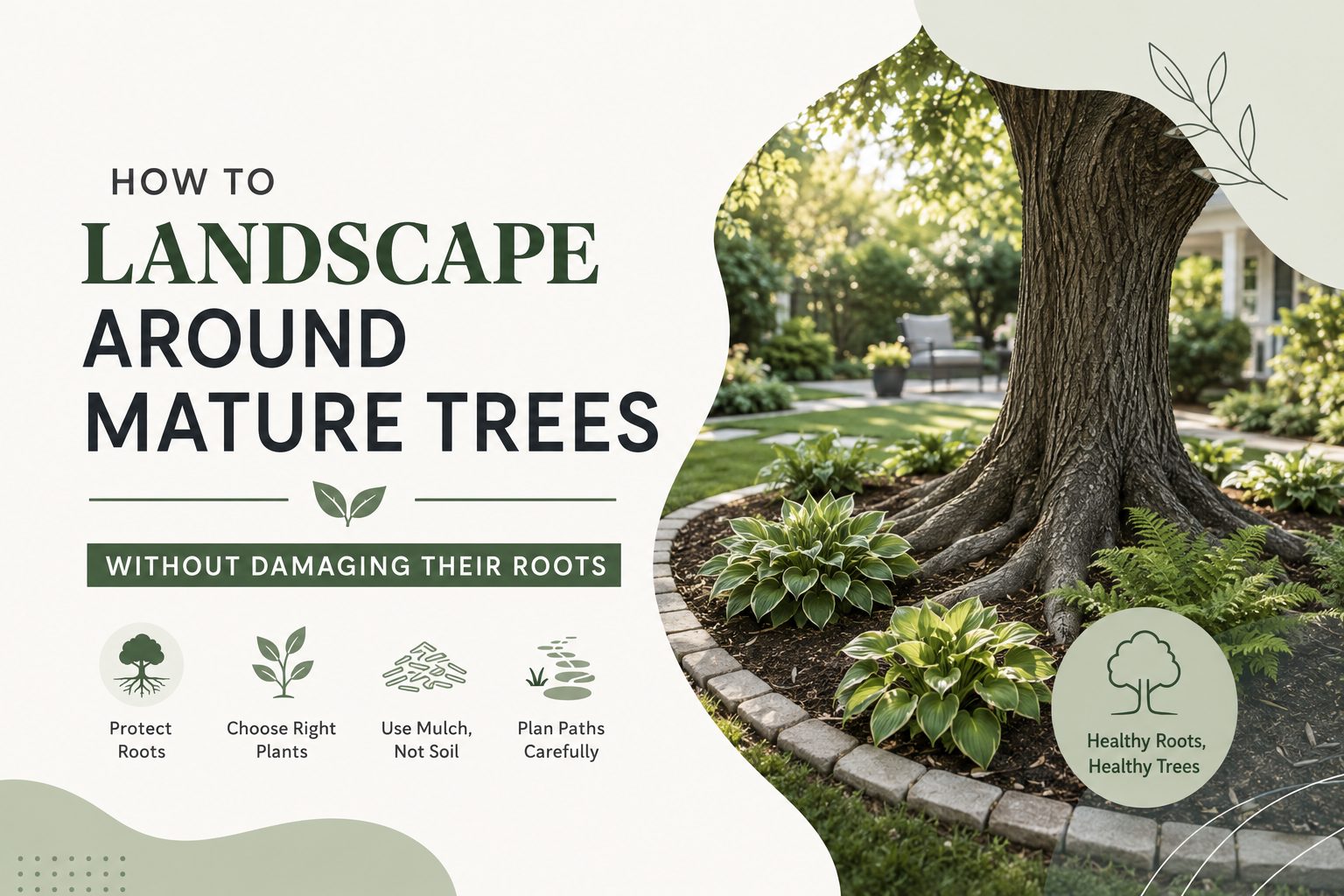
Mature trees add shade, privacy, character, and long-term value to a yard. They can also become the natural focal point around which the rest of the landscape is designed. However, landscaping beneath an established tree requires more care than creating an ordinary garden bed. Digging too deeply, cutting exposed roots, piling soil around the trunk, or installing heavy hardscape can slowly weaken a tree that has taken decades to grow. The safest approach is to design around the tree’s existing root system rather than trying to reshape the ground beneath it. With thoughtful plant selection, shallow installation methods, proper mulching, and careful planning, you can improve the area without threatening the health or stability of the tree.
Why Mature Tree Roots Are Easy to Damage
Tree roots are often imagined as deep underground structures that mirror the canopy. In reality, most of the roots responsible for absorbing water, oxygen, and nutrients grow relatively close to the soil surface. These roots can spread far beyond the outer branches of the tree. This means digging outside the visible canopy can still disturb the root system. Tree roots may be damaged by:
- Deep excavation
- Root cutting
- Soil compaction
- Raised garden beds
- Excess soil or mulch
- Changes in drainage
- Heavy construction equipment
- Patio and walkway installation
- Repeated mowing over exposed roots
Root damage may not become visible immediately. A mature tree can decline slowly over several months or years after the original disturbance.
1. Start by Evaluating the Tree’s Health
Before planning plants, pathways, edging, or seating, inspect the tree carefully. Look for:
- Dead or broken branches
- Cracks or cavities in the trunk
- Fungal growth near the base
- Large exposed roots
- Areas of damaged bark
- Thinning foliage
- Soil erosion
- Standing water
- Significant leaning
A tree that is already stressed may require professional care before additional landscaping is installed. If the tree is particularly old, large, valuable, or close to a structure, ask a certified arborist to inspect it. An arborist can identify important roots, assess stability, and explain how much disturbance the area can safely tolerate.
2. Understand the Tree’s Root Protection Area
The ground beneath the canopy is often called the drip line, but the root system may extend considerably farther. For a basic residential project, treat the entire area beneath the canopy and some space beyond it as a sensitive root zone. Avoid storing equipment, soil, stone, mulch, or building materials in this area. You should also prevent:
- Vehicles from parking beneath the tree
- Heavy machinery from crossing the area
- Workers from repeatedly walking over the same soil
- Construction waste from being placed near the trunk
- Concrete or chemicals from entering the soil
Repeated pressure compresses the soil and reduces the spaces through which water and oxygen reach the roots. Protecting the soil is therefore just as important as avoiding direct root cutting.
3. Keep the Existing Soil Level
One of the most damaging landscaping mistakes is adding a thick layer of soil beneath a mature tree. Homeowners sometimes add topsoil to cover exposed roots, level uneven ground, or build a raised flower bed. Although the result may initially look cleaner, the additional soil can reduce the oxygen available to existing roots. Avoid building:
- Raised beds around the trunk
- Soil-filled tree rings
- Deep berms beneath the canopy
- Elevated lawns over exposed roots
- Thick layers of compost
Removing soil can be equally harmful because it may expose, tear, or dry out the roots. Work with the existing grade whenever possible. Surface roots are a natural part of many mature trees and should be incorporated into the design rather than buried.
4. Keep the Root Flare Visible
The root flare is the widened section where the trunk transitions into the main roots. On a correctly planted and maintained tree, this area should remain visible. Do not pile soil, mulch, stones, or plants directly against the trunk. Covering the root flare can trap moisture against the bark, restrict oxygen, and create conditions that encourage decay. The base of the tree should not look like a straight pole disappearing into a mound of soil or mulch. If the root flare is already buried, do not aggressively excavate it yourself. Ask an arborist whether the excess material can be removed safely without damaging the roots or bark.
5. Replace Struggling Grass With Mulch
Grass frequently becomes thin beneath mature trees because it must compete with the tree for water, nutrients, and sunlight. Repeatedly reseeding, fertilizing, or aerating the area rarely solves the underlying problem. These activities may also disturb shallow roots. A broad mulch bed is usually a safer solution. Organic mulch can:
- Reduce competition from grass and weeds
- Protect surface roots from lawn equipment
- Help the soil retain moisture
- Moderate soil temperature
- Reduce compaction
- Make the area look more intentional
Spread approximately two to four inches of mulch in an even layer. Keep it several inches away from the trunk and avoid creating a mulch volcano. Natural materials such as arborist wood chips, shredded bark, or partially composted leaves generally work well.
6. Never Cut Large Surface Roots Without Advice
Exposed roots can make mowing, walking, and installing edging difficult. However, cutting or grinding them simply to flatten the ground can weaken the tree. Large roots may be responsible for:
- Anchoring the tree
- Transporting water
- Storing energy
- Supporting nearby feeder roots
Removing a structural root may increase the risk of instability, particularly when it is close to the trunk. Cutting roots also creates wounds through which decay-causing organisms may enter. Instead of removing exposed roots, expand the mulch bed around them. Allow the roots to remain visible or cover them only with a light, breathable mulch layer. When a root is lifting a walkway or affecting a building, consult an arborist before taking action. The safest solution may involve changing the walkway rather than removing the root.
7. Choose Plants That Can Handle Dry Shade
The space beneath a mature tree is often described as dry shade. Even when the area receives rainfall, the tree canopy may intercept some of the water while established roots absorb much of the moisture that reaches the ground. Plants selected for this space must tolerate:
- Limited sunlight
- Root competition
- Reduced soil moisture
- Falling leaves
- Uneven ground
- Occasional exposed roots
Depending on your climate and tree species, suitable options may include:
- Shade-tolerant native groundcovers
- Woodland perennials
- Sedges
- Ferns
- Small spring bulbs
- Low-growing flowering plants
Do not select plants based only on appearance. Match every plant to the actual light, soil, climate, moisture, and space available beneath the tree. For more detailed plant-selection guidance, read How to Choose the Right Plants for Sun, Shade, Soil, and Space. It explains how site conditions should guide plant choices before anything is purchased or planted.
8. Use Small Plants Instead of Large Shrubs
Large nursery plants require large planting holes, increasing the chance of encountering important roots. Use:
- Small nursery pots
- Plant plugs
- Bare-root perennials
- Young groundcovers
- Small bulbs
Smaller plants may take longer to fill the area, but they are easier to install between existing roots and generally adapt more gradually to the conditions. Before visiting the garden center, review 10 Things to Check Before Buying Plants for Your Yard. Checking mature size, water needs, maintenance, climate suitability, and plant health can prevent expensive planting mistakes.
9. Dig Small Individual Planting Pockets
Do not till or cultivate the entire area beneath a mature tree. Rototillers, augers, trenchers, and broad soil preparation can damage many roots at once. Instead:
- Position the plants while they are still in their containers.
- Move them around until the arrangement feels balanced.
- Use a hand trowel to dig one small hole at a time.
- Stop if you encounter a substantial root.
- Move the hole slightly rather than cutting the root.
- Return the existing soil around the plant.
- Water gently after installation.
Begin planting away from the trunk and keep the immediate root-flare area open.
You do not need to fill every part of the bed. Groups of shade plants surrounded by mulch often look more natural and create less root disturbance than a densely planted bed.
10. Be Careful When Adding Paths and Patios
Hardscape installation can cause more root damage than planting because it often requires excavation, grading, compacted base material, and heavy equipment. Avoid placing solid concrete, retaining walls, or deeply excavated patios close to the trunk. Lower-impact options may include:
- Mulched pathways
- Widely spaced stepping stones
- Raised boardwalk-style paths
- Surface-laid stone
- Carefully designed permeable paving
Permeable materials can improve water movement, but they are not automatically root-safe. Deep excavation and compacted foundations may still cause damage. Read The Best Way to Combine Hardscape and Plants in One Design before finalizing patios or paths. Planning natural and built elements together can help you avoid placing heavy features where they may conflict with the tree.
11. Avoid Deep Landscape Edging
Metal, plastic, concrete, and stone edging often require a continuous trench. Even a narrow trench can cut through numerous feeder roots. Consider using:
- A natural spade-cut edge outside the sensitive root area
- A gradual lawn-to-mulch transition
- Flexible edging installed with minimal excavation
- Surface-laid stones
- A broad, informal bed shape
Avoid creating a tight circle immediately around the trunk. A larger curved bed that follows the canopy generally looks more natural and provides better protection from mowers and foot traffic.
12. Maintain the Existing Drainage Pattern
Changing the way water enters or leaves the area can stress a mature tree even when no roots are directly cut. Do not direct excessive water from:
- Downspouts
- Patios
- Driveways
- Irrigation systems
- Pools
- Drainage pipes
Constantly saturated soil can reduce oxygen around the roots. At the same time, removing lawn irrigation may leave a tree with much less water than it previously received. Water slowly across a broad part of the root zone when supplemental irrigation is needed. Avoid frequent shallow watering directly beside the trunk. For yards where water use is a concern, How to Plan a Low-Water Yard That Still Looks Green, Soft, and Welcoming explains how mulch, appropriate plants, shade, and watering zones can work together without making the landscape feel dry.
13. Plan Seating Without Compacting the Soil
The shade beneath a mature tree may seem like the perfect place for a bench, swing, or outdoor seating area. It can be, provided the installation does not require deep foundations or create constant soil compaction. Use lightweight, movable furniture where possible. Avoid large concrete pads, deeply buried posts, or structures attached directly to the tree. Place seating where people can enjoy the shade without repeatedly walking over large exposed roots. A gently curved path can guide movement and protect the rest of the area. The guide How to Use iScape to Plan Privacy, Pathways, and Plant Placement can help you compare pathway routes, seating positions, and planting layouts before installation.
14. Complete Major Work in the Right Order
When the project includes drainage, irrigation, lighting, planting, pathways, and seating, complete the most disruptive work first. A sensible sequence may be:
- Tree inspection
- Root-zone identification
- Drainage planning
- Utility and irrigation decisions
- Low-impact hardscape installation
- Small plant installation
- Mulching
- Furniture and finishing details
This prevents newly planted areas from being disturbed by later construction. For larger projects, use the framework in 10 Tips to Plan Landscaping in Phases Without Losing the Final Look. A complete master plan can help every phase support the tree and the final landscape.
Common Mistakes to Avoid Around Mature Trees
Building a raised flower bed around the trunk
This changes the soil depth, covers the root flare, and may reduce oxygen reaching the roots.
Cutting roots to install a clean border
A visually neat edge is not worth damaging the tree’s support or water-absorbing system.
Piling mulch against the trunk
Mulch should be spread broadly and kept away from the bark.
Installing thirsty plants beneath a mature tree
Plants with high water needs may conflict with the tree’s preferred soil conditions.
Covering the area with landscape fabric
Fabric may interfere with planting, trap organic material, and complicate future maintenance as roots continue to grow.
Forcing grass to grow over surface roots
Repeated mowing, aeration, reseeding, and topdressing may cause more damage. Mulch is usually the safer choice.
Placing heavy furniture directly over roots
Permanent structures and repeated foot traffic can compact the soil.
Assuming damage will appear immediately
A tree may continue looking healthy for a period after root damage. Decline can develop gradually.
When Should You Contact an Arborist?
Professional advice is recommended when:
- Large roots must be cut or moved
- The tree has visible decay or structural damage
- A patio, wall, driveway, or pool is planned nearby
- The ground level needs to be changed
- Construction equipment must enter the root zone
- A root is affecting a foundation or utility line
- The tree is leaning or losing major branches
- The tree is particularly old, large, or valuable
An arborist can help determine which roots are essential and whether the landscape plan needs to be adjusted.
Design Around the Tree, Not Against It
A mature tree should be treated as a permanent design feature rather than a problem that needs to be hidden. Use its shape, shade, trunk texture, and canopy to guide the rest of the yard. Broad mulch beds, carefully grouped shade plants, low-impact paths, and lightweight seating can turn a difficult area into one of the most attractive parts of the landscape. Before purchasing plants or digging around the roots, use iScape to test different bed shapes, pathways, seating positions, and plant combinations in your yard view. Visualizing the design first can help you identify potential conflicts before any physical work begins.
Protect the tree while improving the space around it. Download iScape for Android or iOS and plan your landscape before you dig.
FAQs
Can I put soil over exposed tree roots?
Avoid adding a thick layer of soil over exposed roots. It can reduce oxygen and change moisture conditions. Use a light layer of organic mulch instead.
What plants grow well beneath mature trees?
Choose small, shade-tolerant plants suited to dry conditions, local soil, and your climate. Native groundcovers, sedges, ferns, and woodland perennials may work well.
How close can I plant to a mature tree trunk?
Keep the root flare and the immediate area around the trunk open. Begin planting farther out and use small individual holes between existing roots.
Can I install a patio beneath a mature tree?
It may be possible, but excavation and base compaction can damage roots. Consult an arborist and consider raised, permeable, or low-excavation alternatives.
Is mulch better than grass beneath a tree?
In many cases, yes. Mulch reduces competition, protects surface roots, retains moisture, and removes the need to mow close to the trunk.