How to Plan a Low-Water Yard That Still Looks Green, Soft, and Welcoming
June 12, 2026
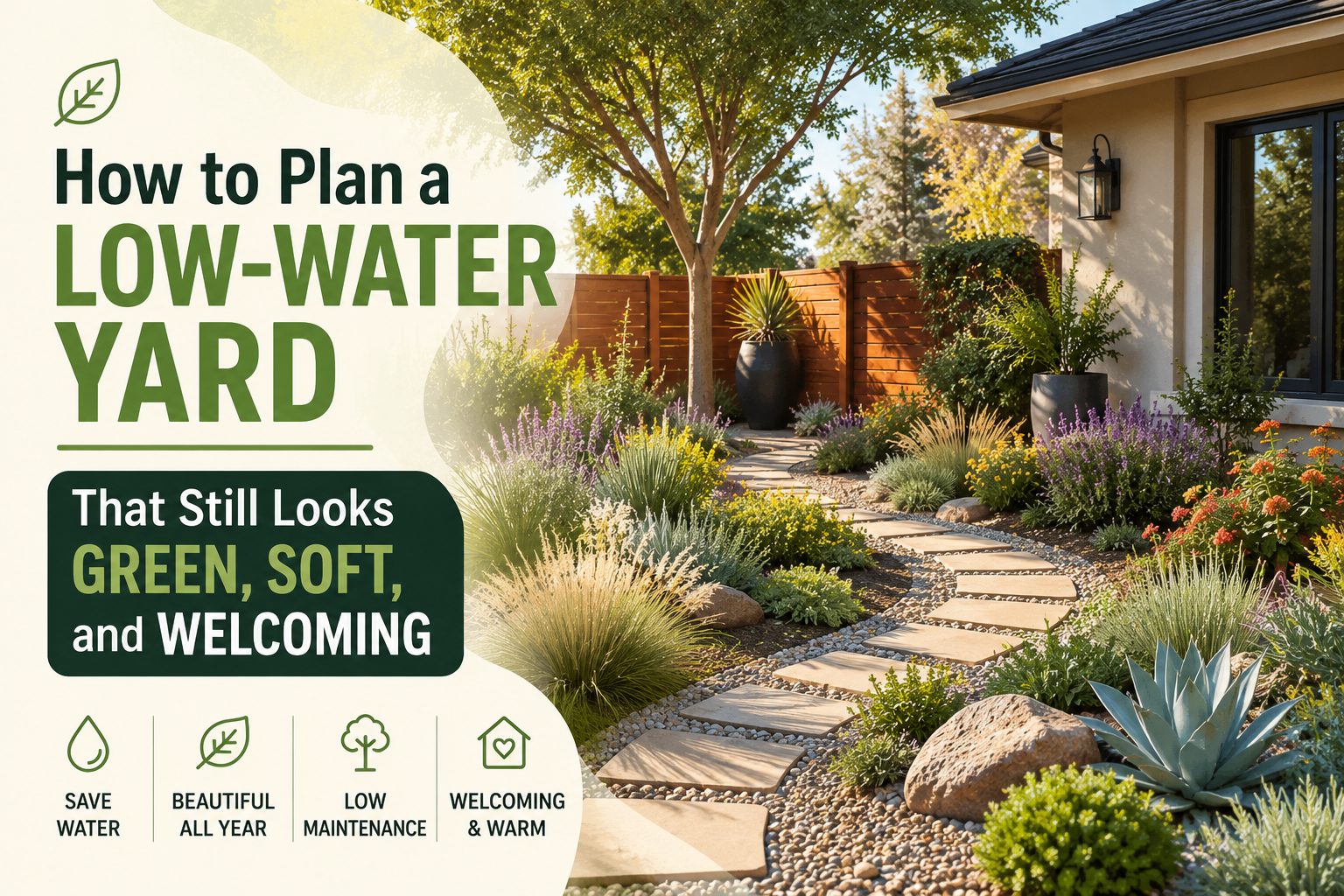
A low-water yard does not have to look dry, empty, or harsh. Many homeowners think water-wise landscaping means replacing everything with gravel, cactus, and a few hard plants, but that is only one style. With the right design approach, a low-water yard can still feel green, soft, shaded, colorful, and inviting.
The goal is not to remove life from the landscape. The goal is to use water more intelligently. That means choosing the right plants, improving soil health, grouping plants by water needs, using mulch, reducing thirsty lawn areas, and designing the space so every part feels intentional. If you are planning a more sustainable outdoor space, you can also explore iScape’s guide on eco-friendly landscape ideas for a sustainable garden.
Whether you are dealing with summer heat, water restrictions, rising utility costs, or simply want a more sustainable yard, this guide will help you plan a low-water landscape that still feels beautiful and welcoming.
Start With a Clear Yard Plan
Before removing grass or buying drought-tolerant plants, take time to study your yard. A low-water landscape works best when it is planned around how the space is used, not just how it looks. Walk around your yard and notice:
- Which areas get full sun all day
- Which areas stay shaded
- Where water naturally collects
- Where soil dries out quickly
- Which parts of the lawn you actually use
- Where you want privacy, seating, color, or pathways
- Which views you want to improve or hide
This first step helps you avoid random planting. For example, a sunny front yard may need heat-tolerant plants and mulch, while a shaded side yard may need groundcovers or stepping stones instead of lawn. A backyard seating area may need soft greenery around it to feel comfortable, while a narrow side yard may work better with gravel, pavers, and low plants.
A low-water yard should still support your lifestyle. If you need play space, keep a smaller lawn or use a durable lawn alternative. If you want curb appeal, focus greenery near the entryway. If you want a peaceful backyard, use layered plants, shade, and texture to make it feel relaxing. If you are not sure where to begin, this iScape blog on using a landscaping app when you do not know where to start can help you think through your space before making changes.
Reduce Lawn, But Do Not Remove All Softness
Traditional grass lawns usually need frequent watering, mowing, and maintenance. Reducing lawn is one of the easiest ways to create a low-water yard, but the goal should not be to make the whole yard hard or bare.
Instead of removing every soft surface, think about where lawn still makes sense. A small patch of grass near a patio, a play area for kids, or a green strip near the front entry can still add comfort and beauty. The key is to make lawn purposeful instead of using it as default ground cover everywhere. You can replace unused lawn areas with:
- Drought-tolerant planting beds
- Mulched garden areas
- Gravel paths
- Native grasses
- Groundcovers
- Pavers with plants between them
- Seating areas
- Rock gardens with soft planting
- Low-water meadow-style plants
This approach keeps the yard visually green while reducing the amount of water needed. It also makes the design more interesting because the yard has different zones instead of one large, flat lawn.
Choose Plants That Look Soft, Not Stiff
Plant selection is the biggest difference between a low-water yard that feels warm and one that feels harsh. Many drought-tolerant plants have soft textures, rounded shapes, colorful blooms, and flowing movement. You do not have to rely only on sharp or desert-style plants. Look for plants that offer:
- Fine leaves
- Soft grasses
- Rounded shrubs
- Seasonal flowers
- Silver or blue-green foliage
- Fragrant herbs
- Low-growing groundcovers
- Plants that move gently in the wind
Ornamental grasses are especially useful in low-water yards because they add softness and movement. Compact shrubs can provide structure without needing constant watering. Flowering perennials can bring color while still being more efficient than high-maintenance annual beds.
For more plant-selection guidance, read iScape’s blog on how to choose the right plants for sun, shade, soil, and space.
When choosing plants, match them to your local climate. A plant that is low-water in one region may struggle in another. The best choices are usually plants suited to your area’s heat, rainfall, soil, and winter conditions.
Also check the mature size before planting. Low-water plants often need good spacing and airflow. If planted too close together, they can become crowded, messy, or unhealthy. A well-spaced planting design may look simple at first, but it fills in naturally over time.
Group Plants by Water Needs
One of the smartest low-water landscaping methods is hydrozoning. This simply means grouping plants with similar water needs together. For example, plants that need more regular watering should be placed in one area, such as near the patio, entryway, or a small garden bed. Very drought-tolerant plants can go in drier zones farther from the house or along sunny edges.
This matters because mixing thirsty plants with drought-tolerant plants often leads to problems. If you water the whole bed often, the drought-tolerant plants may suffer from too much moisture. If you water less, the thirsty plants may decline. A simple low-water yard can have three zones:
Low-Water Zone
This area includes drought-tolerant shrubs, ornamental grasses, native plants, gravel, mulch, and low-maintenance planting beds. It usually needs the least irrigation once established.
Moderate-Water Zone
This area may include flowering plants, small lawn sections, or plants that need occasional watering during hot weather. It works well near patios, walkways, and front entries where you want more visual impact.
Functional Water Zone
This is where water use is most justified, such as a small lawn for kids, pets, or outdoor gathering. The area should be limited and intentional.
By grouping plants properly, you reduce waste and make watering easier to manage. For more sustainable planning ideas, you can refer to eco-friendly landscape ideas, which cover plant grouping, soil improvement, and water-conscious garden planning.
Use Mulch to Keep the Yard Cooler and Healthier
Mulch is one of the most important features in a low-water yard. It helps soil hold moisture, protects plant roots from heat, reduces weeds, and gives planting beds a clean finished look. Organic mulch, such as bark, shredded wood, composted mulch, or leaf mulch, works well around many plants because it gradually improves soil as it breaks down. Gravel or stone mulch can work in some areas, especially with heat-tolerant plants, but it can also make the yard feel hotter if overused.
For a softer and more welcoming design, use mulch in a way that supports the plants instead of replacing them. A bed with only rocks can feel dry and unfinished, while a bed with mulch, layered plants, and a clear border can feel natural and warm. Mulch is especially useful around:
- Trees
- Shrubs
- Flowering perennials
- Walkway edges
- Patio borders
- Front yard planting beds
- Areas where lawn has been removed
Avoid piling mulch directly against plant stems or tree trunks. Leave a small gap so the plant can breathe and avoid rot.
Add Shade Where Possible
Shade plays a major role in low-water landscaping. A shaded yard loses moisture more slowly, feels cooler, and is more comfortable to use during hot months. If your yard is exposed to strong sun, consider adding shade through:
- Small trees
- Larger shrubs
- Pergolas
- Trellises
- Vines
- Covered seating areas
- Shade sails
- Layered planting around patios
Trees are especially valuable because they make the landscape feel established and comfortable. However, they should be chosen carefully. Pick trees that fit the size of your yard and do not have aggressive roots near foundations, driveways, walkways, or underground utilities.
Even partial shade can make a big difference. A seating area with a small tree nearby will feel more inviting than a fully exposed patio. A front walkway with layered planting and shade will feel softer than a bare path surrounded by hot pavement.
Use Hardscape Carefully
Hardscape includes patios, walkways, stepping stones, gravel areas, retaining walls, edging, and other non-plant materials. In a low-water yard, hardscape is helpful because it reduces the amount of irrigated space. But too much hardscape can make a yard feel hot, flat, and unwelcoming. The key is balance. Use hardscape to create structure, then soften it with plants. For example:
- Add low plants along walkway edges.
- Use groundcovers between stepping stones.
- Place grasses near gravel areas.
- Add shrubs around patios.
- Use curved beds to soften straight paths.
- Mix stone with greenery instead of using stone alone.
A low-water yard should still feel alive. Hardscape gives the yard shape and function, while plants bring comfort, color, and softness.
Create Green Focal Points
If you want your low-water yard to feel green and welcoming, focus greenery where it has the most visual impact. You do not need every inch of the yard to be lush. You need the right areas to feel alive. Good places for green focal points include:
- Around the front door
- Along the main walkway
- Near the driveway entrance
- Around a patio or seating area
- Beneath windows
- Around a mailbox
- Near garden walls or fences
- At the center of a front yard bed
Use a mix of evergreen shrubs, soft grasses, flowering plants, and groundcovers in these areas. This helps the yard feel full and fresh without requiring high water use everywhere. Evergreen plants are especially useful because they keep the yard looking green through more of the year. Flowering plants can then be added for seasonal color.
A strong focal point can make the whole yard feel more designed. For example, a low-water front yard with a clean walkway, soft planting near the entry, and a small ornamental tree can feel much more welcoming than a large lawn with no structure.
Improve the Soil Before Planting
Low-water landscaping is not only about plant choice. Soil quality also matters. Healthy soil holds moisture better, supports stronger roots, and helps plants survive dry periods. Before planting, check your soil. Is it sandy and fast-draining? Heavy and compacted? Rocky? Poor soil can make even drought-tolerant plants struggle. To improve soil, consider:
- Adding compost where appropriate
- Loosening compacted soil before planting
- Avoiding heavy foot traffic in planting beds
- Using mulch to protect soil
- Choosing plants that match your soil type
- Improving drainage in areas where water collects
Be careful not to over-amend soil for plants that prefer lean, dry conditions. Some drought-tolerant plants do not need rich soil. The goal is to create soil conditions that match the plants you want to grow. Good soil preparation helps plants establish faster. Once plants are established, they usually need less frequent watering.
Water Deeply, Not Constantly
A low-water yard still needs water, especially during the first growing season. New plants need time to develop strong roots. The mistake many homeowners make is watering lightly every day, which encourages shallow roots. Instead, water deeply and less often when possible. Deep watering helps roots grow downward, making plants more resilient during dry weather. A smart watering plan should consider:
- Plant type
- Soil type
- Sun exposure
- Season
- Local rainfall
- Plant age
- Mulch coverage
Drip irrigation is often a good option for low-water yards because it delivers water near the root zone with less waste. Soaker hoses can also work in some planting beds. Sprinklers are usually less efficient for mixed planting areas because they water everything the same way. Once plants are established, many low-water landscapes need far less irrigation than traditional lawns. However, they still need occasional attention during extreme heat or long dry periods.
Make the Yard Feel Welcoming With Texture and Layers
A low-water yard looks best when it has layers. Without layering, the design can feel flat or unfinished. Layering means combining plants and materials in a way that creates depth. A simple layered design may include:
- Groundcovers near the front
- Flowering plants or grasses in the middle
- Shrubs behind them
- A small tree or taller feature in the background
- Mulch or gravel to finish the bed
- A clean border to define the shape
Texture is also important. Use a mix of fine, soft, rounded, upright, and spreading forms. This creates a natural, full look without needing high-water plants. For example, a low-water planting bed could include soft ornamental grasses, rounded evergreen shrubs, lavender-like flowering plants, and a small tree. The result feels green and inviting, even if the plants are drought-tolerant. Color does not have to come only from flowers. Foliage colors like silver, blue-green, deep green, burgundy, and golden tones can make the yard interesting year-round.
Use iScape to Visualize a Low-Water Yard Before You Build
Planning a low-water yard can feel difficult because you are balancing many things at once: plant choices, lawn reduction, hardscape, mulch, shade, and overall curb appeal. It can be hard to imagine how the yard will look after changes are made. This is where iScape can help. With iScape, homeowners can visualize different landscape ideas before starting the project. You can test where to keep lawn, where to add planting beds, how to place pathways, and how different plant groupings may look around your home. For a low-water yard, iScape can help you:
- Compare lawn replacement ideas
- Plan soft planting around patios and walkways
- Test different plant layouts
- Visualize mulch, gravel, and hardscape areas
- Create green focal points near the entry
- Share design ideas with family or landscapers
- Avoid costly changes before work begins
Instead of guessing, you can preview the design and make sure the yard still feels green, soft, and welcoming before you start planting or removing lawn. You can also download iScape to start testing your own yard ideas visually.
Common Low-Water Yard Mistakes to Avoid
A low-water yard can be beautiful, but it needs the right planning. Avoid these common mistakes:
Removing Too Much Greenery
A yard with only gravel and a few plants can look unfinished. Keep greenery in key areas to maintain softness and curb appeal.
Choosing Plants Only Because They Are Drought-Tolerant
Drought-tolerant plants still need to match your soil, sun exposure, and climate. Choose plants that fit your specific yard.
Planting Without a Layout
Random planting can make the yard feel messy. Plan plant groups, pathways, borders, and focal points before buying materials.
Ignoring Shade
Shade can reduce heat and water stress. Add trees, shrubs, or shade structures where they make sense.
Overusing Rock
Rock can be useful, but too much of it can make the yard hotter and less welcoming. Balance stone with plants and mulch.
Watering New Plants Too Little
Low-water plants still need regular watering while they establish. Once roots are stronger, watering can usually be reduced.
Final Thoughts
A low-water yard does not have to feel dry or plain. With thoughtful planning, it can look green, soft, and welcoming while using less water than a traditional lawn-heavy landscape. Start by understanding your yard’s sunlight, soil, and daily use. Reduce lawn where it is not needed, choose soft-looking drought-tolerant plants, group plants by water needs, use mulch, add shade, and create green focal points in the areas people notice most. With the help of visual planning tools like iScape, you can test your ideas before making changes and design a yard that feels beautiful, practical, and easier to maintain.
FAQs
What is a low-water yard?
A low-water yard is a landscape designed to need less irrigation than a traditional lawn-heavy yard. It often uses drought-tolerant plants, mulch, efficient watering, reduced lawn areas, and smart plant grouping.
Can a low-water yard still look green?
Yes. A low-water yard can still look green by using evergreen shrubs, ornamental grasses, groundcovers, native plants, and green focal points near walkways, patios, and entry areas.
What can I use instead of grass in a low-water yard?
You can use drought-tolerant planting beds, groundcovers, mulch, gravel paths, stepping stones, native grasses, pavers, or small garden areas. You can also keep a smaller lawn where it is most useful.
How do I make a drought-tolerant yard look soft?
Use plants with fine leaves, rounded shapes, soft grasses, layered planting, flowering perennials, and warm natural materials. Avoid relying only on rock or sharp-looking plants.
Can iScape help plan a low-water landscape?
Yes. iScape can help you visualize lawn replacement ideas, plant placement, walkways, mulch areas, and hardscape before starting the project. This makes it easier to plan a low-water yard that still looks attractive and welcoming.