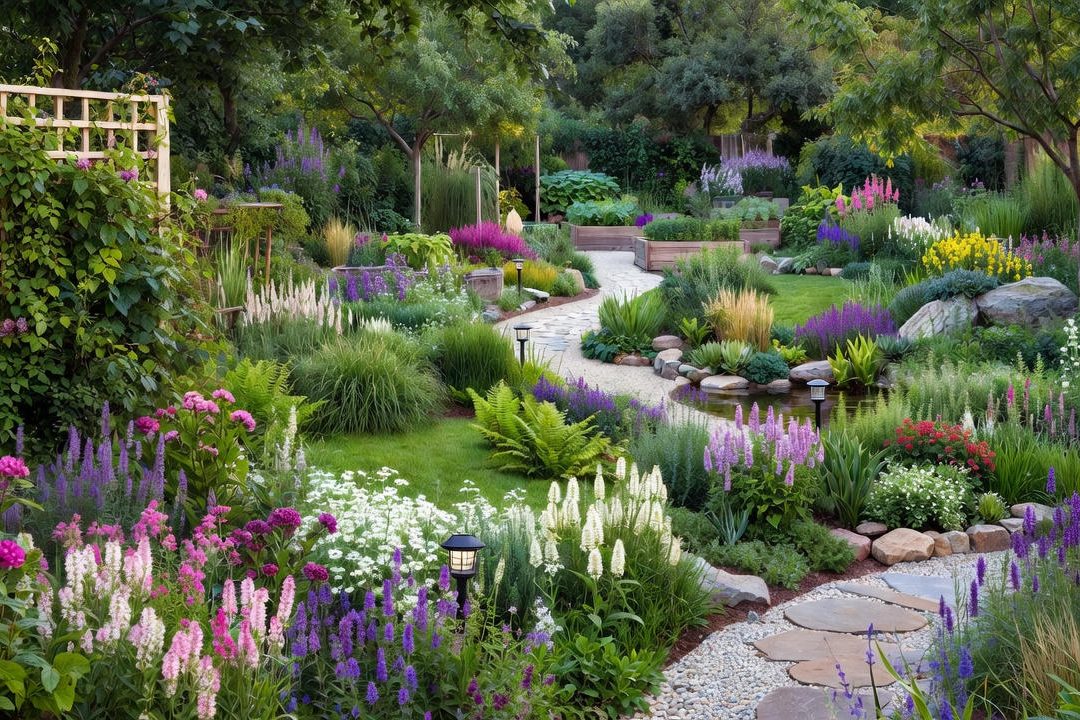
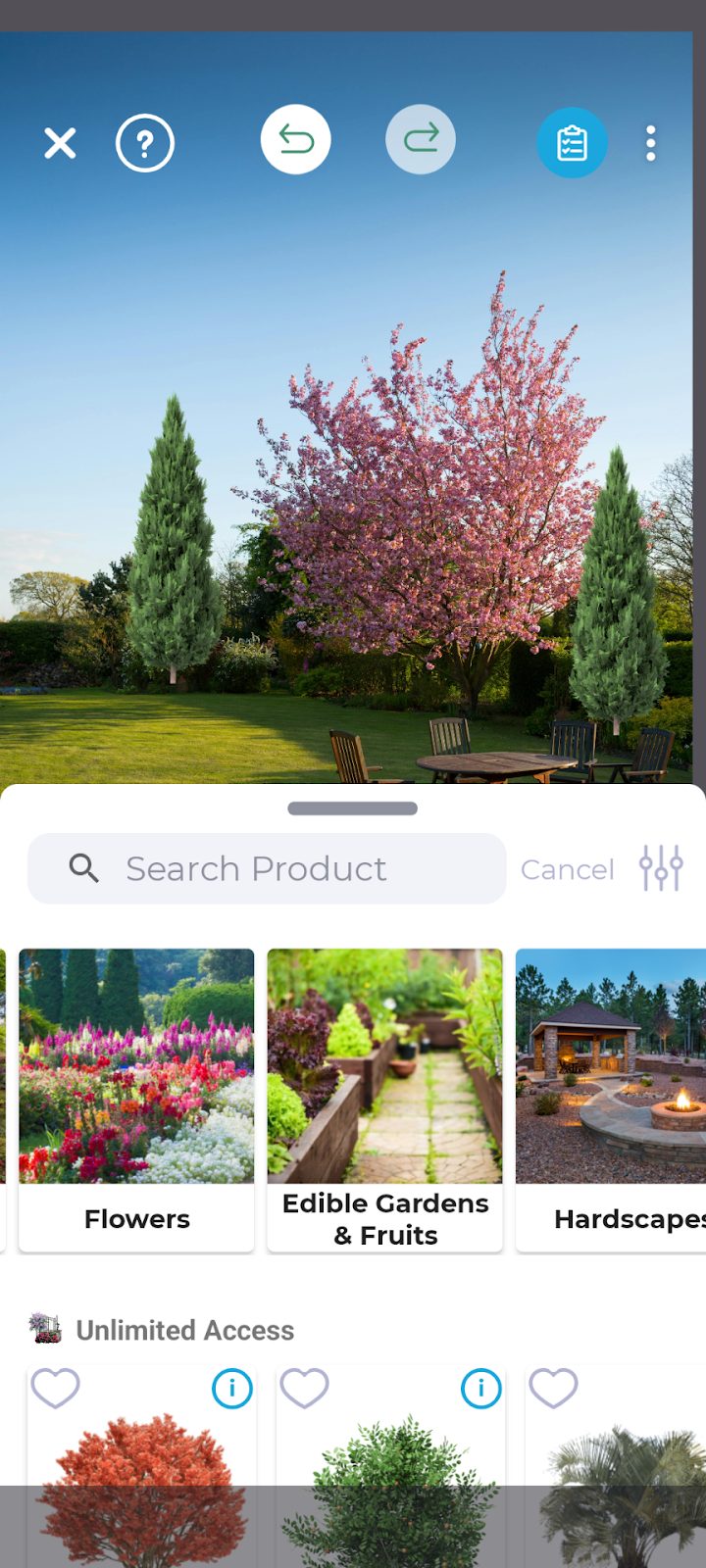
A sustainable garden should feel beautiful to live in and easy to care for. You do not need a full redesign to make a real impact. Small choices add up when they save water, build soil, and support wildlife. The smartest first step is to plan the layout before you buy anything. Take a photo of your yard, think through sun and shade, and map where paths, beds, and water move. If you want a quick visual, open the iScape app and drag and drop plants, paths, and features onto a photo of your own space. You can compare versions, check spacing, and turn the final layout into a simple shopping list so you buy once.
- Build a native plant backbone
Choose a small set of regionally native trees, shrubs, and grasses to form the structure of your garden, because natives are adapted to local climate and soils, require less supplemental water once established, and support birds, butterflies, and beneficial insects. Start with three to five anchor species, repeat them in groups for visual calm, and place them where they will reach mature size without constant pruning. Before you plant, take a photo of your yard and map sun, shade, and wind so each native goes in the right microclimate. In iScape, place these anchors first and build the rest around them.
Download iScape on the App Store or Google Play Store today and start designing your front yard now!
- Group plants by water needs (hydro-zoning)
Reduce water use and plant stress by creating zones that share similar irrigation schedules. Keep drought-tolerant plants together on one line and moisture-loving plants together on another, so you are never overwatering one group to keep another alive. Draw the zones on your layout, note hours of direct sun for each, and run separate valves or timers so each zone gets only what it needs during the season. - Improve soil health with compost and living roots
Healthy soil holds moisture, feeds roots, and prevents runoff, so add one to two inches of finished compost to beds in spring or fall and cover it with mulch to lock in water. Keep living roots in the soil for more months of the year with cover crops or densely planted perennials, because roots exude sugars that feed soil microbes and build structure naturally. Test a small area first to see how much compost improves infiltration and adjust your plan as needed. - Replace unused lawn with purposeful groundcovers or meadows
Lawns consume water and fuel without providing habitat, so keep grass only where it has a job, such as play space or pet traffic, and convert the rest to native groundcovers, a low meadow mix, or a gravel sitting pad. Pick species that match your sun and soil, mow meadows only once or twice a year outside bloom periods, and edge new areas with a clear line so they look maintained and intentional from the street. - Install drip irrigation with a weather-aware controller
Drip irrigation delivers water directly to the root zone, which reduces evaporation and leaf disease while also cutting weed growth between plants. Use a pressure reducer and filter at the faucet, run a main line along the bed edge, and place emitters at or just beyond the plant’s drip line, then connect to a smart controller that pauses watering during rain or cool spells. Walk the system at the start of each season to flush lines, replace clogged emitters, and confirm even distribution. - Capture and slow rainwater on site
Turn downspouts into resources by directing them into shallow swales, dry creek beds, or rain gardens planted with moisture-tolerant natives, which reduces runoff and recharges soil moisture for free. Shape the basin with a gentle slope, line high-flow entries with rock to prevent erosion, and design for complete drainage within 24 to 48 hours so mosquitoes cannot breed. Mark overflow paths in your plan so excess water has a safe way out during heavy storms. - Choose permeable paths and patios that let water soak in
Hard, non-porous surfaces push stormwater into streets, so favor gravel, decomposed granite, permeable pavers, or stepping stones with planted or gravel joints. Set a compacted but permeable base that drains well, check slopes so water moves away from foundations, and use simple edging that keeps materials contained without creating a barrier to infiltration. Permeable surfaces also reduce heat glare and make evening spaces more comfortable. - Mulch correctly to save water and protect soil life
A two to three inch layer of natural mulch reduces evaporation, buffers soil temperatures, and suppresses weeds, but it should never be piled against trunks or crowns where it can trap moisture and cause rot. Keep a small mulch-free ring around stems, top up thin areas annually, and choose materials that fit your climate, such as shredded bark in temperate zones or gravel mulch in very arid regions where organic mulches can blow away. - Add small habitat features and skip broad-spectrum pesticides
Create a layered habitat with a shallow birdbath that includes a stone for perches, a log or twig bundle in a quiet corner for insects, and a mix of nectar, pollen, and berry plants that feed wildlife through the seasons. Manage pests by improving plant health, encouraging predators such as lady beetles and lacewings, and using targeted treatments only when necessary, since broad-spectrum chemicals remove the beneficial insects that keep problems in check. - Plant the right tree in the right place for long-term climate benefits
Trees provide shade, cut cooling costs, store carbon, and slow wind, but only if the mature size and root behavior match the site. Select species that thrive in your region, plant on the west or south side to block late-day sun, check clearances for sidewalks and power lines, and water deeply during the first two growing seasons to set resilient roots. Prune for structure rather than size control, because a well-placed, right-sized tree needs minimal corrective work later.
Plan it first in iScape
Take a clear photo of your yard from the spot you see most. In the iScape app, drag in native plant groups, a permeable path, a small rain garden, and a drip line icon to plan zones. Resize elements until the layout feels balanced and the main route is clear. Save two or three versions and compare them side by side. When you pick a favorite, turn it into a simple materials list so you shop once and avoid returns. Download iScape on the App Store or Google Play Store today and start designing your front yard now!

FAQs
How do I pick the right native plants?
Start with your region and sunlight hours. Choose three to five natives that match your sun and soil. Plant in groups so they read from a distance and support more insects.
Will a rain garden attract mosquitoes?
A well-built rain garden drains within 24 to 48 hours. Mosquitoes need longer to breed. Use coarse mulch and keep water moving to prevent standing pools.
Is drip irrigation hard to install?
Most kits are simple. You connect a pressure reducer and filter to the hose bib, run a main line along the bed, and punch in emitters near plant roots. Test flow and adjust as plants grow.
Can I keep some lawn and still be sustainable?
Yes. Keep the lawn where it has a job, like play or pets. Shape it simply for easy mowing. Replace unused strips with groundcovers or native beds.
How does planning in iScape help the environment?
You reduce buying mistakes and returns, which cuts waste. You can test lawn reductions, path changes, and plant groupings on a photo of your yard, then build a focused shopping list. The result is less over-planting, less water use, and a layout that works the first time.