


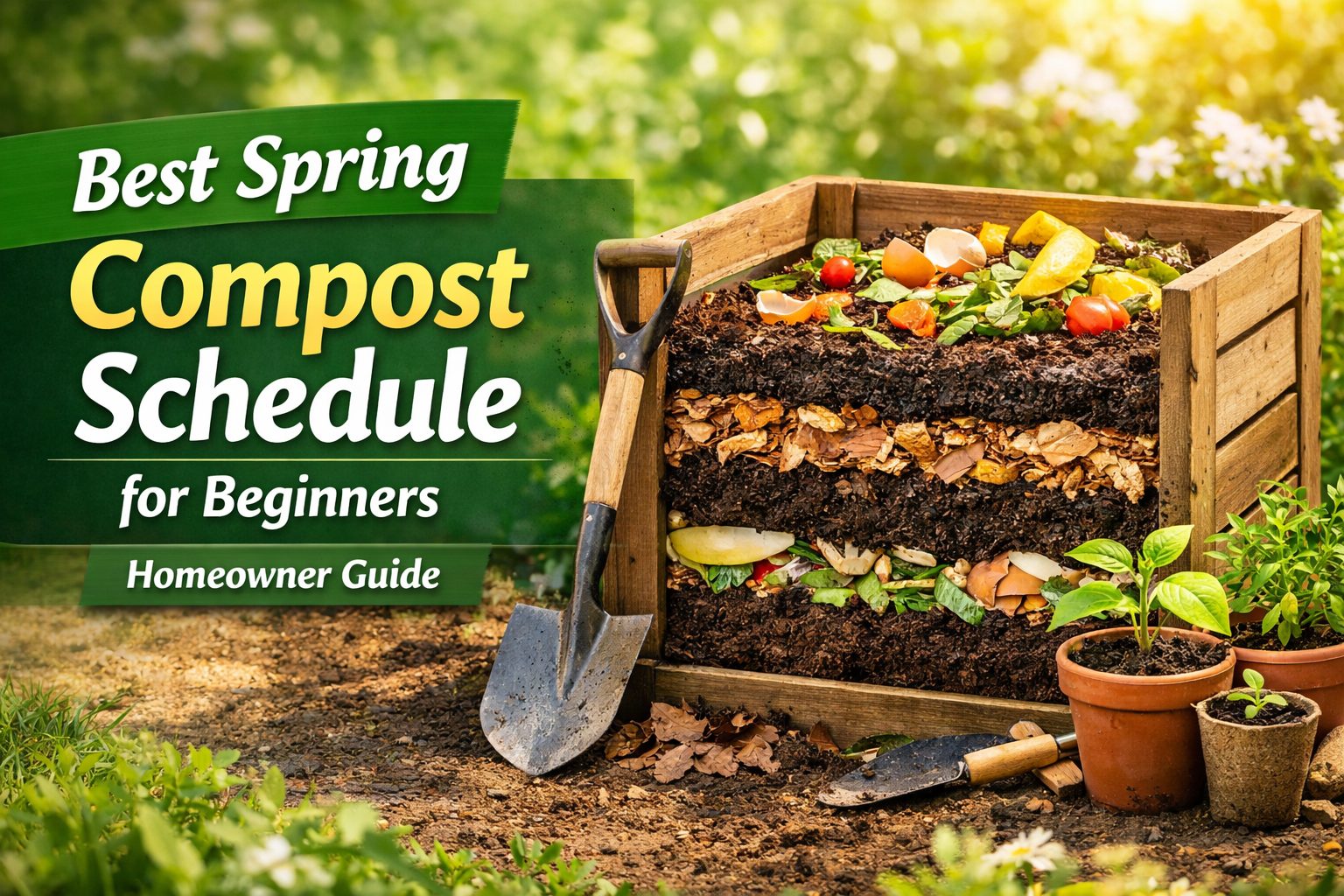
Spring is the perfect time for homeowners to start composting. As gardens wake up and yard cleanup begins, there is a steady supply of organic waste like dry leaves, grass clippings, and kitchen scraps. Instead of sending this waste to the landfill, composting turns it into nutrient-rich soil that improves garden health and plant growth.
For beginners, composting may sound complicated. Many homeowners wonder how often they should add materials, when to turn the pile, and how long it takes before compost is ready to use.
The truth is that composting can be very simple. By following a basic spring compost schedule, homeowners can create high-quality compost with minimal effort. This guide explains the ideal schedule, maintenance tips, and how to plan compost use in your landscaping.
Why Spring Is the Best Time to Start Composting
Spring is ideal for composting because everything naturally starts moving again. Warmer temperatures wake up the microorganisms that break down organic matter. Homeowners also have more compostable materials available in spring than in most other seasons. You can also naturally generate compost materials during spring cleanup, including:
- Fallen leaves from winter
- Yard trimmings and garden waste
- Grass clippings from the first lawn mowing
- Kitchen scraps from fruits and vegetables
Starting compost in spring ensures you will have finished compost ready by mid or late summer, just when plants need extra nutrients.
What Compost Actually Does for a Home Landscape
For homeowners, compost is more than a way to get rid of waste. It is one of the most useful soil-building materials you can make at home. Finished compost improves the structure of the soil, helps it hold moisture better, and supports beneficial microbes that plants need. In practical terms, compost can help your yard in several ways:
- It can loosen heavy soil so roots grow more easily. It can help sandy soil retain water for longer.
- It can reduce the need for frequent watering in planting beds. It can improve the overall health and appearance of flowers, shrubs, and vegetable plants.
- It also gives homeowners a productive use for common organic waste instead of throwing it away.
For beginners, this is what makes composting worth the effort. You are not just managing scraps. You are creating something valuable for your lawn and landscape.
Compost Basics Every Beginner Should Know
A healthy compost pile depends on three simple elements.
1. Green Materials (Nitrogen)
These help feed the microorganisms responsible for decomposition. Examples include:
- Fruit and vegetable scraps
- Coffee grounds
- Grass clippings
- Fresh plant cuttings
2. Brown Materials (Carbon)
These provide structure and balance nitrogen-rich materials. Common brown materials include:
- Dry leaves
- Shredded paper
- Cardboard
- Straw
- Wood chips
A healthy compost pile typically uses two or three parts brown materials for every one part green materials.
3. Oxygen and Moisture
Compost needs oxygen to break down materials efficiently. Turning the pile adds air and keeps decomposition active. Moisture is equally important. Compost should feel damp like a squeezed sponge.
A Simple Spring Compost Schedule for Beginners
You do not need to manage compost every day. A weekly schedule works well for most beginner compost systems.
Week 1: Build Your Compost Pile
Start by choosing a location with partial shade and good drainage. Create your compost pile using layers.
- Begin with small sticks or straw to help airflow.
- Add a thick layer of brown materials like dry leaves.
- Add a layer of green materials such as vegetable scraps or grass clippings.
- Lightly water the pile.
- Repeat layers until the pile reaches about three feet tall.
This layered structure allows microbes to begin breaking down materials quickly.
Week 2: Add New Materials
During the second week, decomposition begins. Tasks for this week include:
- Add new kitchen scraps
- Add yard waste from garden cleanup
- Cover greens with brown materials
- Check that the pile stays moist
If the pile smells unpleasant, it usually means too many greens were added. Simply add more brown materials.
Week 3: Turn the Compost Pile
Turning the compost adds oxygen and speeds up decomposition. Use a garden fork or shovel to mix the pile by moving outer materials toward the center. Turning the compost every few weeks helps keep microbes active and prevents odors.
Week 4: Maintain the Compost
By week four, materials should begin breaking down and the pile will shrink slightly. During this stage:
- Continue adding kitchen scraps
- Maintain the green and brown balance
- Turn the pile again
- Monitor moisture levels
With regular maintenance, compost will continue breaking down steadily.
A Simple Monthly Spring Compost Routine
After the first month, beginners usually do best with a light, practical routine rather than a rigid daily system. Add kitchen scraps a few times a week. Add browns whenever fresh greens go in. Check moisture weekly. Turn the pile every two to three weeks. Remove or break up large pieces that are taking too long to decompose. This kind of schedule is manageable and keeps the compost pile active without turning it into a high-maintenance project.
Signs Your Compost Pile Is Healthy
A beginner compost pile does not have to look perfect. What matters is whether it is functioning well. A healthy pile usually smells earthy, not rotten. It may feel warm in the center, especially after fresh material is added. The pile slowly shrinks over time. Leaves soften, food scraps disappear, and the material becomes darker and crumbly. If you are seeing these signs, the process is working.
How To Use Compost in Landscaping
Finished compost improves soil structure and plant health across many parts of the yard. You can commonly use compost for:
- Flower beds
- Vegetable gardens
- Lawn soil improvement
- Tree planting
- Container gardening
Compost helps soil retain moisture, improves nutrient levels, and encourages beneficial soil organisms.
Plan Your Compost Use with the iScape App
Many homeowners struggle to visualize where compost will make the biggest difference in their yard. Planning soil improvements in advance can help you make better landscaping decisions. The iScape app allows users to design their yard layouts and test landscaping ideas before starting a project. Using iScape, you can:
- Visualize garden beds and landscape improvements
- Plan soil preparation areas where compost will be applied
- Experiment with planting layouts and yard upgrades
- Design a healthier, more sustainable outdoor space
Instead of guessing where to improve soil, you can preview their landscaping ideas and plan compost use more strategically.
Try iScape Before Your Next Landscaping Project
If you want to improve your yard this spring, start by planning your landscape layout first.
Download iScape on the App Store or Google Play Store to visualize landscaping upgrades and create smarter garden plans before you start digging.
Common Spring Compost Problems and How to Fix Them
Beginners often run into a few common issues, but most of them are easy to correct. If the pile smells bad, it usually has too many greens or too much moisture. Add dry browns like shredded cardboard or leaves, then turn the pile to bring in oxygen.
If the pile is not breaking down, it may be too dry, too small, or lacking enough green material. Add some moisture, mix in fresh greens, and make sure the pile has enough mass to hold heat. If flies or pests show up, exposed kitchen scraps may be the problem. Bury food scraps in the center of the pile and always cover them with browns.
If the pile looks matted, especially from grass clippings, turn it more thoroughly and mix in bulkier dry material. These simple adjustments can quickly improve the pile without forcing you to start over.
When Will Your Compost Be Ready?
Spring compost piles typically take two to four months to fully break down. Finished compost will look dark, crumbly, and soil-like with an earthy smell. Once ready, it can be added directly to garden beds or mixed into soil before planting.
Final Thoughts
Starting compost in spring is one of the easiest ways homeowners can reduce waste and improve soil health naturally. With a simple weekly schedule and the right balance of materials, beginners can produce nutrient-rich compost in just a few months. The key is consistency. Even a small compost pile can produce valuable soil that supports healthier plants and a more vibrant garden throughout the year.
Use iScape to visualize your spring landscaping ideas, plan planting areas, and make better decisions before you buy materials or begin yard work. If you want a more organized and attractive outdoor space this season, start with a plan and build from there.
Download iScape on the App Store or Google Play Store to visualize landscaping upgrades and create smarter garden plans before you start digging.
FAQs
How often should beginners turn compost in spring?
Most compost piles should be turned every two to three weeks. Turning adds oxygen and speeds up the decomposition process.
What is the best ratio for compost materials?
A good rule is two to three parts brown materials and one part green materials.
Can homeowners compost kitchen scraps?
Yes. Fruit and vegetable scraps, coffee grounds, and tea bags are excellent compost materials.
How long does compost take to break down?
Compost usually takes two to four months depending on temperature, materials, and maintenance.
What should not go into compost?
Avoid meat, dairy, oily foods, diseased plants, and pet waste because they can attract pests or create odors.


