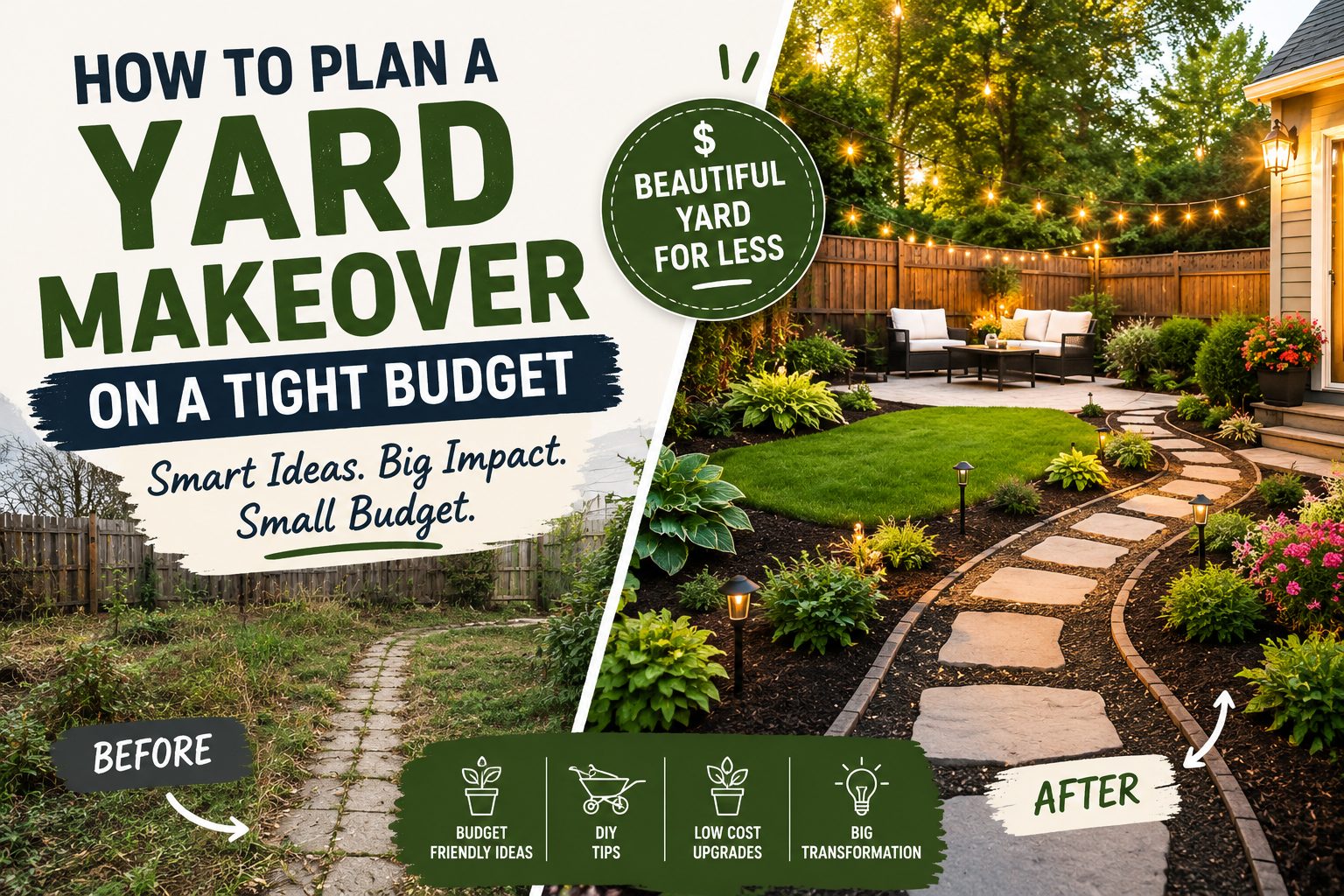
A yard makeover does not have to mean tearing everything out, hiring a full design team, or spending thousands on hardscaping. With the right plan, you can make your outdoor space look cleaner, more useful, and more welcoming without going over budget.
The key is to focus on the changes that create the biggest visual impact first. Instead of trying to redesign the whole yard at once, start with a clear goal, reuse what you already have, and make improvements in phases. A thoughtful budget-friendly makeover can still make your yard feel polished, intentional, and easier to maintain.
Start With One Clear Goal
Before you buy plants, mulch, pavers, lights, or furniture, decide what you want your yard makeover to accomplish. Many homeowners overspend because they start with random upgrades instead of a clear plan. Ask yourself what the yard needs most. Do you want better curb appeal? A more usable backyard? A cleaner entryway? More privacy? Less maintenance? A safer walkway?
Once you know the main goal, it becomes easier to spend wisely. For example, if curb appeal is the priority, focus on the front walkway, porch area, driveway edge, mailbox, and front planting beds. If you want a better backyard, start with one seating area, a simple path, shade, and lighting.
A tight budget works best when every upgrade supports the same purpose.
Look at What You Can Keep and Refresh
A budget-friendly yard makeover is not only about adding new things. It is also about improving what already exists. Existing shrubs, trees, patios, walkways, fences, planters, and furniture may not need to be replaced. They may only need trimming, cleaning, painting, staining, or better placement. Walk through your yard and decide what should stay, what can be improved, and what should be removed. Overgrown plants may only need pruning. An old patio may look better after cleaning, planters, and outdoor lights. A plain fence can feel more attractive with stain, climbing plants, or simple containers. This step helps you avoid unnecessary spending and gives you a clearer idea of where your budget should go.
Clean Up Before Spending Money
Cleanup is one of the cheapest and most effective parts of any yard makeover. Before buying anything new, remove weeds, dead plants, broken pots, unused furniture, fallen branches, and clutter. Then trim overgrown shrubs, define bed edges, mow the lawn, rake leaves, and clean hard surfaces. A messy yard can make you feel like you need a major redesign, but many spaces improve dramatically with basic cleanup and structure. Once the yard is clean, you can see what the space actually needs. This helps you avoid buying plants, decor, or materials that do not solve the real problem.
Focus on the Most Visible Areas First
When your budget is tight, do not spread it across the entire yard. A few finished areas will look much better than many half-finished ones. For a front yard, focus on the areas people notice first: the entry path, porch, front beds, driveway border, and lawn edges. Clean lines, fresh mulch, and a few healthy plants can make the whole home feel more cared for.
For a backyard, choose one main area to improve first. This could be a small seating corner, a fire pit area, a garden bed, or the view from your patio door. Once that zone feels complete, you can slowly improve the rest of the yard over time. For more front yard planning ideas, you can also explore iScape’s guide on designing front yard curb appeal.
Use Mulch for a Fast, Affordable Upgrade
Mulch is one of the easiest ways to make a yard look cleaner and more finished. It gives planting beds a fresh appearance, helps reduce weeds, protects plant roots, and keeps soil moisture more stable. Use mulch around shrubs, trees, flower beds, and foundation plantings. Keep it a few inches away from tree trunks and plant stems so moisture does not collect directly against them. Even if you only add a few new plants, fresh mulch can make the whole area look more complete. It is especially useful when you need a quick improvement without major landscaping work.
Add Clean Edging for a More Finished Look
Edging gives your yard structure. It separates lawn, mulch, gravel, paths, and planting beds so the space looks intentional instead of messy. You can use metal edging, plastic edging, brick, stone, wood, or a simple spade-cut edge. The material does not have to be expensive. What matters most is that the line looks clean and suits the style of your yard.
Start with the most visible edges first, such as the front walkway, driveway border, porch beds, or patio area. If you are improving the space around a driveway or walkway, planning landscaping around a driveway or walkway can help you think through borders, plant placement, and visibility.
Choose Fewer Plants, But Choose Better Ones
Buying too many plants without a plan can quickly waste money. Instead, choose fewer plants that offer stronger long-term value. Look for plants that fit your sun exposure, soil, climate, and maintenance level. Choose shrubs, perennials, ornamental grasses, or groundcovers that can provide color, texture, structure, or privacy.
Smaller plants are usually more affordable than mature ones. They may take longer to fill in, but they can save money and often establish well when planted correctly. To make smaller plants look more intentional, group them together instead of spreading them randomly around the yard.
- A simple budget planting plan works well:
- Use one or two anchor plants for structure.
- Add medium plants for color and fullness.
- Use groundcovers or mulch to cover empty space.
- Repeat the same plants in more than one area for a connected look.
- Repetition is important because it makes the yard feel designed, even when the plant list is simple.
Keep Water and Maintenance Costs in Mind
A low-cost makeover should not create high future costs. Avoid plants that need constant watering, trimming, fertilizing, or replacement. Choose hardy plants that suit your local conditions and can grow well with reasonable care.
You can also reduce maintenance by using mulch, groundcovers, native or climate-friendly plants, and simpler planting beds. If your goal is to create a yard that looks green without heavy watering, this iScape blog on planning a low-water yard that still looks green and welcoming is a helpful next read.
Create a Simple Path Instead of Expensive Hardscaping
You do not always need a full patio or paved walkway to improve your yard. Gravel, stepping stones, mulch paths, decomposed granite, or simple pavers can create movement and structure at a lower cost. A path can connect the driveway, gate, garden bed, shed, patio, or seating area. It can also protect grass from foot traffic and make the yard easier to use. Keep the design simple. Straight or gently curved paths are usually easier and cheaper to install than complicated shapes. Make sure the path is wide enough to walk comfortably and has a stable base so it lasts longer.
Use Containers for Quick Impact
Container plants are useful when you want an instant upgrade without changing the whole yard. They work well near front doors, patios, steps, balconies, gates, and seating areas. A pair of large planters near the entry can create more impact than several small pots scattered everywhere. You can also reuse old containers by cleaning or repainting them. Containers are especially helpful if your soil is poor, your yard is mostly paved, or you want seasonal color without redesigning the entire landscape.
Refresh Furniture, Lighting, and Decor
Small updates can make outdoor areas feel more inviting. Instead of buying all-new furniture, clean, repaint, or rearrange what you already have. Add cushions, an outdoor rug, planters, or string lights to make the space feel more complete.
Lighting can also make a big difference. Solar lights, battery lanterns, and string lights are affordable ways to brighten paths, steps, seating areas, and entry points. Avoid buying too much decor before the basic structure is finished. A clean layout, healthy plants, mulch, and defined edges usually add more value than random decorations.
Plan the Makeover in Phases
You do not need to complete the whole yard at once. A phased plan helps you stay within budget and avoid unfinished projects. Start with cleanup and repairs. Then add structure with edging, mulch, and paths. After that, add plants. Finish with lighting, furniture, containers, and decor. This approach lets your yard improve step by step while making sure every upgrade fits the bigger plan.
Use iScape to Test Ideas Before Buying
When your budget is limited, mistakes can become expensive. A landscape design app like iScape can help you preview different ideas before spending money on plants, materials, or outdoor features. You can test plant placement, path shapes, seating areas, garden beds, borders, and hardscape ideas before making purchases. This helps you compare options and choose the updates that will make the biggest difference.
If you are still exploring different layouts, this guide on trying multiple yard ideas using a landscape design app free can help you plan smarter before starting the project.
Avoid Common Budget Makeover Mistakes
Even a small yard project can become expensive without a plan. Avoid buying plants before checking sunlight, soil, and mature size. Do not start too many areas at the same time. Avoid mixing too many materials, because it can make the yard look busy. Fix drainage issues before adding new plants or hardscaping.
Also, do not spend most of your budget on decor before improving the basic structure. Clean beds, fresh mulch, defined edges, simple paths, and healthy plants will usually improve the yard more than decorative items alone.
Final Thoughts
Planning a yard makeover on a tight budget is about making smart choices. Start with one clear goal, clean up the space, reuse what you can, and focus on the most visible areas first. Fresh mulch, clean edging, simple paths, hardy plants, containers, lighting, and refreshed furniture can make a big difference without a full renovation.
The best approach is to plan before you spend. When you know what your yard needs and test your ideas in advance, your budget goes further and your makeover feels more intentional.
FAQs
What is the cheapest way to improve a yard?
The cheapest way to improve a yard is to clean it up, remove weeds, trim overgrown plants, define bed edges, and add fresh mulch. These simple changes can make the yard look cleaner and more finished.
How can I make my backyard look better on a small budget?
Focus on one area first. Create a small seating zone, add container plants, use gravel or mulch underfoot, and add simple lighting. A finished corner can make the whole backyard feel more usable.
What landscaping gives the best value for money?
Mulch, edging, hardy plants, groundcovers, gravel paths, and outdoor lighting usually offer strong value because they improve appearance and reduce maintenance.
Should I buy small plants or mature plants?
Small plants are usually better for a tight budget. They cost less and can grow into the space over time. Use grouping and repetition to make them look intentional from the start.
How do I avoid wasting money on a yard makeover?
Create a plan before buying anything. Set one main goal, focus on the most visible areas, reuse existing features, and preview your layout with a tool like iScape before purchasing plants or materials.