


When people choose plants for a landscape, flower color is often the first thing they notice. A homeowner may be drawn to purple salvia, white hydrangeas, red roses, or yellow daylilies and immediately start imagining how those colors will look together. Color is important, but it is rarely what determines whether a landscape feels well designed.
Plant height has a much greater influence on the structure, balance, and overall appearance of a yard. Height affects what you notice first, which plants remain visible, how the landscape connects to the house, how private or open a space feels, and whether the planting still looks intentional when flowers are no longer in bloom. For that reason, a strong planting design usually begins with height, form, spacing, and mature plant size. Flower color should come later.
Plant Height Creates the Structure of the Landscape
A planting bed is not a flat arrangement of flowers. It is a three-dimensional space in which every plant occupies a certain amount of vertical and horizontal area.
A 15-foot ornamental tree creates a completely different effect from a three-foot shrub, even if both plants produce flowers of the same color. The tree may create shade, frame the house, provide privacy, and establish a focal point, while the shrub may help create a transition between taller plants and the lower parts of the planting bed. This is why plant height plays such an important role in landscape structure.
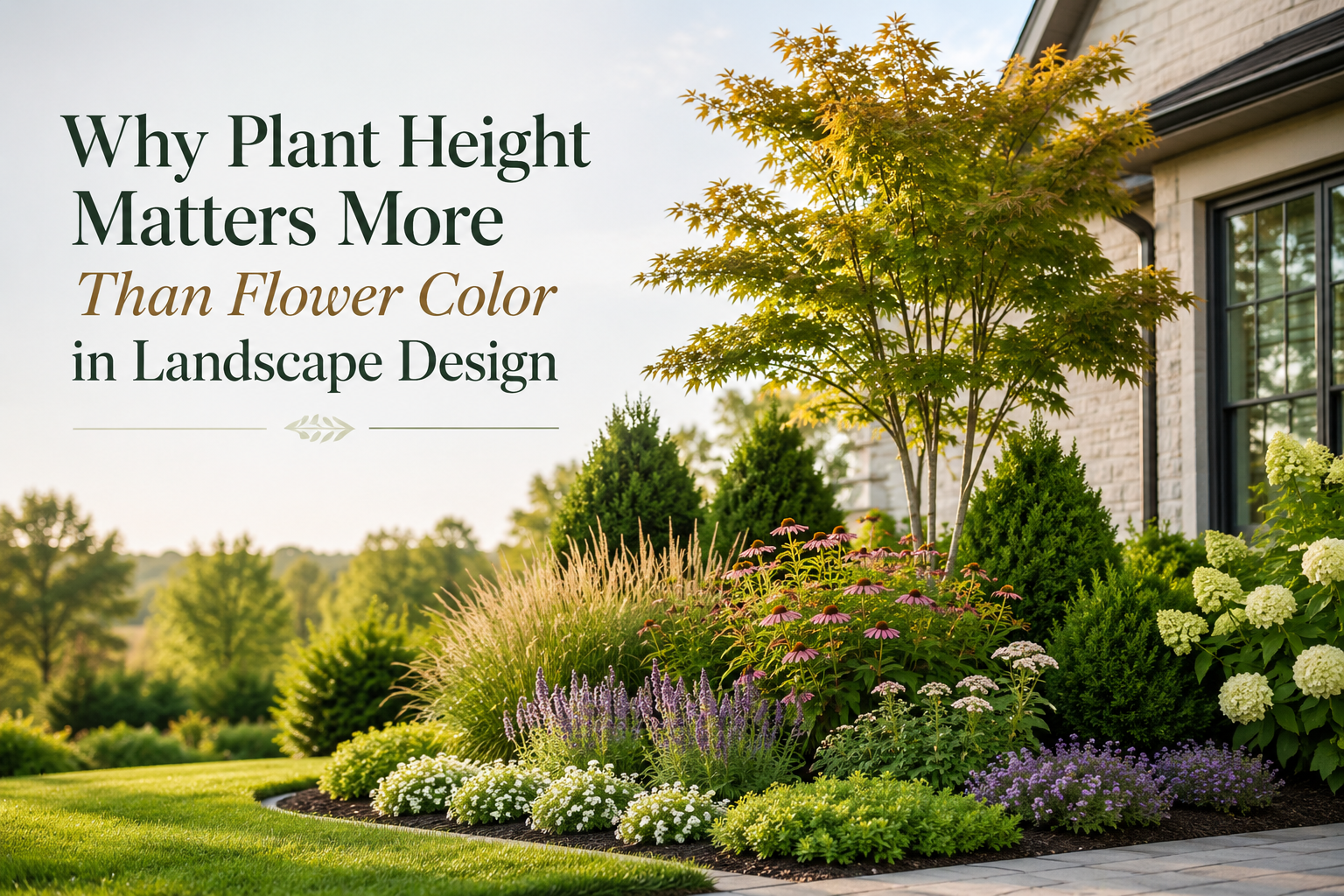
A well-planned landscape might include small trees at the highest level, larger shrubs below them, medium-height perennials through the middle of the bed, and low-growing plants or groundcovers along the edges. This type of layered planting helps trees, shrubs, flowers, grasses, and groundcovers relate to one another instead of appearing as separate plant groups. When these different heights work together, the landscape develops depth and dimension. Without this variation, even a colorful planting can look flat and unfinished.
Height Creates a Clear Visual Hierarchy
A successful landscape gives the eye somewhere to look and provides a natural sequence for how the space is viewed. When every plant is approximately the same height, the planting can become visually repetitive. There may be plenty of color, but there is very little movement or hierarchy.
Consider a planting area with a 12-foot multi-stem tree, several five-foot evergreen shrubs, three-foot flowering perennials, 18-inch ornamental grasses, and low groundcovers along the edge. The eye naturally moves between these different levels, which gives the planting a stronger sense of depth.
Now imagine the same area filled entirely with plants that stay around two feet tall. The flowers may still be attractive, but the planting will have much less variation and structure. This is why professional planting plans often focus on vertical composition before deciding on a detailed flower palette.
Plant Height Helps Connect the House to the Yard
Landscape plants should relate to the scale of the architecture around them. A two-story home surrounded only by very low plants can feel disconnected from the landscape because there is a large visual gap between the building and the planting. Trees and taller shrubs help reduce that gap by creating a gradual transition between the house and the ground.
For example, a small ornamental tree might sit near the corner of the house, larger shrubs could be placed closer to the foundation, and medium and low-growing plants could extend toward the lawn or walkway. This gradual change in height makes the landscape feel more connected to the architecture. The same principle becomes especially useful when a backyard includes several different outdoor zones. Varying plant heights can help connect a deck, patio, and lawn into one cohesive yard by creating softer transitions between raised structures, paved areas, planting beds, and open grass. Instead of allowing the deck, patio, and lawn to look like three separate projects, planting can visually carry the eye from one area into the next.
Height Determines Which Plants Remain Visible
One of the most common planting mistakes is choosing plants individually without considering how they will overlap once they mature. A homeowner may plant a beautiful 18-inch perennial behind a shrub that eventually reaches four or five feet tall. The perennial may grow perfectly well, but most of it will remain hidden. This is why plant height should always be considered from the main viewing direction.
In a planting bed viewed mostly from the front, taller plants can generally be placed toward the back, medium-height plants through the middle, and shorter plants closer to the front edge. However, this does not apply to every landscape. An island bed that can be viewed from several sides may need taller plants near the center with lower plants around the outside. A planting bed beside a patio may use taller plants selectively to create privacy while keeping other areas lower so that the space does not feel enclosed. The correct arrangement depends on how people will actually move through and view the landscape.
Mature Height Is More Important Than Nursery Size
Plants can be misleading when you first see them at a nursery or garden center. A shrub that is only two feet tall when purchased may eventually reach six or eight feet. A small ornamental grass may develop into a dense four-foot clump, while a young tree that looks compact during installation may eventually dominate a small planting bed. This is why landscape planning should always be based on mature plant dimensions rather than the size of the plant on installation day. Before choosing a location for a plant, it is important to consider its mature height, mature width, growth habit, growth rate, pruning requirements, and seasonal behavior.
Ignoring mature size can create several problems over time. Shrubs may begin covering windows, plants may grow over walkways, smaller perennials may disappear behind larger plants, and trees may become too close to buildings or hardscape. A planting that looks attractive during the first year is not necessarily well designed if it becomes overcrowded after three or four growing seasons. The strongest planting plans anticipate how the landscape will look several years after installation.
Height Can Make a Small Yard Feel More Dimensional
Many homeowners assume that a small yard should only contain small plants. However, using plants of the same low height throughout the space can make a compact yard feel even flatter. Strategic changes in height can create more depth. For example, a narrow side yard might include one upright ornamental tree, a medium-height shrub, several ornamental grasses, and low perennials near the pathway.
Because the eye moves between different vertical levels, the space can feel more layered and visually interesting. The important consideration is not simply whether a plant is tall. Its mature width also needs to fit the available space. Tall and narrow plants can sometimes be much more suitable for compact landscapes than shorter plants that spread several feet in every direction.
Plant Height Can Create Privacy Without Making the Yard Feel Closed In
Height also serves an important practical function because it can be used to create privacy and screening. Taller plants can help reduce views of neighboring properties, utility equipment, air-conditioning units, parking areas, roads, pool equipment, or storage areas. However, privacy planting does not need to consist of one continuous row of identical shrubs.
A more natural approach is often to combine plants with different heights and forms. A small tree may provide upper-level screening, evergreen shrubs may fill the middle level, and ornamental grasses or flowering perennials may soften the lower portion of the planting. This layered approach provides privacy while maintaining visual depth, and it prevents the yard from feeling surrounded by a solid wall of vegetation.
Height becomes particularly important when you are choosing plants for a windy or exposed yard because taller, top-heavy plants are usually exposed to more wind pressure than compact plants closer to the ground. Combining taller structural plants with lower shrubs, grasses, and groundcovers can create a more protected planting arrangement.
Height Changes How Open or Enclosed a Space Feels
Plant height can influence how large, open, private, or intimate an outdoor area feels. Tall plants close to a patio can make the space feel protected and enclosed, while lower plants can make the same area feel more open.
Neither approach is automatically better. The right choice depends on the purpose of the space. A seating area may benefit from medium-height planting that creates some separation from the rest of the yard. A front walkway usually needs lower planting near the path so that the entrance remains visible and welcoming. If a property has an attractive view, tall plants should be positioned carefully so that important sightlines remain open. Plant height should therefore be used intentionally to shape how people experience different areas of the yard.
Height Keeps the Landscape Interesting When Flowers Are Not Blooming
Flower color is usually seasonal. Some plants bloom for several weeks, while others may flower for a few months. Once the flowering period ends, the landscape still needs to look balanced. Plant height, branching structure, foliage, evergreen form, ornamental grasses, and overall plant shape continue contributing to the design even when flowers are absent. This is one of the main reasons height is more important than flower color when creating the basic structure of a landscape.
A planting design that depends entirely on bloom color may look impressive during peak flowering but lose much of its visual interest during the rest of the year. This is also why it helps to mix evergreen and flowering plants for a more balanced yard. Evergreens can maintain height, mass, and structure throughout the year, while flowering plants can introduce seasonal color without carrying the entire visual composition. A well-structured landscape should still feel balanced when very little is blooming.
Layered Planting Creates a More Natural Landscape
One of the simplest ways to use height effectively is to organize planting into several visual layers. The highest layer usually contains small trees, multi-stem trees, or taller architectural plants. These elements help establish the upper framework of the landscape and often act as focal points. Large shrubs form the next layer and can provide structure, privacy, or evergreen interest.
Medium-height shrubs and perennials help connect the tallest plants to the lower portions of the planting bed. These plants often provide much of the seasonal variation. Lower perennials, grasses, and compact shrubs can soften the edges of planting beds and create a smoother transition toward lawns, patios, driveways, or pathways. Finally, groundcovers can fill gaps near the soil and make the planting look more complete. The exact plant heights will differ from one property to another, but the principle remains the same. A landscape usually looks more natural when it contains several connected vertical layers rather than one continuous height.
Plant Height Should Respond to the Architecture
Plant height can also be used to support important architectural features. For example, taller plants can soften a large blank wall, while lower plants may be more appropriate beneath windows. At the front entrance, plants should help direct attention toward the door rather than cover it. Around the corners of a house, taller shrubs or small trees can soften the transition between exterior walls.
The mature height of plants placed beneath windows is especially important because shrubs that grow above the window sill often require frequent pruning. Choosing plants that naturally remain at an appropriate height reduces maintenance and allows them to keep their natural shape.
Not Every Bed Needs a Perfect Tall-to-Short Pattern
Layering plants by height is useful, but it should not become too rigid. If every planting bed follows a perfectly predictable pattern from tall plants in the back to short plants in the front, the landscape can begin to look overly formal.
Natural landscapes usually contain some variation. A taller ornamental grass may appear closer to the front of a bed. A low groundcover may extend deeper into the planting. Medium-height plants may repeat throughout several parts of the design. The goal is not to create a perfect staircase of plant heights. The goal is to create enough variation to establish depth while allowing the planting to feel relaxed and natural.
Repeating Heights Helps Create Rhythm
Height variation works best when it is organized rather than random. If every plant has a completely different height and form, the landscape can become visually cluttered.
Repeating similar heights can create rhythm. For example, several four-foot ornamental grasses placed at intervals through a long planting bed can create repeated vertical accents. Lower shrubs and flowering plants can then fill the areas between them.
This repetition connects different sections of the planting and gives the landscape a stronger sense of continuity. It is often more effective than introducing a completely different plant every few feet.
Plan Plant Height Before Choosing Flower Colors
A practical way to design a planting plan is to temporarily ignore flower color and focus entirely on structure. Start by deciding where the tallest plants should be located and where additional privacy or screening is required. Consider which views should remain open, how tall plants can grow near windows, and where the landscape needs a focal point. You should also think about how taller plants will transition toward lawns, pathways, patios, and other hardscape areas.
Once the vertical structure works, flower colors and foliage combinations can be added. This process usually produces a more cohesive landscape because decorative choices are being added to a strong structural foundation rather than being used to create the structure itself.
Consider Plant Height When Planning Landscape Lighting
Plant height continues to influence the landscape after sunset.
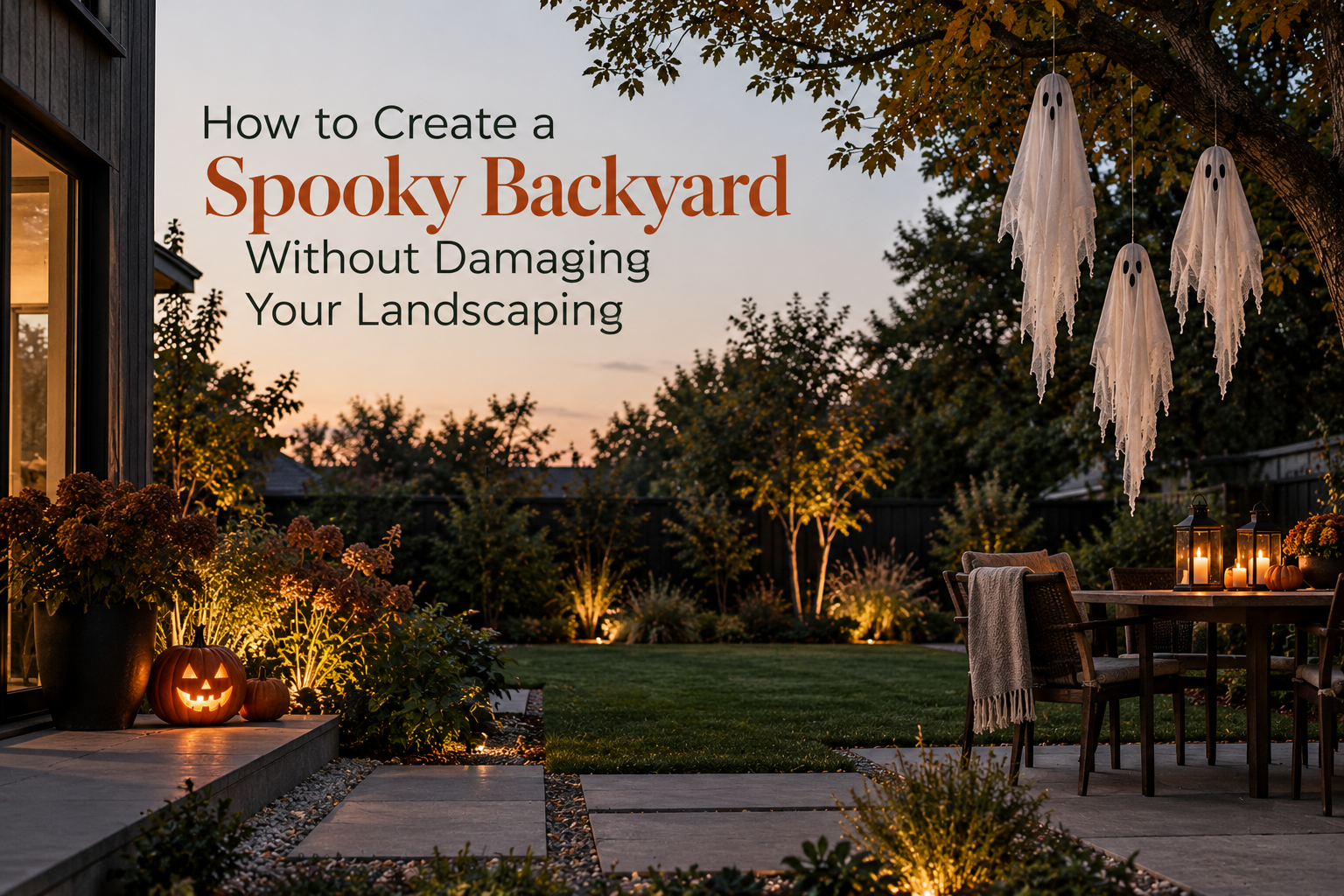
Trees, shrubs, and ornamental grasses can create shadows, frame illuminated areas, and determine which landscape features are visible at night. A specimen tree may become a strong nighttime focal point when illuminated correctly, while dense shrubs can eventually block fixtures that were positioned without accounting for mature growth. This is why planning landscape lighting before plants and hardscape go in can prevent problems later. Mature plant height and width can affect fixture locations, beam direction, shadows, access, and the amount of light that reaches paths and outdoor living areas.
Thinking about lighting and planting together makes it easier to create a landscape that works during both the day and night.
Visualize Plant Height Before Installation
It can be difficult to imagine how a young plant will look after several years of growth. A shrub that looks small during installation may eventually fill a large portion of the planting bed, while a young tree may become the dominant feature in that section of the yard. Using iScape can help homeowners and landscape professionals compare different plant arrangements before installation.
You can experiment with taller and shorter foundation planting, different screening ideas, tree placement, layered planting beds, and plant arrangements around patios or decks. Instead of evaluating each plant individually, look at the entire composition and consider whether the height changes feel balanced when viewed from the house, patio, walkway, driveway, and other important areas.
Visualizing these relationships in advance can make it easier to identify height and placement problems before plants are purchased and installed.
Final Takeaway
Flower color may attract attention, but plant height gives a landscape its structure. Height influences how planting connects with the architecture, how the eye moves across the yard, which plants remain visible, where privacy is created, and how balanced the landscape looks throughout the year.
A better planting plan therefore begins with the vertical framework. Consider where trees and structural shrubs belong, how different plant layers will connect, which views need to remain open, and how large every plant will become at maturity. Once those decisions are made, flower color can be used to add personality and seasonal interest. A strong landscape should still feel balanced even when very few plants are blooming. When the structure works without relying on flowers, color becomes an enhancement rather than the element holding the entire design together.

.png)
