


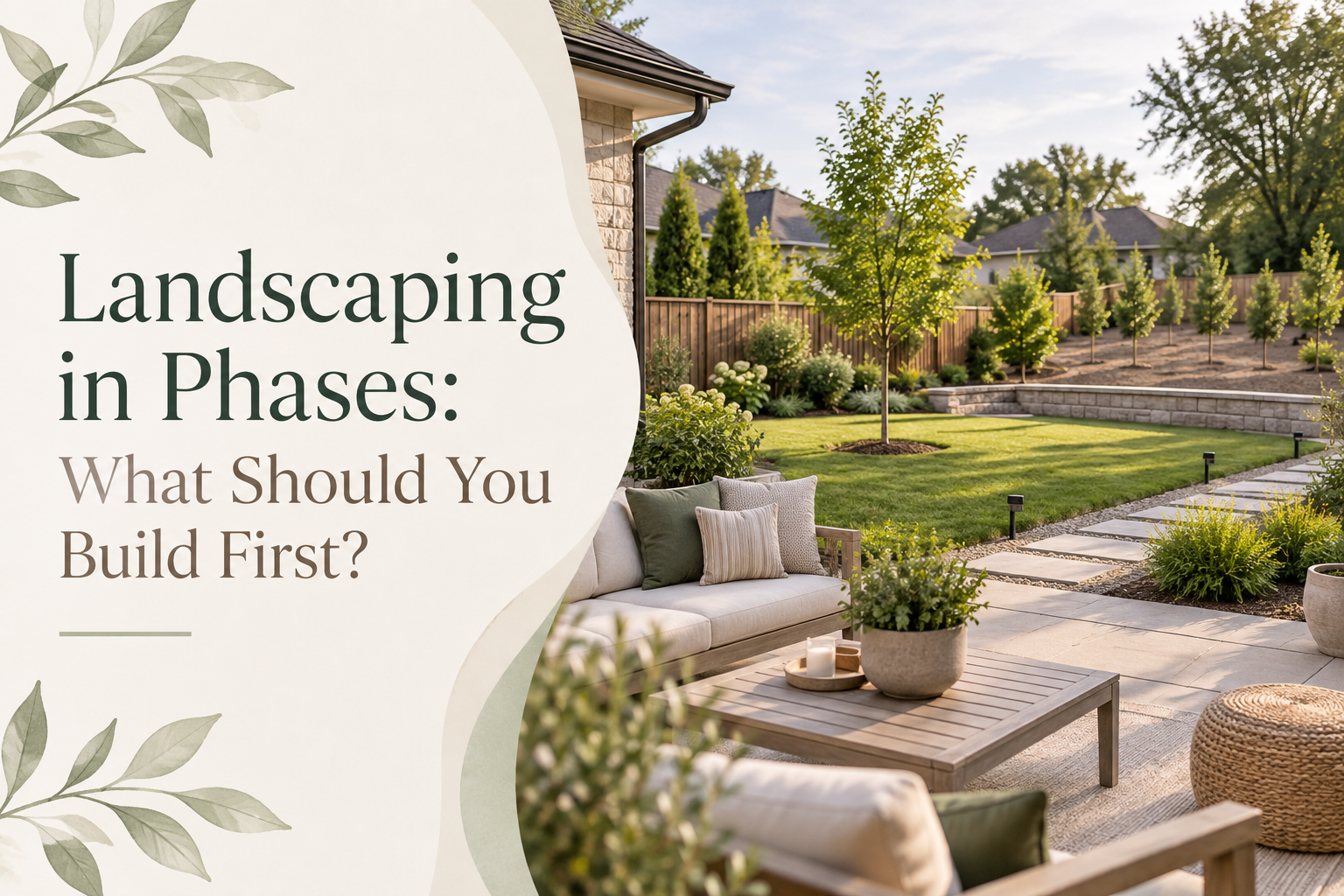
A complete landscape does not always have to be built at once.
For many homeowners, completing the yard in phases is actually the more practical approach. It allows larger projects to be spread across multiple seasons or budgets, gives plants time to establish, and makes it easier to adjust the design as the way you use the outdoor space becomes clearer. The challenge is deciding what should come first.
Installing plants before drainage is resolved, building a patio before underground utilities are planned, or finishing a lawn before heavy construction begins can create unnecessary demolition and additional expense later.
A phased landscape therefore needs more than a list of projects. It needs the right sequence. The best approach is to plan the entire yard first, even if you intend to build only one portion at a time.
Start With a Complete Landscape Plan
Phased landscaping does not mean designing one section now and figuring out the rest later.
Before beginning construction, create a general plan for the entire property. It should identify where major elements such as patios, decks, pathways, retaining walls, lawn areas, planting beds, trees, drainage, lighting, irrigation, storage, and outdoor living spaces will eventually go.
A complete landscape plan also helps identify which improvements depend on one another. For example, a future outdoor kitchen may require water, electricity, or gas lines, while a patio may affect drainage, circulation, planting areas, and lighting.
Understanding what a complete landscape design should include can help you coordinate these elements before deciding which ones belong in the first construction phase. Think of phased landscaping as building one finished landscape over a longer period rather than creating several unrelated projects.
Phase 1: Solve Drainage, Grading, and Site Problems First
Before installing attractive features, make sure the site itself works properly. Drainage and grading should generally be among the first issues addressed because water problems can affect almost everything that follows.
Watch what happens during heavy rain. Water should move away from the house and should not consistently collect around patios, pathways, lawn areas, or planting beds.
Potential issues may include water pooling near the foundation, low areas that remain wet, erosion on slopes, or downspouts releasing water into areas planned for future construction.
Correcting these conditions may involve grading changes, swales, drainage systems, catch basins, downspout extensions, or retaining structures. It is much easier to complete this work before patios, lawns, and established planting make the site more difficult to access.
Phase 2: Install Underground Infrastructure
Anything that needs to go beneath the landscape should generally be considered before permanent surfaces are installed. This may include irrigation lines, drainage pipes, electrical conduit, landscape-lighting cable, water lines, gas lines, or utilities for future outdoor features.
You may not need every system immediately. However, installing conduit beneath a future patio or pathway can make upgrades significantly easier later.
This is particularly useful if you eventually want landscape lighting, an outdoor kitchen, a water feature, an electrically powered pergola, or automated irrigation. Planning infrastructure early does not mean buying every future feature now. It simply prevents the finished landscape from blocking future improvements.
Phase 3: Complete Major Structural Hardscape
Once the site and underground systems are prepared, major hardscape usually becomes the next priority.
Hardscape creates much of the permanent structure of a landscape and may include patios, decks, retaining walls, major pathways, steps, driveways, or built-in outdoor features.
These elements should generally be completed before extensive planting because excavation, construction equipment, material deliveries, and repeated foot traffic can damage plants and compact soil.
A useful rule is to build the largest and hardest-to-change features first. If a patio will eventually become the main outdoor living area, determine its final location and dimensions before surrounding planting beds are installed.
Plan the Patio Around Its Future Use
One common mistake in phased landscaping is building a patio according to the current budget without considering how the area will eventually be used.
A small patio may initially fit a table and a few chairs, but it can become inadequate once a grill, larger dining set, sectional, fire feature, or outdoor kitchen is added.
Before building, consider the furniture that will eventually occupy the space and the circulation room required around it. iScape's guidance on planning outdoor furniture before finalizing patio size explains why furniture dimensions and movement should influence the hardscape footprint before construction begins.
If the full patio cannot be completed in the first phase, design its eventual footprint from the beginning so that later expansion feels intentional rather than patched together.
Phase 4: Establish the Main Circulation Routes
A landscape becomes much easier to use when movement through it feels natural.
Once the major outdoor spaces have been established, determine how people will move between the house, patio, lawn, garden, shed, driveway, gates, and other frequently used areas.
Not every pathway has to be completed with expensive materials immediately.
A secondary route may temporarily use gravel, mulch, or stepping stones until a later phase. What matters is preserving the intended circulation pattern so that permanent planting or structures do not block it.
Major paths should be direct and comfortable enough that people naturally use them instead of creating shortcuts through lawn or planting beds.
Phase 5: Plant Trees and Large Structural Plants
Once heavy construction is complete, trees and larger structural plants can usually be installed.
These plants are worth prioritizing because they require time to mature.
A tree planted during an early phase may already provide meaningful shade, screening, or visual scale by the time later phases are completed.
Trees also influence sunlight, privacy, views, planting conditions, and outdoor comfort, so their final size needs to be considered carefully.
Always plan according to mature height and width rather than the size of the tree at the nursery.
Large evergreen shrubs and other structural plants can often be installed during the same phase because they establish the basic framework that smaller plants will eventually fill in.
Phase 6: Add Essential Screening and Privacy
Privacy planting also benefits from an early start.
If certain parts of the property need screening from neighboring windows, roads, utilities, pools, or other areas, establishing those plants earlier gives them more time to mature.
Avoid automatically creating a solid row of identical tall shrubs.
Combining trees, evergreen shrubs, ornamental grasses, and plants at several heights can provide screening while keeping the yard visually open and layered.
The objective is to reduce unwanted views without turning the property into an enclosed wall of vegetation.
Phase 7: Establish Lawn and Major Planting Beds
Lawn and larger planting areas are usually better installed after major construction has finished.
Installing turf too early can lead to unnecessary replacement because construction equipment, excavation, material storage, and heavy foot traffic can compact the soil and damage new grass.
Once the disruptive work is complete, the soil can be properly prepared and the main shapes of lawn and planting beds can be established.
You do not have to fill every planting bed immediately.
Mulch can temporarily cover areas that will receive additional plants during future phases. This allows the overall structure of the landscape to take shape without forcing you to purchase every plant at once.
Phase 8: Fill In Shrubs, Perennials, and Groundcovers
Smaller plants are among the easiest landscape elements to add gradually.
Once trees, structural shrubs, hardscape, and planting-bed shapes are established, medium and lower planting can be introduced over time.
Phasing smaller plants also gives you an opportunity to observe actual site conditions.
You may discover that one area receives considerably more afternoon sun than expected or that another stays wetter after rain. These observations can help you make better plant choices.
Focus first on plant height, mature size, spacing, foliage, and structure. Flower color can then provide seasonal interest without being responsible for holding the entire design together.
Phase 9: Complete the Landscape Lighting
Landscape-lighting fixtures may be installed relatively late, but the infrastructure should be considered much earlier.
Once the hardscape and major planting are in place, you can refine where fixtures should go based on actual pathways, steps, trees, architectural features, and outdoor living areas.
However, power routes and conduit are much easier to install before permanent surfaces restrict access.
This is why planning landscape lighting before plants and hardscape can prevent situations where finished paving needs to be lifted or established planting disturbed simply to run wiring.
Lighting should support safe movement and highlight selected landscape features rather than illuminate every corner equally.
Phase 10: Finish With Decorative Features
Decorative elements generally belong toward the end because they are easier to change and have less influence on the fundamental layout.
These may include decorative pots, outdoor art, movable fire features, small water features, cushions, furniture accessories, and seasonal planting.
These details can add personality, but they cannot compensate for poor drainage, inadequate patio space, inconvenient circulation, or badly positioned trees.
The landscape should function well before decoration becomes the priority.
What Should You Build First If the Budget Is Limited?
When the project cannot be completed at once, prioritize elements that would be expensive or disruptive to change later.
Drainage, grading, underground infrastructure, retaining walls, major patios, important pathways, and structural trees deserve early attention.
Smaller plants, furniture upgrades, decorative items, and many finishing details can usually wait.
For example, it may be better to build the correctly sized patio and temporarily mulch the surrounding planting beds than to build an undersized patio simply so the entire yard looks finished immediately.
Plants can be added later. Rebuilding a patio may require demolition, new materials, additional labor, and damage to surrounding landscaping.
A phased project should prioritize getting permanent decisions right rather than making every area look completely finished from the first year.
Make Sure One Phase Does Not Block the Next
Each completed phase should make future work easier.
Before starting any part of the landscape, ask what may eventually need to happen underneath, beside, or beyond that area.
If electricity will eventually reach a pergola, prepare the route before paving.
If a future pathway will cross the lawn, include it in the original layout.
If an outdoor kitchen is planned later, consider utilities and circulation before completing the patio around it.
Thinking several phases ahead is one of the simplest ways to prevent paying twice for the same work.
Keep Future Construction Access Open
Another easily overlooked issue is equipment access.
Imagine completing expensive planting and fencing along the only route into the backyard and then discovering that machinery needs to pass through the same area when a pool, retaining wall, or large patio is installed.
Think about how future materials and equipment will reach the construction area before early phases are completed.
Maintaining an appropriate access route can protect completed sections of the landscape from unnecessary damage.
Visualize the Final Yard Before Building Phase One
A phased project becomes much easier to manage when you can see how the early stages fit into the eventual landscape.
With iScape, homeowners and landscape professionals can visualize patios, pathways, trees, planting beds, lawn areas, and outdoor living spaces before construction begins.
Instead of designing only the phase you can afford today, use the app to explore what the property should ultimately become. You can then decide which elements need to be installed first and which can safely wait.
This helps each phase move toward the same final design instead of gradually turning the yard into a collection of unrelated projects.
Plan the Whole Yard. Build It at Your Own Pace.
Landscaping in phases can make a large outdoor project significantly more manageable, but the order of work matters.
Begin with the full landscape plan. Address drainage and grading before permanent construction, prepare underground infrastructure before hardscape closes access, and complete the major structural elements before installing delicate planting and lawn areas.
Trees and other slow-growing structural plants can be established relatively early, while smaller plants, lighting fixtures, furniture, and decorative elements can be completed gradually.
Most importantly, do not treat each phase as a separate design.
Every phase should anticipate the next one.
Before starting your first phase, use iScape to visualize the complete landscape and test different layouts before making permanent changes.
Download iScape: Available for iPhone and iPad on the App Store and Android on Google Play. The app supports homeowners and landscape professionals who want to plan and visualize outdoor projects before installation.


