Permeable Patio vs. Traditional Pavers: Which Is Better for Your Yard?
August 17, 2026
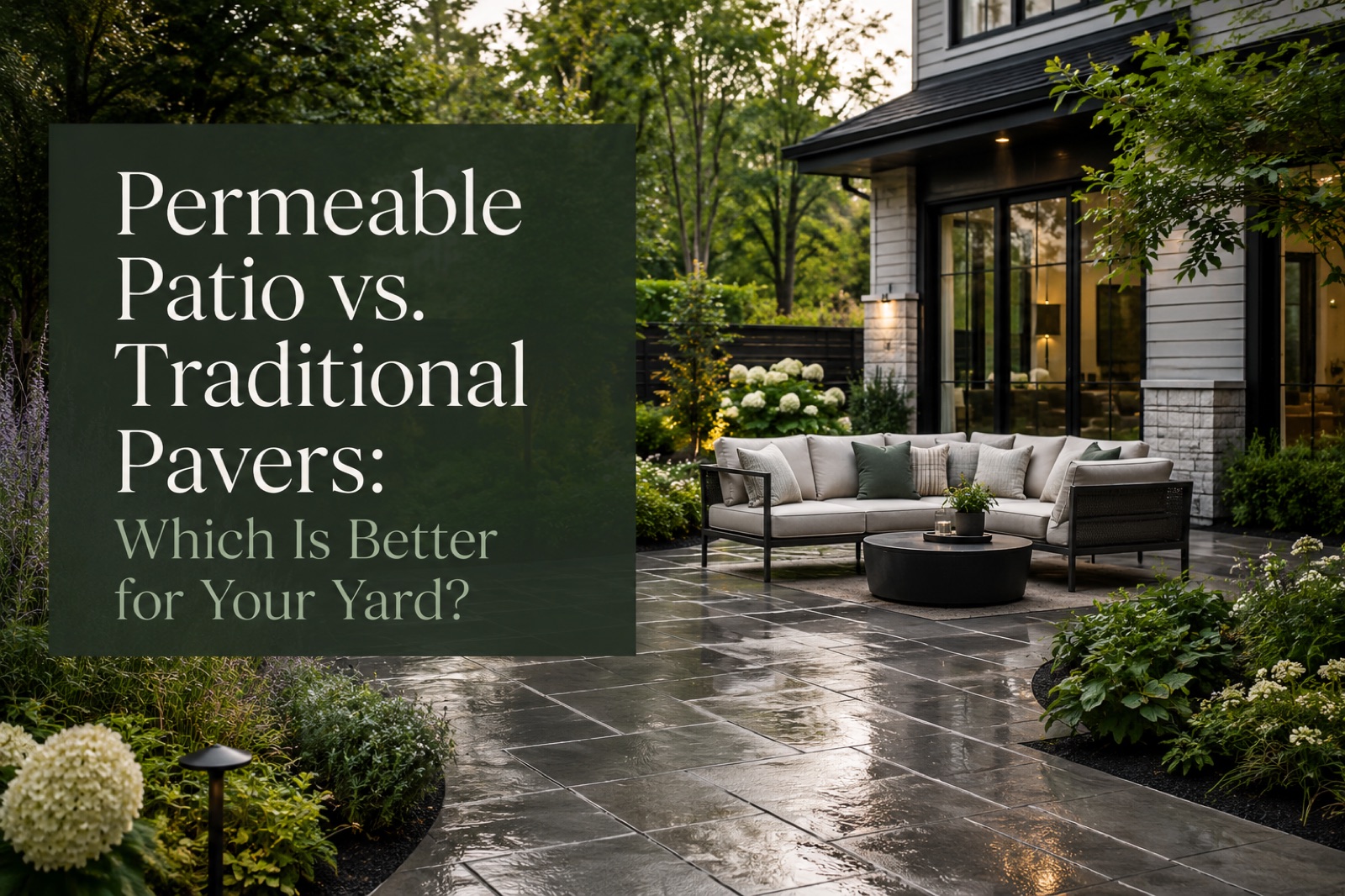
If you are choosing a patio surface, the decision often comes down to two options: permeable pavers or traditional pavers.
Both can create a durable, attractive patio, but they handle water very differently.
Permeable pavers are usually the better choice if your yard has drainage issues, heavy rainfall, or a large amount of existing hardscape. Traditional pavers are often better if your yard already drains well, you want simpler maintenance, or you are working with a tighter installation budget.
The right choice depends less on appearance and more on what is happening underneath and around the patio. Here is how the two options compare.
Permeable Patio vs. Traditional Pavers at a Glance
Choose permeable pavers if:
- Your yard experiences runoff or standing water
- You want more rainwater to soak into the ground
- You already have a large driveway, roof area, or other hardscape
- Stormwater management is an important part of the project
- You are comfortable with slightly more maintenance
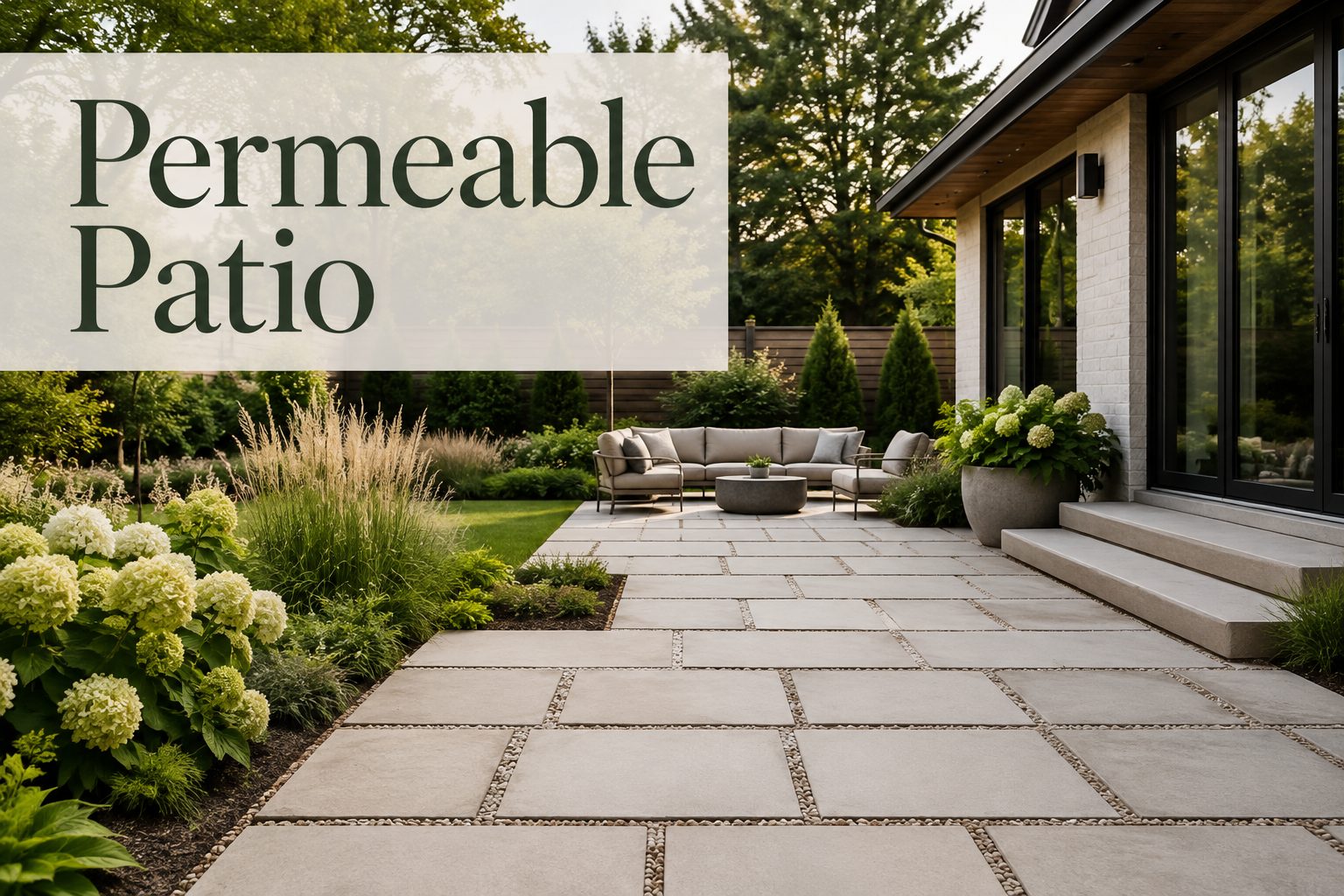
Choose traditional pavers if:
- Your property already has good drainage
- Water can be safely directed into a lawn or drainage system
- You want a simpler installation
- You prefer easier ongoing maintenance
- Your soil is poorly suited to infiltration
That is the basic decision. Now let’s look at why.
1. Which Is Better for Drainage?
Winner: Permeable pavers
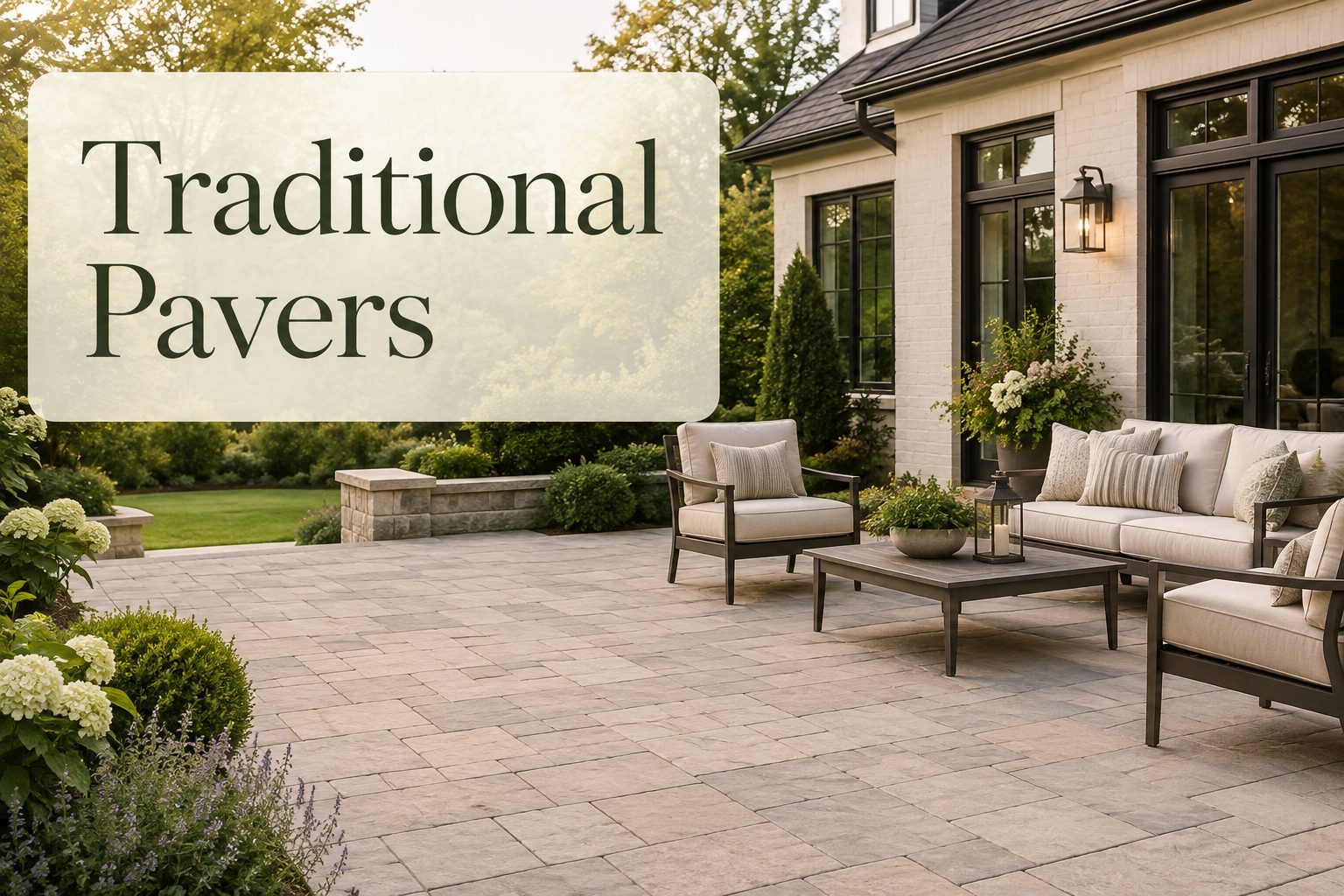
Drainage is the biggest difference between the two. Traditional pavers create a mostly solid surface. Rain lands on the patio, runs across it, and is directed somewhere else through grading. That works well when water has a safe destination. Problems begin when runoff is directed toward:
- The house
- A low section of lawn
- A neighbor's property
- Already saturated soil
- A narrow side yard
- An overloaded drainage area
Permeable patios handle rainfall differently. Water passes through the joints and enters layers of stone beneath the patio. From there, it can gradually infiltrate into the soil or move through a designed drainage system.
If your yard already becomes soggy or experiences noticeable runoff after storms, permeable paving generally has the advantage. However, permeable paving is not a cure for every drainage problem. Poor soil conditions, high groundwater, or severe grading issues may still require professional drainage work.
2. Which Is Better for a Yard With Clay Soil?
Winner: Usually traditional pavers
Permeable paving works best when water has somewhere to go after it enters the paving system. Heavy clay soil absorbs water slowly. If water moves through the patio but then sits underneath because the soil cannot absorb it, the system may need additional drainage infrastructure.
Traditional pavers can sometimes be easier in these conditions because the patio can be intentionally sloped toward an appropriate drainage point. That does not mean permeable pavers cannot be used over clay. They can, but the installation may require:
- Deeper stone layers
- Drainage pipes
- An engineered outlet
- Additional site preparation
If your main reason for choosing permeable paving is drainage, soil conditions should be checked first.
3. Which Is Better for Preventing Runoff?
Winner: Permeable pavers
Every time you replace lawn or planting space with hardscape, you change how water moves through the property. Imagine replacing 500 square feet of lawn with a conventional patio. Rain that previously had an opportunity to enter the soil now lands on a hard surface and must travel somewhere else. A permeable patio allows at least some of that rainfall to continue entering the ground through the paving system. That can be especially valuable if your property already contains:
- A large roof
- Wide driveway
- Walkways
- Pool decking
- Other patios
- Significant hardscape
The more impermeable surfaces your property already has, the stronger the argument for considering permeable paving.
4. Which Is Easier to Maintain?
Winner: Traditional pavers
Traditional pavers generally require more familiar maintenance. You may occasionally need to:
- Clean the patio
- Remove weeds
- Replace joint material
- Correct settling
- Remove stains
Permeable pavers need many of the same things, but there is another concern: the joints must remain open enough for water to pass through. Over time, those openings can collect:
- Dust
- Soil
- Grass clippings
- Leaves
- Mulch
- Organic debris
If enough fine material accumulates, infiltration can decrease. That means homeowners with permeable patios need to pay more attention to keeping surrounding soil and mulch from washing onto the surface. If minimal maintenance is one of your top priorities, traditional paving has the edge.
5. Which Is More Affordable?
Winner: Traditional pavers in many cases
Permeable patios can cost more initially because the installation often requires additional excavation and specialized base materials. The visible paver is only one part of the system. A proper permeable installation may need:
- Deeper excavation
- Open-graded aggregate
- Multiple stone layers
- Specialized joint material
- More detailed base preparation
Traditional pavers may therefore have a lower initial installation cost. However, compare the entire project, not simply the cost of the pavers. If a conventional patio requires extra drains, pipes, grading improvements, or another stormwater solution, the final cost difference may become much smaller.
6. Which Looks Better?
Winner: Tie
You do not necessarily have to sacrifice appearance to choose permeable paving. Modern permeable pavers are available in many of the same visual styles as conventional paving, including:
- Large-format contemporary pavers
- Natural stone-inspired finishes
- Traditional brick patterns
- Neutral modern designs
- Courtyard-style layouts
In many finished landscapes, visitors may not immediately realize that the patio is permeable. Appearance should therefore be a secondary consideration. Drainage, soil, maintenance, and installation requirements are usually more important.
7. Which Is Better Around Plants?
Winner: Depends on the landscape
Both systems can work beautifully with planting beds. The bigger issue is how those beds interact with the patio. Permeable paving should ideally be protected from loose soil and mulch because sediment can gradually clog the joints. If planting beds sit directly beside the patio, consider:
- Groundcover plants
- Stable edging
- Decorative gravel
- Dense planting
- Proper grading
Traditional patios are less sensitive to sediment entering the joints, although surrounding planting still needs good drainage and edging. For ideas on making patios feel naturally connected to planting, read The Best Way to Combine Hardscape and Plants in One Design.
8. Which Is Better Near Mature Trees?
Neither is automatically better.
Permeable paving sounds like the obvious choice near a tree because water can pass through it. But tree protection is more complicated than surface permeability. Patio installation may involve excavation, soil compaction, root cutting, and construction equipment. Any of these can damage an established tree.
Avoid assuming that permeable pavers make it safe to build directly over important roots. Sometimes the better solution is simply to move the patio boundary. If you are designing around an existing tree, see How to Landscape Around Mature Trees Without Damaging Their Roots.
9. Which Is Better for a Large Patio?
Often permeable pavers, especially if runoff is a concern.
The larger the patio, the more rainfall it receives. A small 100-square-foot seating area may create relatively little additional runoff. A 700-square-foot entertainment patio is very different. Large areas of conventional hardscape can send significant amounts of water toward surrounding parts of the property during heavy rain. That makes stormwater planning increasingly important as the patio grows. Before deciding how large your patio should be, plan the furniture first. A dining table, grill, sectional, fire pit, and circulation paths all require different amounts of space.
The guide How to Plan Outdoor Furniture Before Finalizing Your Patio Size can help you avoid building more hardscape than you actually need.
Permeable Patio vs. Traditional Pavers: Which Should You Choose?
Here is the simplest way to make the decision.
Choose a permeable patio when:
Your yard already struggles with runoff, you receive substantial rainfall, you are adding a large amount of hardscape, or you want stormwater management built into the patio itself. It is particularly worth considering when the property already has several impermeable surfaces.
Choose traditional pavers when:
Your yard drains well, runoff can easily be directed somewhere safe, soil conditions make infiltration difficult, or you want a simpler and potentially less expensive installation. Traditional paving is not inferior. It simply manages water by moving it elsewhere rather than allowing it to move through the patio.
Could a Hybrid Design Be Better?
Sometimes the best answer is not choosing one system for the entire yard. You might use traditional pavers beside the house and permeable paving for:
- Garden pathways
- Secondary seating areas
- Fire pit zones
- Courtyard spaces
Another option is to use traditional paving while directing runoff into a rain garden or landscaped infiltration area. The best patio design considers the entire property rather than treating the paving material as an isolated decision.
Plan the Patio Before Choosing the Pavers
Whether you choose permeable or traditional paving, determine the patio's layout before installation. Think about:
- Patio dimensions
- Furniture placement
- Walkways
- Planting beds
- Trees
- Drainage
- Outdoor kitchens
- Fire features
- Lawn areas
Changing a patio on a design plan is easy. Changing it after installation is expensive. You can also read Step-by-Step: How to Design a Patio in iScape for more guidance on planning the layout before construction begins.
Visualize Your Patio Before You Build
Not sure whether a larger patio, smaller footprint, different shape, or more planting would work best?
With iScape, you can visualize patio layouts alongside furniture, plants, pathways, lawn, and other outdoor features before committing to the final design. Experiment with the layout first, then choose the paving system that best matches your yard's drainage and soil conditions. Plan it. Compare it. Then build the yard you actually want. Download iScape on the App Store or Google Play Store today and start designing today. Try a free trial today at iScape!
Final Verdict
For most homeowners, the decision comes down to one question: Does your patio need to help manage water, or does your yard already have a reliable way to handle runoff?
If runoff, drainage, and increasing hardscape are concerns, permeable pavers are generally the better option. If your property already drains effectively and you want straightforward installation and maintenance, traditional pavers are likely the more practical choice. The best patio is not simply the one with the nicest paver. It is the one that fits your yard's drainage, soil, landscape, and everyday use.
Frequently Asked Questions
Are permeable pavers better than traditional pavers?
They are better for managing runoff and allowing rainfall to enter the ground. Traditional pavers can be better when drainage is already good and simpler maintenance is preferred.
Are permeable patios worth the extra cost?
They can be, particularly on properties where stormwater runoff is already a concern or where large amounts of hardscape are being added.
Can weeds grow in permeable pavers?
Yes. Weeds can appear when soil and organic material accumulate in the joints. Regular cleaning helps reduce the problem.
Do permeable pavers work in heavy rain?
A properly designed system can temporarily store and manage rainfall, but performance depends on soil, base depth, drainage design, and storm intensity.
Can permeable pavers be installed on clay soil?
Yes, but slow-draining clay may require additional drainage beneath the patio rather than relying entirely on infiltration.