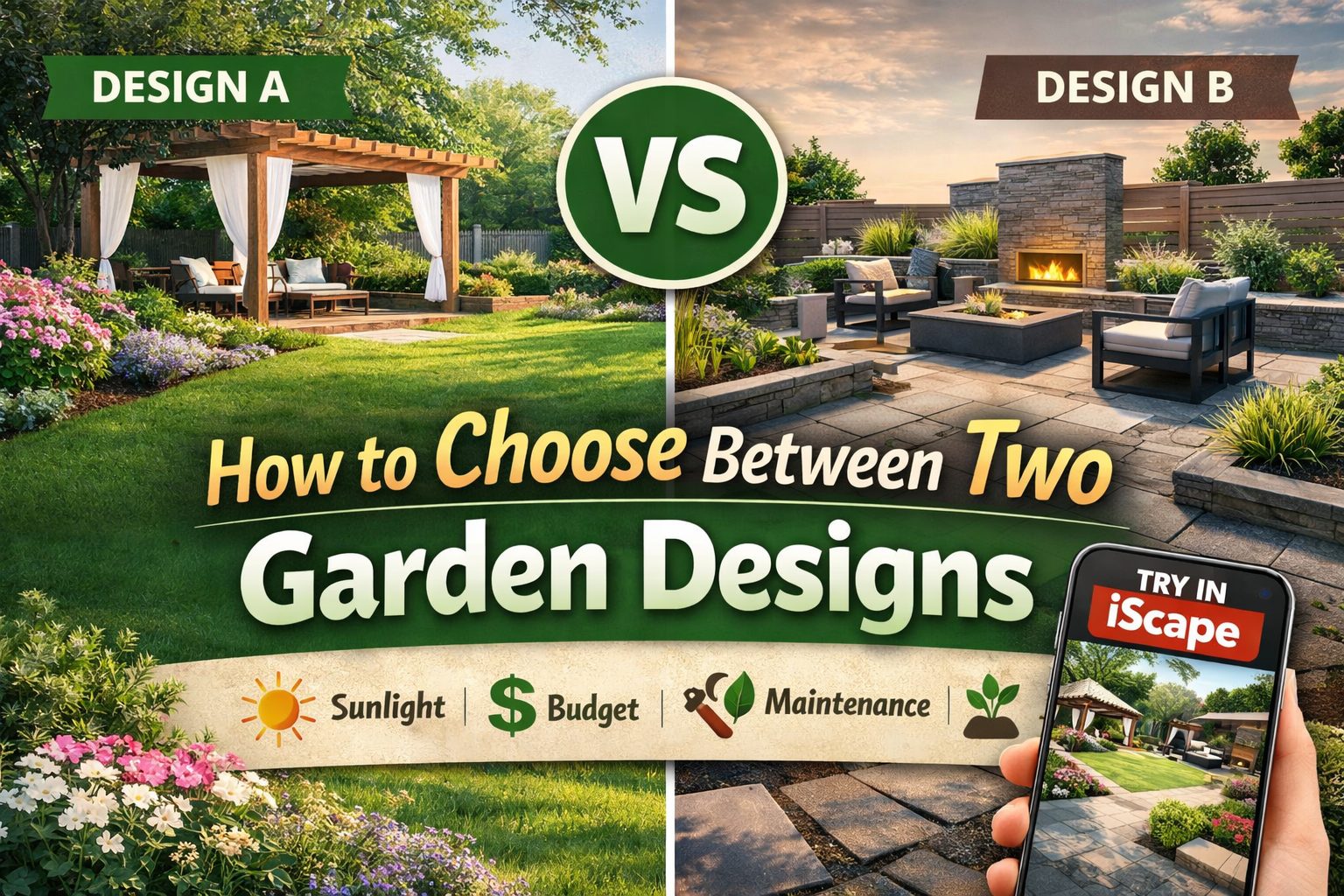
Choosing between two garden designs often feels like you are picking between two “good” options, which is exactly why it becomes so confusing. On paper, both plans can look polished and balanced, and both might promise a beautiful final result, but the real question is whether the design will work for your actual space and your actual life once it is built. A garden is not a static picture; it is a living, changing outdoor environment that has to handle sun, rain, growth, foot traffic, maintenance routines, and the way you and your family will use it every week.
If you want to make the right decision without second-guessing yourself later, the best approach is to compare the two designs using practical factors that directly affect comfort, cost, upkeep, and long-term performance. This guide walks you through that process in a clear and value-driven way, and it also explains how using the iScape app to visualise both designs in your own yard can remove uncertainty before you spend money on materials and plants.
Why choosing the “prettier” design often leads to regret
Many garden decisions go wrong because people judge a plan by its style alone, even though the style is only one part of the experience. A design can look modern and clean, but feel hot and uncomfortable in the afternoon because there is no shade strategy. Another design can look lush and expensive, but become messy within a year because the plants were selected without considering mature sizes and maintenance demands. Even small layout choices, such as the width of a pathway or the placement of a seating zone, can affect whether the space feels calm and functional or cramped and difficult to use.
A smarter way to choose is to compare your two designs based on how well they solve the real problems every garden faces: daily usability, climate conditions, drainage, privacy, maintenance time, and budget efficiency.
Step 1: Decide what your garden must do for you, not what it should look like online
Before you compare Design A and Design B, you need to define what “success” means for your garden, because two designs can be equally attractive while serving completely different lifestyles. If you want a garden where you can sit quietly in the morning and unwind in the evening, the plan must prioritise comfort, shade, privacy, and seating placement. If your goal is a family-friendly area where kids can move freely and you can host guests occasionally, you will need open circulation, durable surfaces, and clear zones that keep movement and seating from colliding.
A useful way to do this is to write down your needs in three categories:
- Must-haves: features you will genuinely use and cannot compromise on
- Nice-to-haves: upgrades that improve the space but are not essential
- Avoid: elements you do not want because of maintenance, safety, cost, or personal preference
This step matters because it helps you recognise a design that looks good but does not match your routine. A garden that aligns with your must-haves will feel “right” every day, even if it is less dramatic than the other option.
Step 2: Compare how each design responds to your space conditions
Your outdoor space has its own reality, and a strong design respects that reality instead of fighting it. When you evaluate the two plans, focus on the conditions that affect how the garden will behave over time.
Sun and shade behaviour
Sun is one of the biggest factors that decides whether a garden feels comfortable, because harsh heat can make even a beautiful space unusable. You should check whether seating zones are exposed to direct afternoon sun, whether plants are being placed in the right light conditions, and whether the design includes a long-term shade plan through trees, pergolas, or layered planting. When shade is treated as an afterthought, people end up spending extra money later on umbrellas, shade nets, or redesigning seating entirely.
Rain, drainage, and monsoon performance
Many gardens look perfect in dry conditions and then fall apart during heavy rain because water flow was not planned properly. You should look at where water will run, where it may pool, and how surfaces will behave when wet. A design that includes proper grading, drainage solutions, and practical pathways usually performs better and requires fewer repairs after monsoon seasons.
Wind, dust, and privacy
In many neighbourhoods, wind direction and privacy lines decide how often you use the garden. If your space faces the street or neighbouring windows, the best design is the one that blocks unwanted views without closing the garden completely. Designs that use layered planting, screens, and smart placement of taller greenery often create a more comfortable environment than designs that rely only on walls or fences.
Step 3: Evaluate layout like you will live in it, not like you will photograph it
A garden design is successful when movement feels natural and the space supports your habits without friction. That means you should analyse circulation and spacing, because poor circulation is one of the most common reasons people stop enjoying their garden.
You should check whether the main path is wide enough for two people to walk comfortably, whether the seating area has enough clearance for chairs to be pulled back without hitting planters or walls, and whether transitions between zones feel smooth. Even if a design looks balanced, a narrow or awkward layout can make everyday use frustrating, especially when you are carrying items, watering plants, or hosting guests.
A very practical test is to imagine a typical day and ask yourself whether the design makes your life easier or harder. If you regularly walk from the kitchen to an outdoor seating area, the path should feel direct and comfortable, and if you plan to water plants frequently, access to hose points and movement around beds should feel simple rather than tight and complicated.
Step 4: Use a scorecard so you can make a decision with confidence
When both designs look good, a scorecard helps you choose without bias. Write 8–10 factors that matter most, give each one an importance weight from 1–5, then rate Design A and Design B from 1–10. Multiply weight × rating for each factor and add the totals. The higher total usually points to the smarter choice.
Keep the factors practical: daily usability, comfort (shade and breeze), maintenance effort, total cost (build + upkeep), privacy, year-round look, safe circulation, how plants will look after 1–2 years of growth, and how easily you can upgrade later. This approach makes the trade-offs obvious, so you pick the design you will actually enjoy living with.
Step 5: Compare maintenance honestly, because upkeep decides your long-term happiness
Maintenance is where garden plans often fail in real life, because people underestimate how quickly a space can look messy when upkeep is inconsistent. You should compare both designs based on the work they demand, not the work you wish you had time for.
If one design includes a large lawn, you should consider mowing, watering, weed control, and seasonal patching, because lawns look clean only when they are maintained regularly. If another design includes dense planting, you should consider pruning, pest management, leaf litter, and the effort of maintaining borders. Hardscape-heavy designs often reduce plant maintenance but can require cleaning, algae control in monsoon climates, and heat management in peak summers.
A simple but revealing question is whether the garden will still look acceptable if you skip maintenance for two weeks. The design that holds its shape and still feels presentable with minimal effort is usually the design that delivers long-term satisfaction.
Step 6: Compare cost the smart way by understanding where money goes
Many people compare two designs by the final estimate, but the more useful approach is understanding which design has riskier cost drivers.
You should break each design into categories like hardscape, softscape, utilities, and labour, because those categories behave differently over time. Hardscape costs are often high upfront but stable, while softscape costs can increase if plants fail and need replacement. Utilities like irrigation and lighting can be highly valuable, but they need correct planning to avoid rework. Labour costs can rise sharply when a design includes complex curves, detailed stonework, multiple levels, or difficult installation zones.
You should also compare whether a design can be built in phases without looking incomplete, because a plan that allows a clean upgrade path gives you more control over budget and timelines.
Step 7: Check long-term growth and maturity so the garden still works in 2–3 years
A garden that looks perfect on day one can become overcrowded and uncomfortable after plants grow. That is why it is important to look beyond the initial look and consider maturity.
You should check whether planting beds have enough space for root spread, whether trees are placed safely away from foundations and paving, and whether future shade patterns will improve comfort or make certain zones too dark. When plant maturity is ignored, gardens often feel cramped, paths get narrowed by overgrowth, and maintenance becomes harder than expected.
A well-planned design should feel better over time, not worse.
Step 8: Stress-test both designs with real-life scenarios
This is one of the most useful steps because it forces you to see how the design performs during normal life.
You should imagine a weekday evening when you are tired and want 15 minutes outside, and then ask which design gives you a comfortable seating spot without effort. You should imagine monsoon weather and check whether paths will be slippery or water will pool near seating. You should imagine hosting guests and see whether the layout allows movement without awkward squeezing. You should also imagine cleaning and ask whether there are too many tight corners and hard-to-reach spots.
The best design is the one that performs well across many scenarios, because that is what makes the garden feel easy to live with.
Step 9: Visualise both designs in your actual space using iScape
Even when you use checklists and scorecards, the biggest uncertainty usually comes from scale, because it is difficult to imagine how a design will feel until you see it in context. This is where the iScape app becomes extremely useful, because it helps you visualise both garden designs using a photo of your own yard.
With iScape, you can place key elements like patios, pathways, plant groupings, and features directly onto your space, which makes layout issues immediately obvious. You can see whether the seating feels crowded, whether the path width looks comfortable, and whether the planting blocks views or creates better privacy. When you compare Design A and Design B visually, you stop guessing, and you start making decisions based on what feels right at real scale.
This step often saves money because you can catch mistakes before installation, such as oversized features, awkward circulation, poorly placed focal points, or plantings that overwhelm small areas.
Download iScape on the App Store or Google Play Store today and start designing your front yard now!
Final decision tie-breakers that protect you long-term
If both designs still feel close after your comparison, these tie-breakers help you choose the one you will enjoy for years:
- You should choose the design you can maintain during your busiest month, because consistency matters more than ambition.
- You should choose the design that gives comfort first through shade, privacy, and seating, because comfort determines usage.
- You should choose the design that offers cleaner movement and fewer awkward corners, because the layout affects everyday convenience.
- You should choose the design that allows upgrades later, because a flexible garden grows with your life rather than locking you in.
See both designs clearly before you build
If you are choosing between two garden designs, you do not have to rely on imagination, rough sketches, or second guesses. Download the iScape app and visualise both Design A and Design B in your actual space, so you can choose the layout that feels right, fits your lifestyle, and avoids costly changes after installation.
Download iScape on the App Store or Google Play Store today and start designing your front yard now!