You stand at the curb, and something feels off. The walkway looks cramped, the entry has no pop, and every new planter you add just makes the space feel smaller. That’s the headache of a small front yard: there’s nowhere to hide mistakes. The fix is smarter planning, not more stuff. Start with a clean layout, choose one strong focal point, and right-size everything so it reads clearly from the street. Test ideas on a photo, compare two versions, and keep the one that feels balanced. When the plan is tight, even a tiny front yard looks intentional, welcoming, and bigger than it is.
In this blog, we’ll discuss how to set a simple layout, pick a standout focal point, layer plants for depth, use color wisely, and add lighting that makes a small space feel bigger so you can build once with confidence.
- Start with one strong focal point
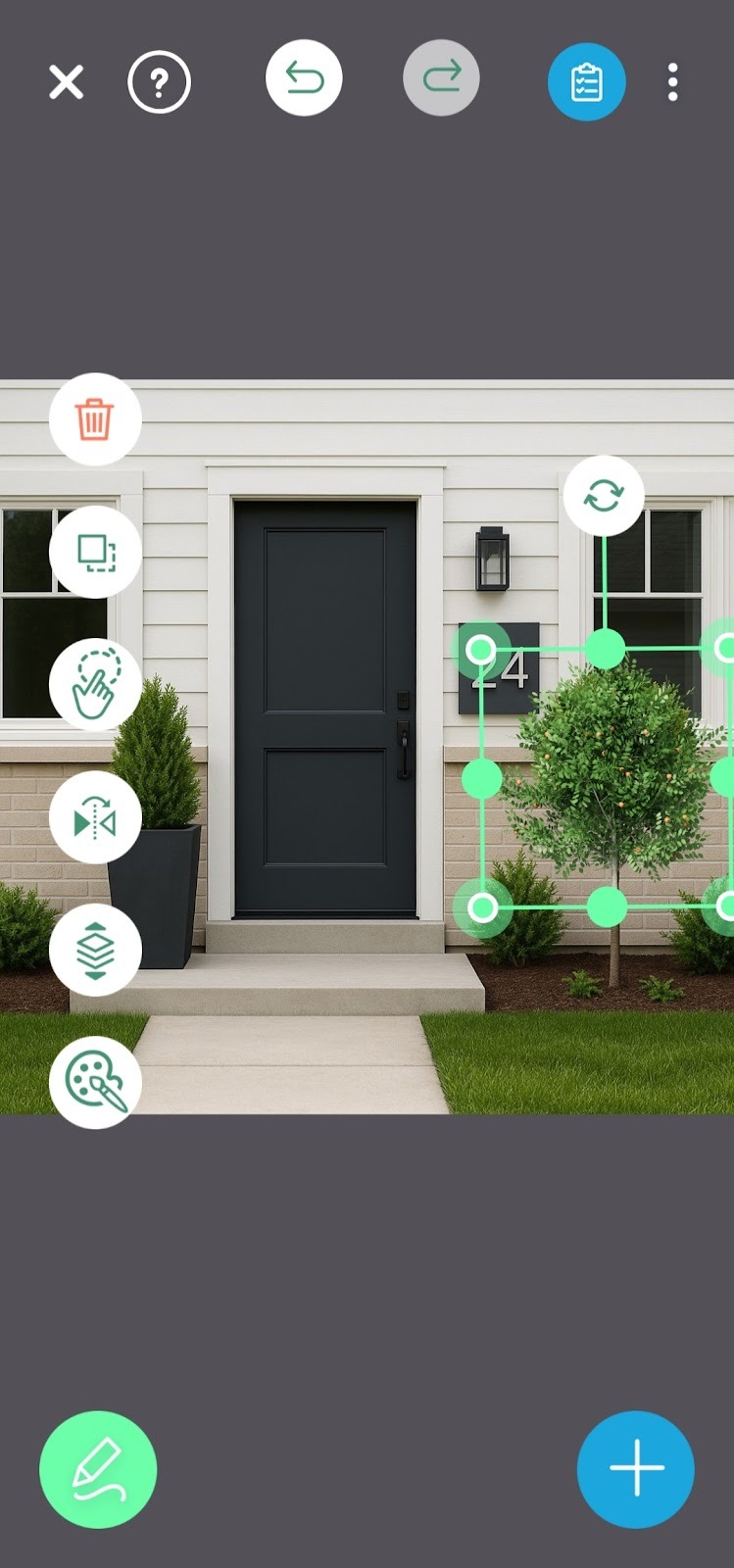
Pick one element that anchors the whole view. It could be a pair of tall planters at the door, a compact ornamental tree off to one side, or a bold house number panel near the entry. Place your focal point in a spot that is easy to see from the curb. In a tiny space, two matching forms and one clear star keep the design calm and focused.
iScape tip: Snap a straight-on photo from curb height. Drop in your focal piece and adjust the size until it feels right against the door and windows. If it feels too small on the screen, it will look even smaller in real life.
- Keep the path clear and generous
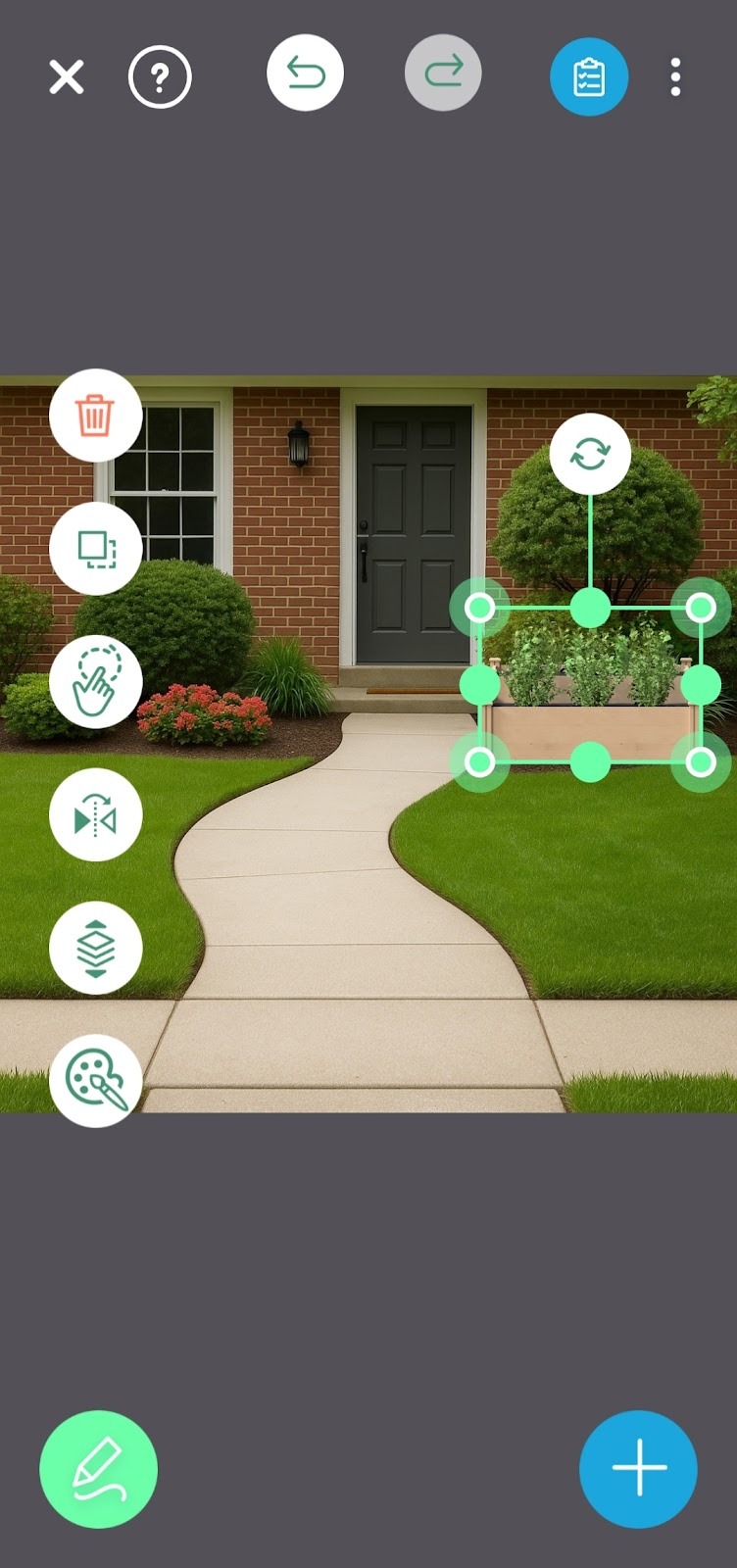
A tight walkway makes the whole front feel cramped. Aim for at least 3 feet or 1 meter of clear walking width from the sidewalk to the door. Use a gentle curve instead of sharp angles to make the route feel longer and the space feel wider. Cut a crisp edge where the lawn meets the planting. A clean line throws a small shadow that reads as neat even from across the street.
iScape tip: Draw the path line on your photo. Test stepping stones, pavers, or gravel. Save a narrow-path version and a wider-path version, and choose the layout that looks easy to walk.
- Layer plants so the space reads from the street
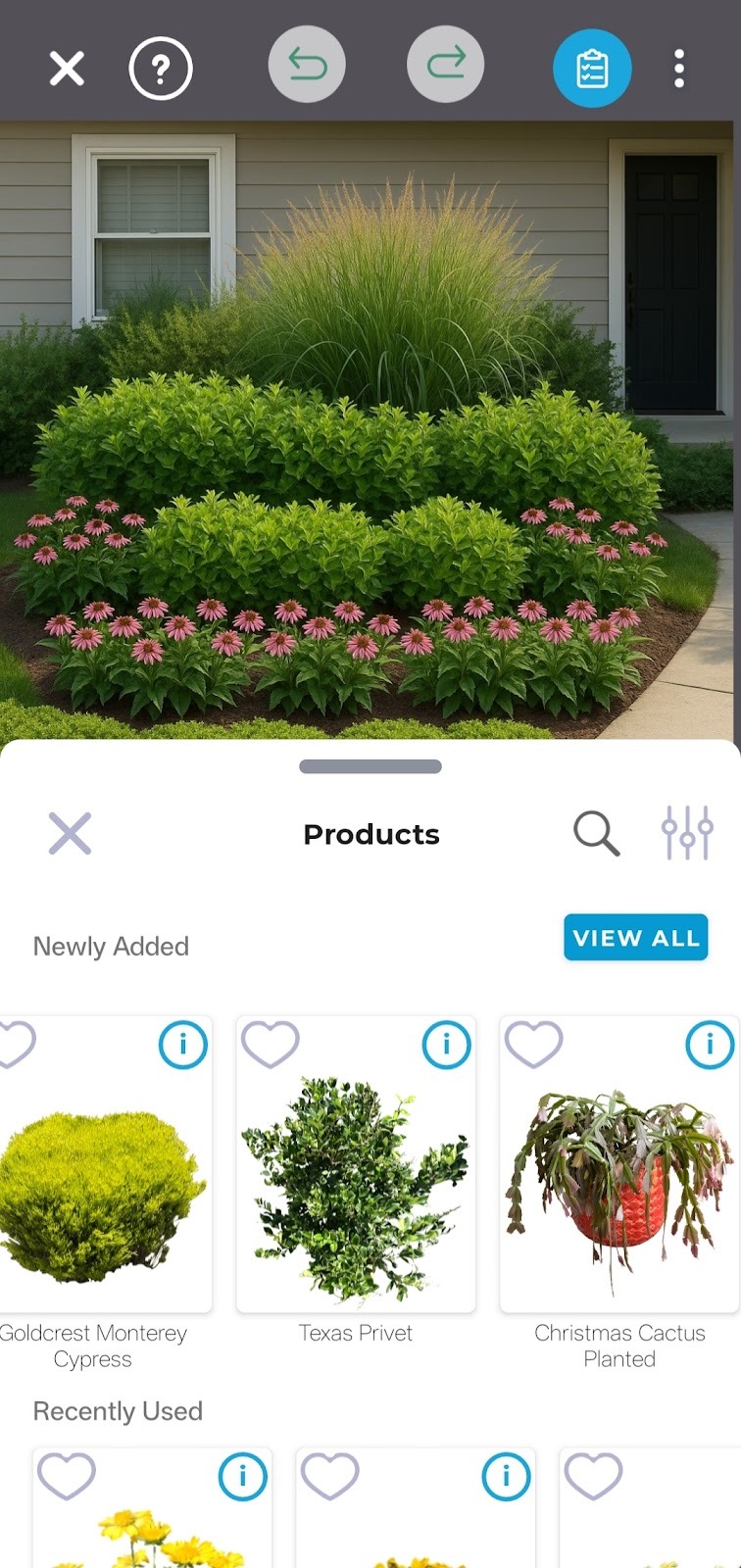
Small yards look bigger when plants step down in height. Put the tallest plant forms at the back near the house, mid-height shrubs in the middle, and low groundcovers at the front. Plant in groups of 3 or 5 instead of singles. Repeating the same group twice or three times creates rhythm without clutter.
Simple Palettes That Work In Most Regions
- Option A, soft cottage: Small hydrangea or spirea near the house, lavender or salvia in the middle, creeping thyme or sedum along the edge.
- Option B, clean modern: Upright yew or arborvitae near the house, boxwood or compact nandina in the middle, mondo grass or blue fescue at the front.
- Option C, pollinator-friendly: Serviceberry or redbud off-center as a small tree, coneflower or black-eyed Susan in the middle, catmint or ajuga at the edge.
Download iScape on the App Store or Google Play Store today and start designing your front yard now!
- Use a tight color story
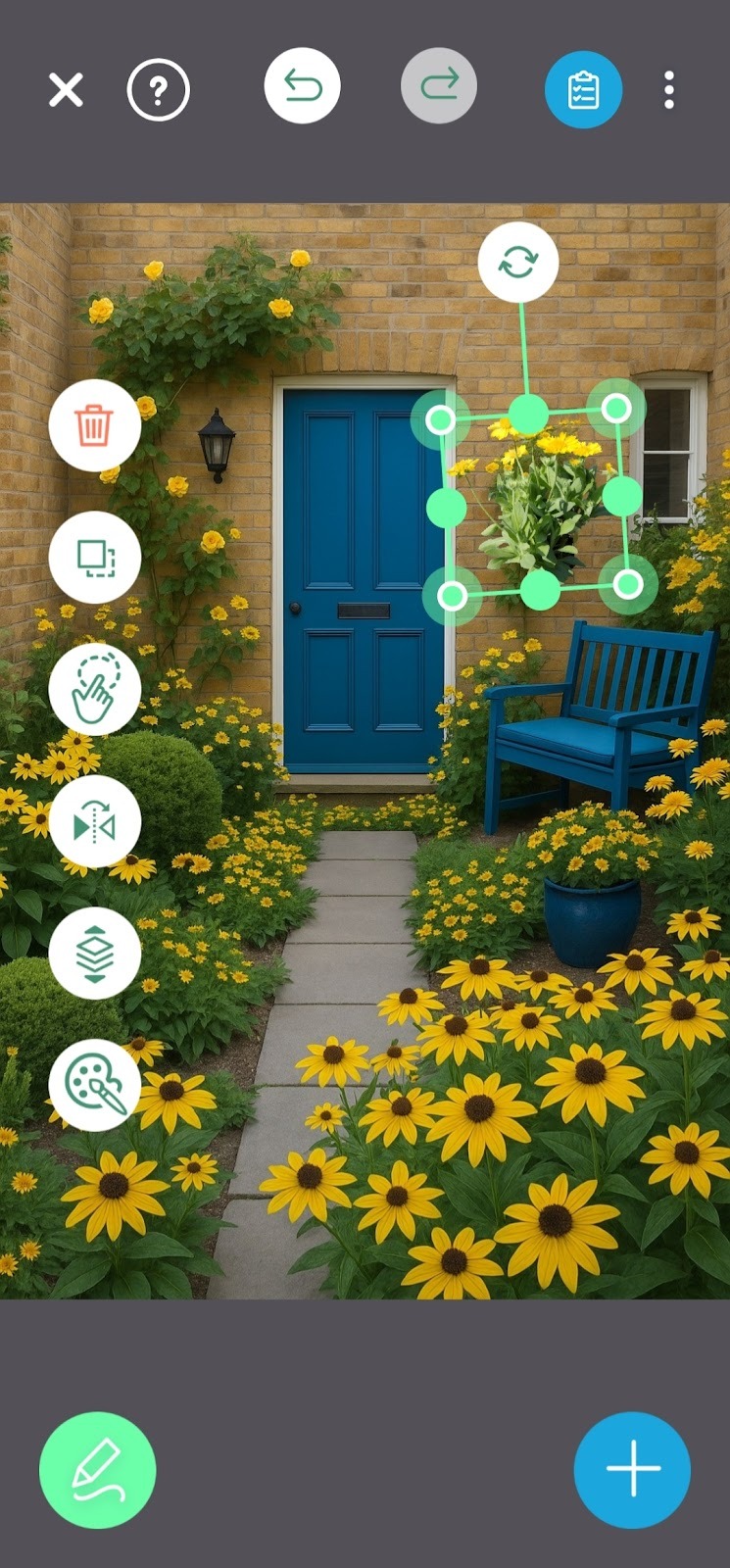
Too many colors make a small yard feel noisy. Choose one base color for foliage or flowers, then add one accent color. Carry those colors from the door to the beds and even to pots or a small bench cushion. When color repeats, the eye reads the space as larger.
iScape tip: Try two versions. Version one uses cool colors like blues and purples. Version two uses warm colors like oranges and reds. Compare which one suits your house color and keep one.
- Add verticals to pull the eye up
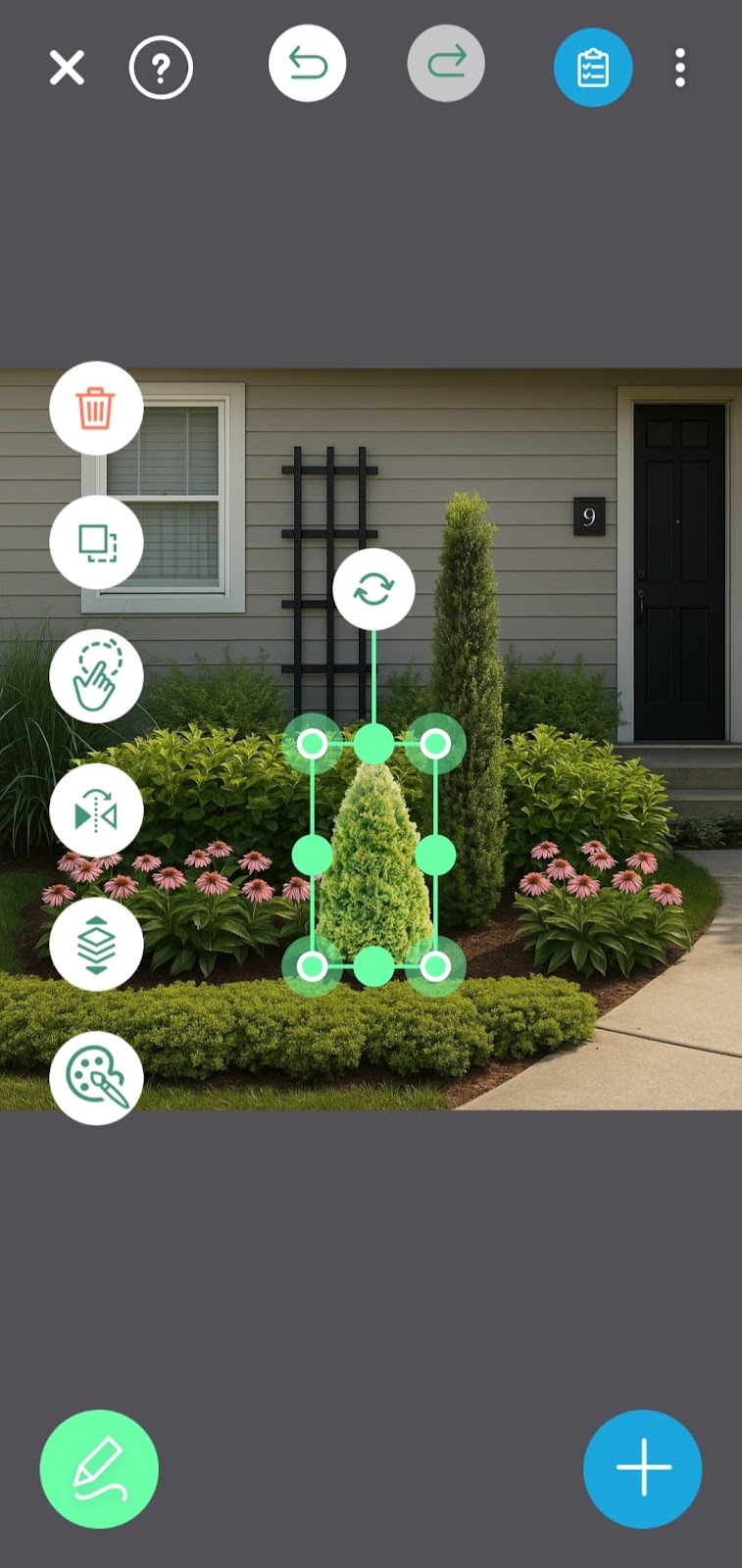
Tall accents add scale without taking up floor space. Think narrow trellises, a slim columnar shrub, or a wall-mounted number plaque. One or two verticals placed near the entry make the facade feel taller and the yard feel bigger.
iScape tip: Add a trellis or columnar plant in the mockup. Check it from the curb view. If the vertical overwhelms the door, reduce its height slightly in the app and retest.
- Choose a compact hardscape that does more than one job
In small spaces, every element should work hard. A short stretch of edging can hold mulch in place and define the shape of the bed. A small landing at the base of the steps can make room for two planters and give guests a place to pause. Keep materials simple. One main material and one accent are enough in a tiny front yard.
iScape tip: Test a small landing pad size and planter placement on the photo. Move items until door clearance and step access are obvious.
- Light it like a show window
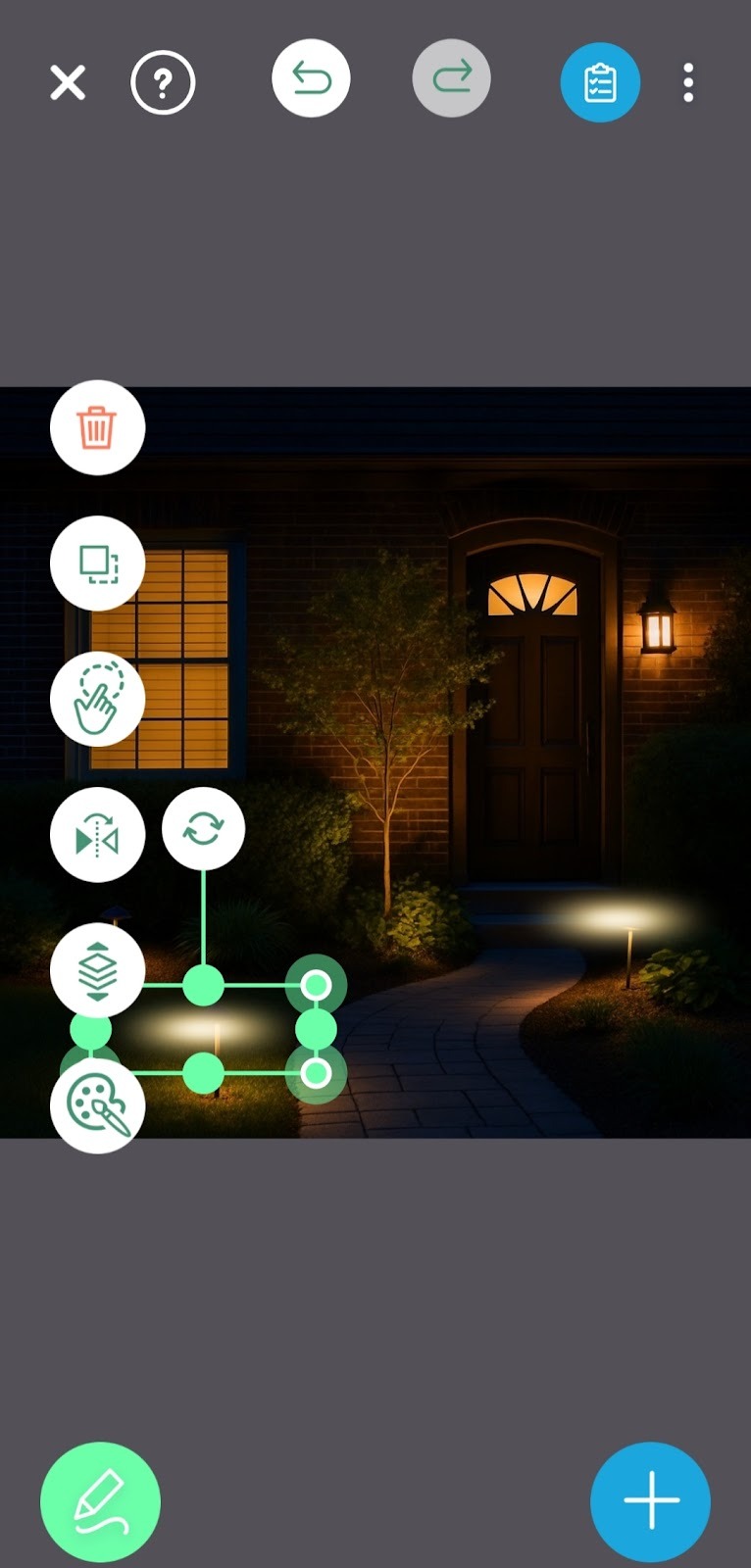
Even a tiny front yard deserves a glow at dusk. Think in three layers. Low-path or step lights make the route safe. A soft wall or hedge wash adds depth. One accent light highlights the focal point. Keep the door as the brightest spot so guests know where to go. Hide fixtures behind plants where you can, so the light appears to come from the scene, not from the light source.
iScape tip: Save a “night version” of your design. Place lights and check for glare or dark patches on the screen before you buy fixtures.
- Cut clutter and edit with purpose
Small yards get messy fast. Limit décor to one or two pieces. Hide hoses with a simple pot or box. Group mailboxes, doorbells, and number plates so the entry looks clean. If you cannot decide on an item, remove it and check the curb view again. Open space is a design choice in a tiny yard.
- Try one of these quick mini layouts
These simple templates fit most small fronts. Use them as a starting point and adapt them to your house.
- The classic entry
Two matching planters at the door, one medium shrub group on each side, and a narrow groundcover strip along the path. A number plaque on the wall and one accent light on the door. - The off-center tree
A small ornamental tree to one side, a bench or pot on the opposite side to balance, a curved bed line that meets the base of the steps, and a short run of path lights on the inside of the curve. - The modern ribbon
A straight path of large pavers with gravel joints, a single line of boxwood or grasses along one side, and one tall planter at the steps. A wall wash light for the facade and a soft glow on the house number.
Download iScape on the App Store or Google Play Store today and start designing your front yard now!
- Plan it on your phone before you spend
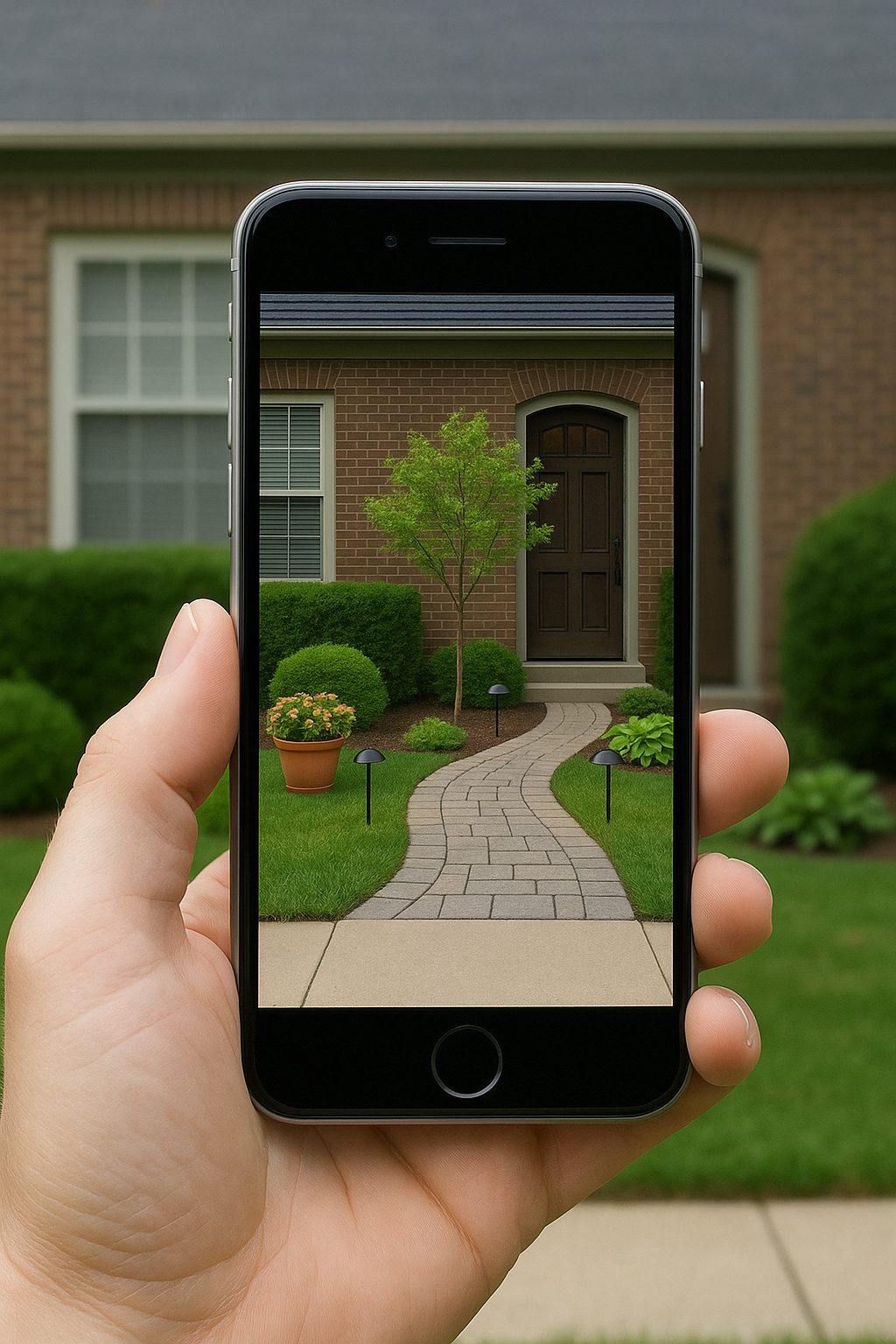
Designing first avoids returns and rework. Open iScape, take a clear photo from curb height, and drag and drop your focal point, plant groups, planters, and lights. Resize until the path feels clear and the composition looks balanced. Save two or three versions and pick the one that reads best from the street. Turn that version into a materials list so you buy once and install in a single weekend. On iPhone and iPad, you can also preview size in AR. On both iOS and Android, the 2D photo workflow is fast and accurate. Download iScape on the App Store or Google Play Store today and start designing your front yard now!
FAQs
Which plants are best for very small front yards?
Choose compact varieties that stay tidy. Look for dwarf shrubs, upright grasses, and long-blooming perennials. Plant in groups so the yard does not look spotty. If you want specific names, start with dwarf boxwood, lavender, catmint, blue fescue, and small hydrangea varieties.
How wide should my main path be?
Plan for at least 3 feet or 1 meter of clear width. If you can push to 42 inches, it will feel even better. Keep edges clean so the path reads as a strong line from the street.
Do I need a tree in a small front yard?
Not always, but one small ornamental tree placed off-center can add height and shade without taking much space. Redbud, serviceberry, or a narrow crabapple are good options in many regions.
How many colors should I use?
Pick one main color family and one accent. Repeat them in plants, pots, and a small accessory at the door. Repetition makes the space feel larger.
How does iScape help me get the scale right?
You work on a photo of your own house, so you can set the size and spacing before you buy. Drag and drop items, resize them, and compare two or three layouts. On iPhone and iPad, AR can also show true scale in place.
Transform your Small Yard With iScape!Ready to turn your small front yard into a big-impact space. Open iScape, snap a curb-height photo, and try these steps on the screen first. Pick the version that feels balanced, build your materials list, and finish in a calm weekend. Design first in iScape, then buy, then build. Your small yard will look polished, welcoming, and bigger than it is.