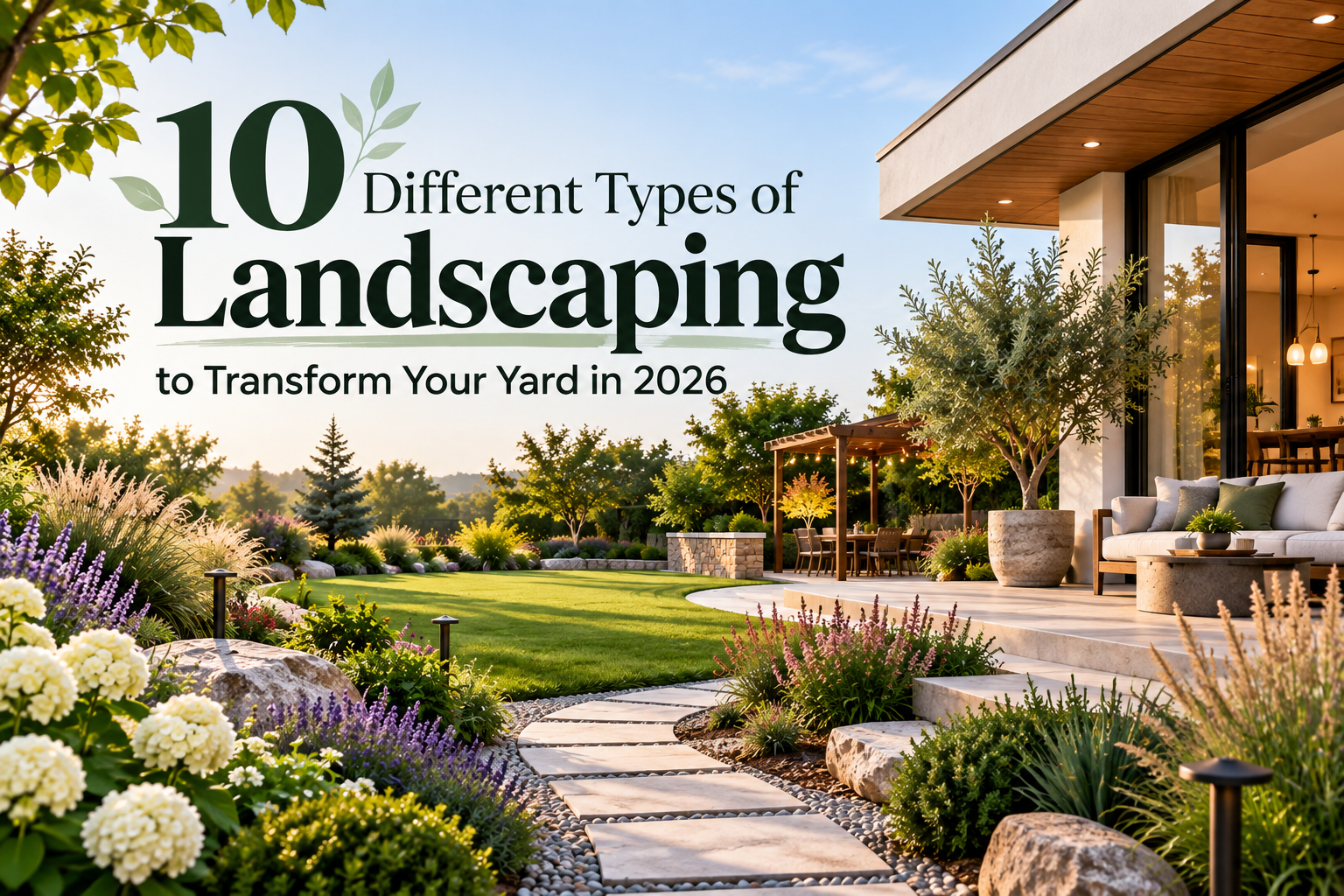
10 Different Types of Landscaping to Transform Your Yard in 2026
September 25, 2026
A successful landscape is not simply a collection of attractive plants, a patio, and a lawn. The best yards follow a clear design direction that determines how plants, hardscape, pathways, outdoor living areas, and open space work together.
Choosing a landscaping style can make those decisions much easier.
However, the right landscaping type depends on more than appearance. Your climate, sunlight, soil, water availability, yard size, maintenance expectations, architecture, and how you actually use the property should all influence the design.
A tropical landscape may look impressive but require too much care in the wrong climate. A formal garden may complement a symmetrical home but feel overly rigid around a casual cottage. A native landscape may reduce some maintenance demands, but it still requires thoughtful spacing and plant selection.
If you are planning a yard makeover in 2026, these ten landscaping types offer very different ways to create an outdoor space that looks intentional and works for everyday life.
1. Modern Landscaping
Modern landscaping focuses on simplicity, clean geometry, restrained planting, and a strong relationship between the house and outdoor space.
Rather than filling every available area with plants, modern landscapes often use carefully selected trees, grasses, shrubs, and architectural plants in repeated groups.
Hardscape plays an equally important role. Large-format pavers, concrete, gravel, wood, stone, and simple retaining walls can create clearly defined outdoor zones.
A modern yard might include a rectangular lawn, a simple patio, ornamental grasses planted in repeated groups, one or two specimen trees, and a limited range of materials.
The challenge is making simplicity feel intentional rather than empty. A modern landscape still needs variation in plant height, texture, shade, and seasonal interest.
Modern landscaping works particularly well when the home has contemporary architecture, the property benefits from clear outdoor zones, or you prefer a cleaner landscape with fewer decorative elements.
2. Native Landscaping
Native landscaping uses plants that naturally occur within a particular region and are adapted to its environmental conditions.
This does not mean allowing the yard to grow randomly.
A well-designed native landscape can look structured and polished when plants are selected according to height, bloom period, mature size, texture, and location.
Trees and larger shrubs can create the structural layer, while grasses, flowering perennials, and groundcovers fill the lower levels.
Native plants can also provide food and habitat for local pollinators, birds, and other wildlife. However, the fact that a plant is native does not automatically mean it is suitable for every location within the yard.
Sunlight, soil, moisture, mature size, and maintenance requirements still matter.
If you are deciding how heavily to rely on regional plants, iScape's comparison of native plants vs. traditional ornamentals explains how the two approaches differ in water use, maintenance, wildlife value, appearance, and overall landscape performance.
Native landscaping works particularly well when you want a regionally appropriate garden, greater wildlife value, naturalistic planting, or a landscape built around local growing conditions.
3. Xeriscape and Water-Wise Landscaping
Xeriscaping is commonly associated with desert landscapes, but the basic idea is much broader. It involves designing around efficient water use.
A water-wise landscape may include drought-tolerant plants, native species, efficient irrigation, mulch, gravel, carefully planned lawn areas, and plants grouped according to similar water requirements.
The goal is not necessarily to eliminate plants or create a yard filled entirely with rocks.
A well-designed xeriscape can still contain shade trees, flowering perennials, ornamental grasses, shrubs, and comfortable outdoor living areas.
Plant placement matters because different parts of a property can have very different moisture conditions. A low area that retains water after rainfall should not necessarily contain the same plants as a hot, exposed slope.
Before building any planting style around appearance alone, it helps to understand how to choose plants for sun, shade, soil, and available space. Matching plants to actual site conditions is one of the simplest ways to reduce unnecessary watering and corrective maintenance later.
Water-wise landscaping works particularly well when supplemental water is limited, summers are hot or dry, or you want to reduce the amount of high-water planting in the yard.
4. Cottage Garden Landscaping
Cottage landscaping takes almost the opposite approach from minimalist modern design.
Instead of large open areas and strict geometry, cottage gardens often use generous planting beds filled with flowers, shrubs, herbs, climbing plants, and ornamental grasses.
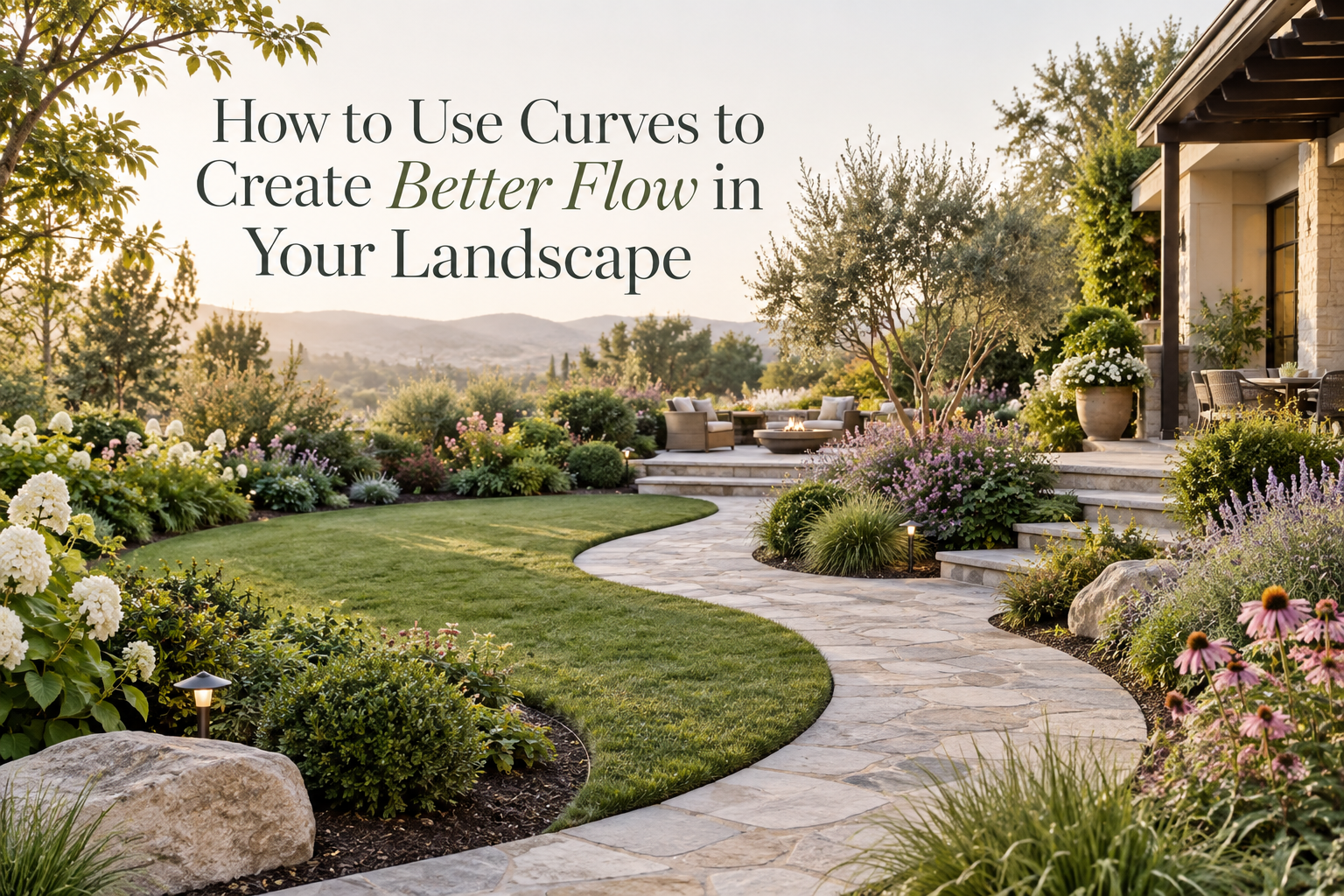
Paths may curve gently, plants may overlap visually, and flowers can appear throughout several layers of the garden.
However, the relaxed appearance should not be confused with a lack of planning.
Without structural plants, defined pathways, repeated varieties, and clear bed edges, a cottage garden can quickly become visually chaotic.
A strong cottage landscape often uses shrubs and small trees as permanent anchors, with perennials and annuals providing seasonal variation around them.
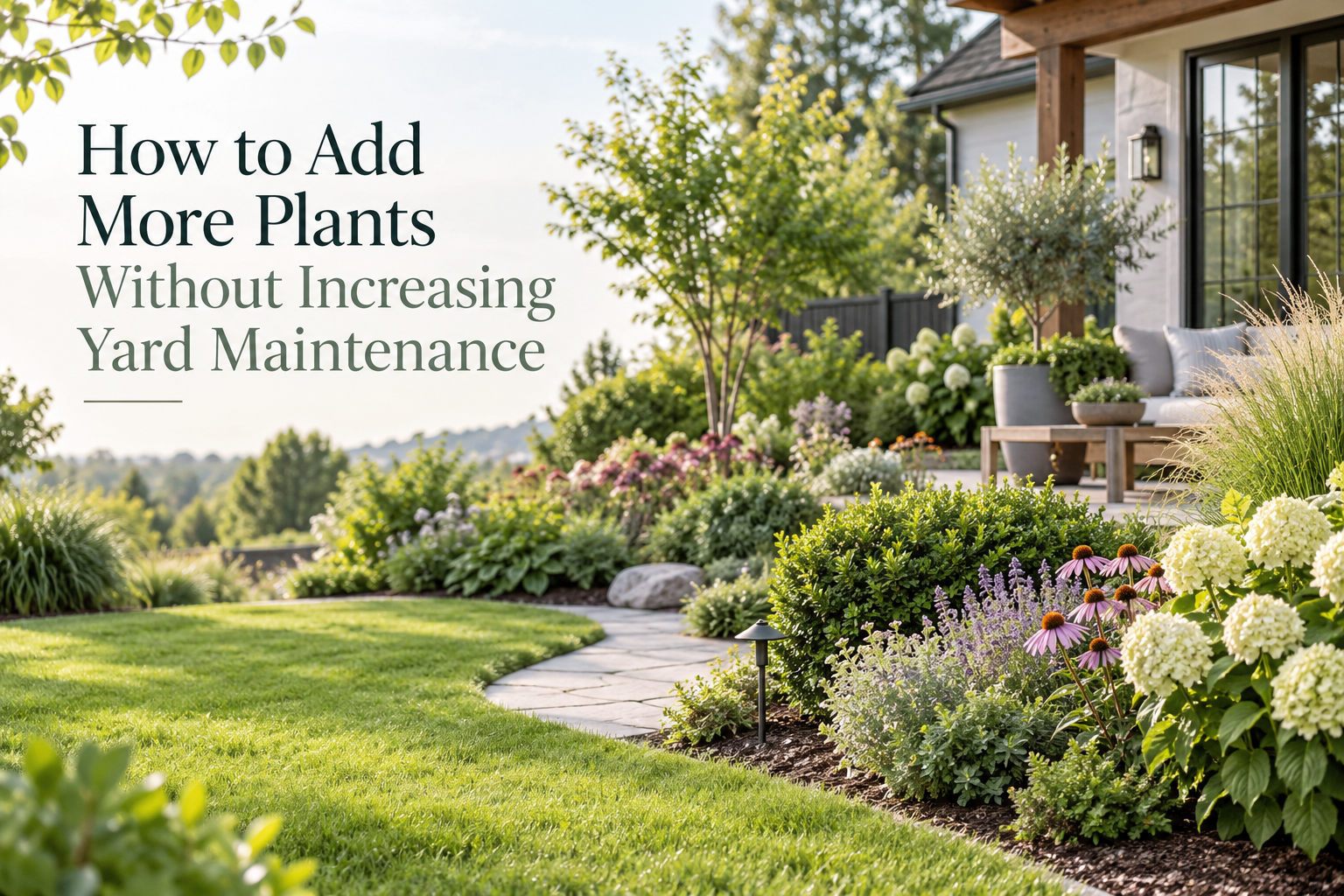
Using layered planting with trees, shrubs, flowers, grasses, and groundcovers can help create the fullness associated with cottage gardens without making planting beds feel flat or overcrowded.
Repetition also matters. Using some of the same plants in several locations can connect a colorful garden and prevent it from looking like a collection of unrelated species.
Cottage landscaping works particularly well when you enjoy flowers, softer garden shapes, layered planting, and a less formal outdoor atmosphere.
5. Formal Landscaping
Formal landscape design relies on symmetry, balance, strong lines, repeated planting, and clearly defined shapes.
Typical features may include straight pathways, clipped hedges, symmetrical planting around entrances, rectangular lawns, aligned trees, and carefully positioned focal points.
The appeal comes from order.
When someone enters a formal landscape, it should be easy to understand how the different elements relate to one another.
However, formal gardens usually require discipline in both design and maintenance. Plants that rapidly grow outside their intended shape may require regular pruning, while poorly positioned shrubs can disrupt the symmetry as they mature.
Formal landscaping does not have to mean creating an elaborate estate garden. Even a small front yard can use formal principles by repeating plants on both sides of a walkway or creating a clearly defined geometric planting layout.
Formal landscaping works particularly well when the architecture is symmetrical, the entrance is an important focal point, or you prefer a controlled and highly organized garden.
6. Edible Landscaping
Edible landscaping combines ornamental design with plants that produce food.
Instead of separating the vegetable garden completely from the rest of the property, edible plants become part of the landscape itself.
Fruit trees might provide both shade and harvests. Herbs can grow beside pathways or patios. Berry-producing shrubs can become part of a mixed border, while raised beds can be incorporated into a larger garden layout.
Edible landscaping may include fruits, vegetables, herbs, edible flowers, and productive trees and shrubs.
The main challenge is remembering that productive plants have practical requirements.
Vegetables may need strong sunlight and convenient access to irrigation. Fruit trees need sufficient mature space. Herbs are most useful when they are located somewhere easy to reach regularly.
An edible landscape is more successful when harvesting, watering, pruning, and seasonal maintenance have been considered in the original design.
Edible landscaping works particularly well when you want the yard to produce food while still functioning as an attractive outdoor space.
7. Pollinator and Wildlife-Friendly Landscaping
A wildlife-friendly landscape is designed to support birds, butterflies, bees, and other beneficial wildlife while still functioning as a residential yard.
Plant diversity is important because different species provide food, shelter, and habitat at different times of the year.
A strong wildlife garden may include flowering perennials, native shrubs, grasses, small trees, groundcovers, and plants with different bloom periods.
Instead of relying on one large flower bed that peaks during a single month, plants can be selected to provide seasonal changes across spring, summer, and fall.
Wildlife-friendly landscaping does not require turning the entire property into an unmanaged meadow.
Paths, lawn areas, patios, and defined bed edges can keep the landscape functional while selected planting areas provide ecological value.
This landscaping style works particularly well when you enjoy naturalistic planting and want the garden to support greater biodiversity.
8. Mediterranean Landscaping
Mediterranean-style landscapes are usually designed around heat-tolerant planting, textured foliage, outdoor living, and hardscape materials that create a warm, relaxed atmosphere.
Typical elements can include gravel, stone, terracotta containers, herbs, silvery foliage, drought-tolerant shrubs, and smaller trees.
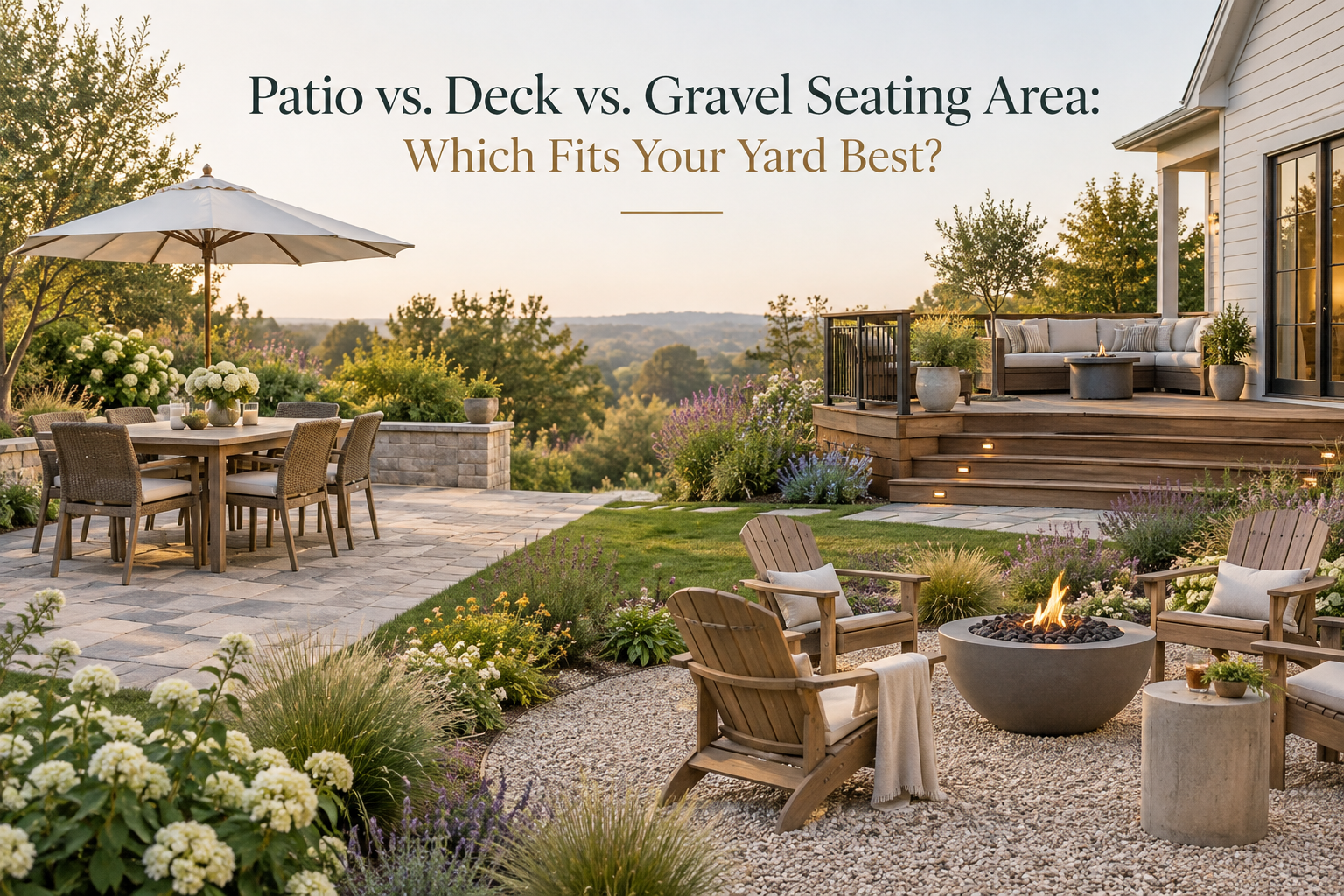
Instead of relying heavily on lawn, the design may use planted borders around patios, gravel seating areas, pathways, courtyards, or other outdoor living spaces.
Plant texture often becomes as important as flower color.
Fine-leaved herbs, ornamental grasses, evergreen shrubs, and sculptural plants can maintain visual interest even when very little is flowering.
A Mediterranean look still needs to be adapted to local climate conditions. Plants associated with Mediterranean landscapes should only be used where temperature, rainfall, soil, and winter conditions are suitable.
Mediterranean landscaping works particularly well when you want strong outdoor living spaces, less emphasis on lawn, and a warm, textured garden character.
9. Tropical Landscaping
Tropical landscaping uses lush foliage, bold plant forms, layered greenery, and relatively dense planting to create a more immersive garden environment.
Large leaves and contrasting textures are often more important than individual flowers.
A tropical-style landscape may include taller canopy plants, medium-height shrubs, large-leaved plants, groundcovers, and flowering accents arranged at several levels.
The layering is what creates the lush appearance.
If all plants are approximately the same size, the landscape may look like a flat border rather than an immersive tropical garden.
Climate is the biggest consideration. Plants associated with true tropical landscapes may not tolerate colder winters, so homeowners in cooler regions may need to recreate the visual effect using hardy plants with similar foliage, form, and texture.
Containers can also provide flexibility because some tender plants can be moved or protected seasonally.
Tropical landscaping works particularly well when the climate supports lush planting or when you want the yard to feel private, green, and visually immersive.
10. Japanese-Inspired Landscaping
Japanese-inspired landscapes often emphasize restraint, balance, carefully framed views, and a strong relationship between plants, stone, water, pathways, and open space.
Rather than filling every part of the yard, empty space becomes an intentional part of the composition.
A tree may be positioned specifically to frame a view. A pathway may curve gently so the landscape is revealed gradually. Stones can establish visual weight, while plants are selected for form and seasonal change rather than sheer quantity.
This style benefits from careful editing.
Adding too many decorative objects can quickly weaken the quiet and deliberate character of the landscape.
Japanese-inspired landscaping also does not require recreating a traditional Japanese garden exactly. Homeowners can use principles such as asymmetrical balance, restrained planting, natural materials, and controlled views while selecting plants suitable for their own climate.
Japanese-inspired landscaping works particularly well when you prefer calm outdoor spaces, natural materials, carefully composed planting, and a landscape that does not depend heavily on constant flower color.
Can You Mix Different Landscaping Types?
Yes. Many successful residential landscapes combine principles from several styles.
You might prefer modern hardscape but want native planting. A cottage-style border could surround a more structured lawn. An edible garden might be integrated into a Mediterranean-inspired backyard.
The key is preventing too many visual languages from competing with one another.
Repeated materials, similar plant forms, consistent edging, and a clear layout can connect different influences.
The house should also remain part of the decision. A landscape usually looks more cohesive when its lines, materials, proportions, and level of formality have some relationship with the architecture.
How to Choose the Right Landscaping Type for Your Yard
Instead of choosing entirely from photographs, begin with the property itself.
Look at how much sun and shade the yard receives. Consider soil and drainage conditions, local climate, irrigation availability, slopes, existing trees, and how much maintenance you realistically want to perform.
Then think about function.
If outdoor entertaining matters most, establish circulation and seating before filling the yard with plants. If gardening is the priority, identify the best growing areas first. If you want easier maintenance, choose plants based on mature size and actual growing conditions rather than simply buying them for color.
It is also useful to consider how the entire yard will work rather than concentrating only on individual features. Many of the most common landscape design mistakes that make a yard harder to use happen when patios, plants, pathways, shade, furniture, and circulation are planned independently instead of as one system.
Regardless of the style you choose, the landscape should remain comfortable to move through and practical to maintain.
Visualize the Style Before Transforming the Yard
A landscaping style can look completely different once it is applied to your actual property.
That is why it helps to test the overall layout before buying plants or beginning major construction.
With iScape, homeowners and landscape professionals can experiment with planting, pathways, patios, furniture, fencing, and other outdoor features to better understand how a particular style could work within the available space.
You can compare a structured modern layout with a softer cottage garden, experiment with different planting densities, or see whether a proposed patio feels balanced with the lawn and surrounding planting beds.
The goal is not simply to choose a landscaping style that looks attractive in isolation. It is to find one that works with the actual property.
Final Takeaway
There is no single landscaping style that works best for every yard in 2026.
Modern landscaping emphasizes simplicity and structure. Native and wildlife-friendly landscapes focus more heavily on regionally appropriate planting and biodiversity. Xeriscaping prioritizes efficient water use, while cottage and tropical gardens create fuller, more layered environments. Formal, Mediterranean, edible, and Japanese-inspired landscapes each offer a different way to organize outdoor space.
The strongest choice is the one that matches your climate, property, architecture, maintenance expectations, and lifestyle.
Before selecting individual plants or materials, decide how you want the yard to feel and what you need it to do.
Once that direction is clear, every decision that follows, from plant selection to pathways and patios, becomes much easier.