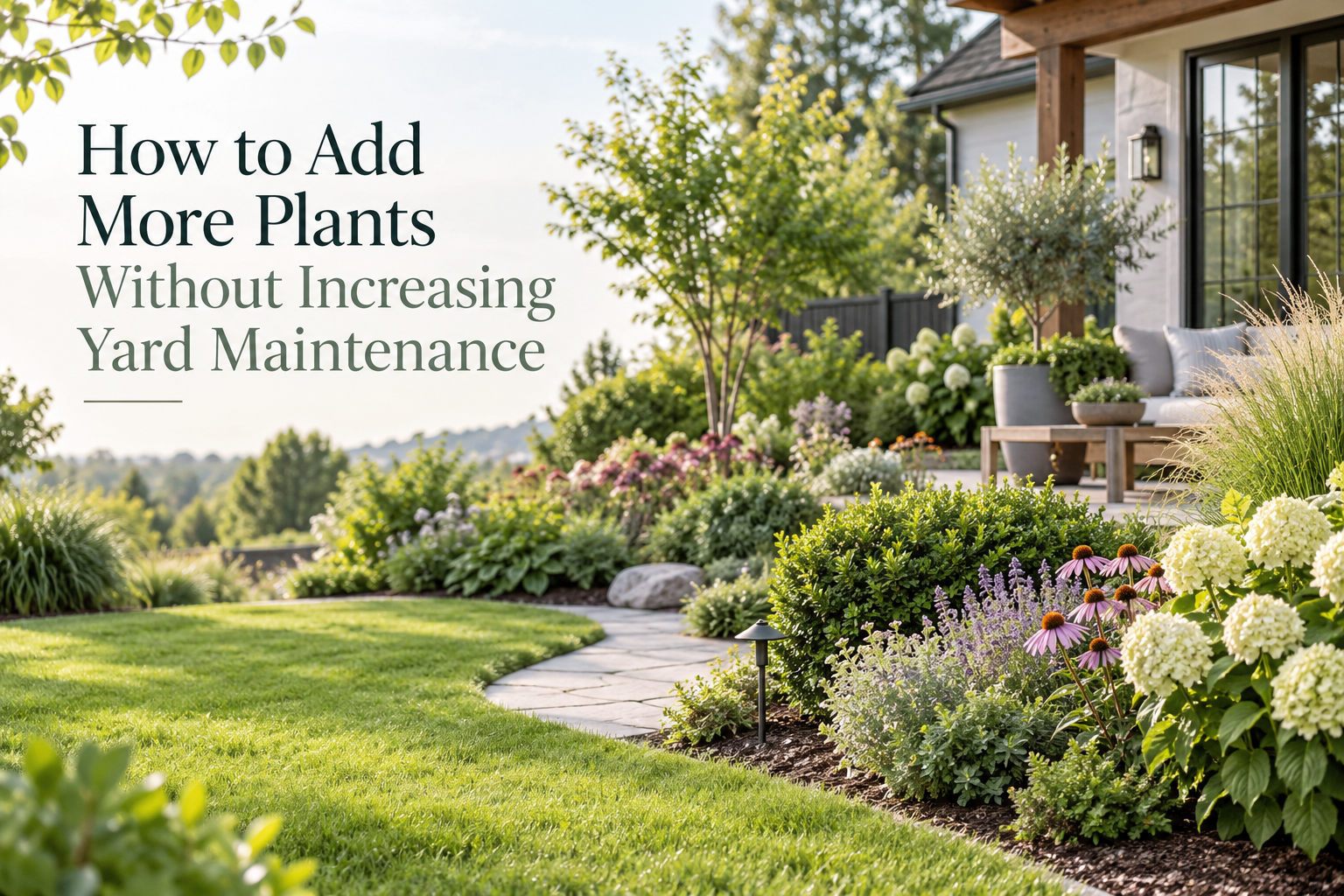
A yard with more plants often feels more complete, private, and inviting. Trees can soften a large open space, shrubs can make beds feel established, and groundcovers can fill areas that otherwise look bare. The problem is that adding plants without a plan can also create more work. More plants can mean more pruning, watering, weeding, deadheading, fertilizing, and cleanup. Beds can become overcrowded, irrigation can become inefficient, and plants that looked small at installation can quickly outgrow the space around them. The goal, therefore, is not simply to add more plants. It is to increase planting density in a way that reduces unnecessary maintenance over time. Here is how to do it.
Start With the Space, Not the Plant List
One of the easiest mistakes to make is visiting a garden center, choosing plants you like, and then trying to find places for them afterward. A better approach is to look at the yard first. Identify areas where additional planting would actually improve the landscape. These might include:
- Large empty planting beds
- Awkward lawn edges
- Bare soil between shrubs
- Areas where weeds regularly appear
- Open spaces beneath taller plants
- Spots where more privacy or shade would be useful
This prevents plants from being added simply because there is technically room for them. It also makes it easier to decide what type of plant the space needs. For example, a gap at the back of a bed may need a medium-height shrub, while exposed soil near the front may be better covered with a spreading groundcover.
Before adding anything, think about how planting fits with pathways, patios, drainage, lawn areas, irrigation, lighting, and the way you actually use the yard. If you are planning larger changes, what a complete landscape design should include can help you look at the yard as one connected design instead of a collection of individual plants.
Choose Plants Based on Mature Size
Small nursery plants can be misleading. A shrub that looks compact in a container may eventually grow six feet wide. A young ornamental grass may expand far beyond the space originally planned for it. When too many plants are installed close together, the landscape may look attractive for the first year or two but become difficult to manage later. Overcrowding can lead to:
- Constant pruning
- Poor airflow
- Plants growing into walkways
- Competition for water and nutrients
- Increased disease pressure
- Plants covering windows or lighting
- Shrubs growing into one another
Always plan around the plant's expected mature height and width. If a shrub is expected to reach five feet wide, give it enough room to approach that size without requiring constant trimming. Mature height is just as important as width. Taller plants influence views, sunlight, privacy, and the visibility of smaller plants around them. The guide on why plant height matters more than flower color in landscaping explains why height, structure, and mature size should usually be considered before selecting plants based on blooms.
Use Fewer Plant Varieties, but Repeat Them More Often
A low-maintenance landscape does not necessarily need fewer plants. It often needs fewer types of plants. A garden filled with dozens of different species may require many different maintenance routines. One plant may need regular deadheading, another may require annual pruning, while another might need different watering conditions. Repeating reliable plants simplifies maintenance. For example, instead of planting ten unrelated shrub varieties, you might use three carefully selected varieties repeatedly throughout the yard. A simple planting palette might include:
- One structural evergreen shrub
- One flowering shrub
- One ornamental grass
- One perennial
- One spreading groundcover
These plants can then be repeated in different combinations throughout the landscape. Repetition also makes a heavily planted yard feel organized rather than crowded.
Let Plants Cover More of the Soil
Bare soil often creates more maintenance than planted soil. Wherever soil remains exposed, weeds have an opportunity to establish. Mulch can reduce weed growth, but mulch itself usually needs to be replenished periodically. One long-term strategy is to use plants to cover more of the ground. Low-growing plants can fill spaces beneath taller shrubs and perennials. Once established, they can reduce visible bare soil while giving planting beds a fuller appearance. Depending on the climate and site conditions, options might include creeping thyme, sedges, low-growing junipers, liriope, ajuga, or other regionally appropriate plants. The important part is matching the groundcover to the location. Consider:
- Sun exposure
- Soil moisture
- Drainage
- Foot traffic
- Mature spread
- Growth speed
Avoid choosing an aggressive spreading plant simply because it fills space quickly. A plant that constantly escapes its intended area creates another maintenance problem.
Build Planting Beds in Layers
Adding plants one at a time wherever you notice an empty space can eventually make a yard look cluttered. Layered planting provides a more organized way to add considerably more vegetation. A typical planting composition might include:
- Upper layer: Trees or larger shrubs that establish the main height and structure.
- Middle layer: Medium shrubs and taller ornamental grasses that create volume.
- Lower layer: Perennials, compact shrubs, and smaller grasses.
- Ground layer: Low plants that cover exposed soil and soften bed edges.
Because these plants occupy different heights and spaces, you can create a much fuller landscape without making every plant compete at the same level. If you want to build this type of planting structure, iScape's Layered Planting 101 guide explains how to arrange trees, shrubs, flowers, and lower-growing plants so a yard feels full without becoming visually overcrowded.
Replace Difficult Lawn Areas With Planting Beds
Sometimes the easiest way to add more plants without increasing maintenance is to reduce the amount of lawn you already struggle to maintain. Look for grass in places such as:
- Narrow strips beside fences
- Areas beneath mature trees
- Steep or awkward slopes
- Small spaces between hardscape
- Corners that are difficult to mow
- Areas where grass consistently struggles
These spaces may require watering, edging, mowing, and reseeding without contributing much to the usability of the yard. Turning them into properly designed planting areas can sometimes reduce maintenance while allowing you to introduce shrubs, grasses, groundcovers, or shade-tolerant plants. However, avoid creating dozens of tiny planting islands. Larger connected beds are usually easier to maintain and mow around than numerous isolated beds scattered throughout the lawn.
Prioritize Plants That Naturally Hold Their Shape
Many maintenance problems begin when the wrong-sized plant is placed in the wrong location. For example, planting an eight-foot shrub below a window and repeatedly pruning it to three feet creates permanent maintenance. Choosing a shrub that naturally matures around three feet solves the problem before it starts. The same principle applies to:
- Foundation shrubs
- Hedges
- Ornamental grasses
- Trees near structures
- Plants beside pathways
- Plants around patios
Choose plants whose natural growth habit already fits the design. Pruning should mainly help maintain plant health and appearance, not continuously force a plant into a space it was never suited to occupy.
Group Plants With Similar Water Needs
Adding more plants does not have to mean dramatically increasing irrigation. What matters is how those plants are grouped. Hydrozoning means placing plants with similar water requirements together. You might have:
- Low-water areas: Drought-tolerant shrubs, grasses, or perennials.
- Moderate-water areas: Plants that require regular but not intensive irrigation.
- Higher-moisture areas: Plants positioned where the soil naturally retains more moisture.
Grouping plants this way makes irrigation easier to control. Without this approach, a thirsty plant may be placed beside a drought-tolerant plant, forcing you either to underwater one or overwater the other.
Use More Long-Lived Plants and Fewer Seasonal Replacements
Annual flowers can provide excellent seasonal color, but large annual beds can also create repeated work. Every season may involve removing old plants, improving the soil, buying replacements, replanting, watering intensively during establishment, and eventually repeating the process. For a lower-maintenance landscape, build most of the planting structure using longer-lived plants such as:
- Trees
- Shrubs
- Evergreens
- Ornamental grasses
- Perennials
- Groundcovers
Annuals can still be used, but concentrate them where their color will have the greatest effect. Good locations include entrances, patio containers, focal areas, and smaller sections close to outdoor seating. This allows you to enjoy seasonal change without treating the entire yard as a rotating flower display.
Mix Evergreen and Seasonal Plants
Another mistake is filling a yard primarily with plants that look impressive during one season. If most plants disappear, become dormant, or lose their visual impact at the same time, the landscape may feel bare for several months. Evergreens provide persistent structure while flowering shrubs, perennials, and ornamental grasses bring seasonal changes. A combination of both usually produces a fuller landscape throughout the year without requiring constant replacement planting.
This is particularly useful when you want to add more plants but still maintain a clear, organized visual structure.
Keep Maintenance Access Open
A densely planted yard should not make essential parts of the property inaccessible. Avoid blocking:
- Outdoor faucets
- Air-conditioning units
- Utility boxes
- Irrigation controls
- Drainage outlets
- Electrical equipment
- Windows
- Gates
- Pathways
- Landscape lighting
Plants around mechanical equipment should also have enough clearance for airflow, inspection, and repairs. Think about mature growth here as well. A newly planted shrub may appear several feet away from a walkway today but extend directly into it once mature.
Use Mulch While New Plants Establish
A newly planted bed will rarely look as full as the mature landscape. If you leave appropriate spacing for future growth, there may initially be visible soil between plants. That is normal. Mulch can protect these areas during establishment by helping to:
- Suppress weeds
- Retain soil moisture
- Moderate soil temperatures
- Limit erosion
- Give beds a more finished appearance
As shrubs, perennials, and groundcovers mature, they may naturally cover more of this space. This is usually better than filling every gap with another plant immediately and then dealing with overcrowding several years later.
Do Not Turn Every Empty Spot Into a Planting Bed
A yard can contain plenty of plants without turning every square foot into garden space. Creating many small planting pockets often increases maintenance because each one introduces another bed edge, another area to mulch, and another obstacle to mow around. Try connecting related planting areas instead. For example, three trees standing individually in the lawn could potentially become one larger planting bed containing the trees, shrubs, perennials, and groundcover. The result can provide considerably more planting space while making the lawn easier to mow.
Choose Plants That Match the Conditions You Already Have
One of the most effective ways to reduce maintenance is to stop fighting the site. Before selecting a plant, consider:
- Sun exposure
- Soil type
- Drainage
- Climate
- Average rainfall
- Wind exposure
- Root space
- Mature height
- Mature width
A plant constantly struggling against its environment often needs additional watering, fertilizing, pest treatment, protection, or replacement. Plants that naturally tolerate the site's conditions generally require less intervention once established. This is also where native and regionally adapted plants can be valuable. They should still be chosen according to specific site conditions rather than assuming every native plant will work everywhere.
Add Plants Gradually
You do not need to finish every planting bed during one season. Plants grow. What looks like a large gap today may become considerably smaller once neighboring shrubs and perennials reach maturity. Adding plants gradually also gives you time to observe your yard. You may discover that:
- One area receives more shade than expected.
- A supposedly dry area stays wet after rain.
- An ornamental grass becomes larger than predicted.
- A shrub provides enough screening without additional plants.
- Certain spaces genuinely need more vegetation.
These observations can help you make better decisions during the next planting phase. For larger projects, iScape's guide to landscaping in phases and deciding what to build first explains how to plan the complete yard first while completing individual improvements over time.
A Low-Maintenance Yard Can Still Be Heavily Planted
Low-maintenance landscaping does not mean covering the property with lawn, gravel, or a handful of shrubs. A well-planned yard can contain plenty of plants.
In fact, additional planting can sometimes make maintenance easier by covering bare soil, reducing weed opportunities, replacing difficult lawn areas, and creating clearer landscape zones. The key difference is intentional density rather than overcrowding.
Choose plants that suit the site. Understand their mature size. Repeat reliable varieties. Layer different heights. Group plants according to their needs. Leave enough room for growth. When those decisions are made before planting, you can create a yard that feels lush and established without turning every weekend into a maintenance project.
Plan Before You Plant
Adding more plants is much easier when you can see how the finished landscape may look before buying or moving anything. With iScape, homeowners can experiment with planting layouts, explore different landscape ideas, and visualize how trees, shrubs, beds, lawn, and outdoor spaces work together. Instead of filling every empty space immediately, create a plan that accounts for how the plants will grow. Download iScape and start planning your yard today.
FAQs
Does adding more plants always increase yard maintenance?
No. Properly selected plants can reduce maintenance by covering bare soil, suppressing weeds, replacing difficult lawn areas, and reducing the amount of mowing required.
How close together should landscape plants be placed?
Spacing should primarily reflect each plant's mature size. Planting closer together may create a fuller appearance immediately, but it can result in overcrowding and excessive pruning later.
What types of plants work well in low-maintenance landscapes?
The best options depend on your climate and site conditions. Compact shrubs, ornamental grasses, long-lived perennials, groundcovers, evergreens, and regionally adapted plants are commonly useful.
Is mulch still necessary if I add more plants?
Mulch is particularly helpful while new plants establish and before their foliage covers more of the soil. Mature, densely planted beds may eventually leave less exposed ground.
Should I remove lawn to add more plants?
You do not have to eliminate useful lawn. Start with grass in difficult-to-mow, heavily shaded, awkward, or consistently unsuccessful areas where a planting bed could perform better.