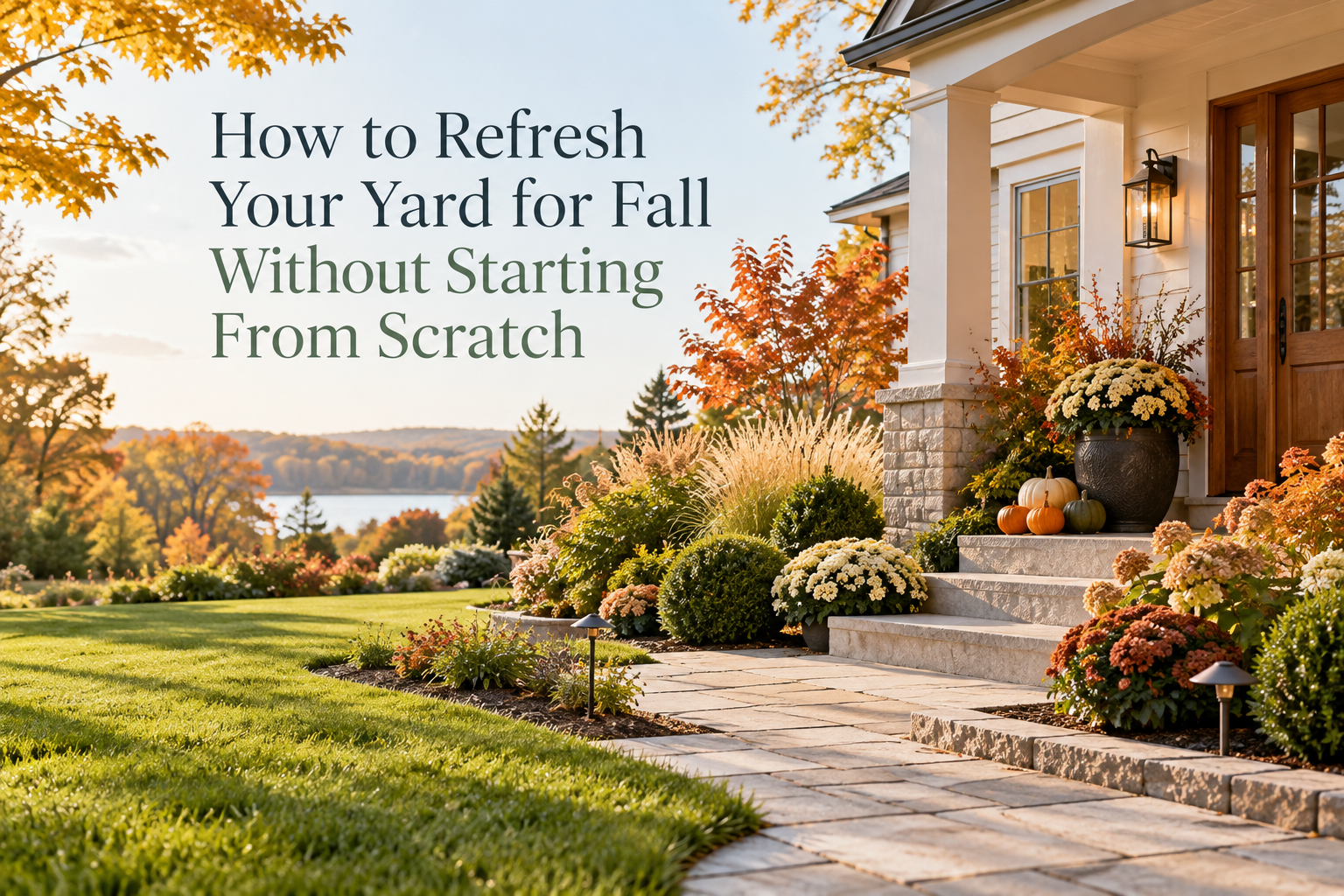
By the end of summer, even a well-designed yard can start looking tired. Flowers fade, lawns may show heat stress, mulch becomes thin, shrubs lose their shape, and outdoor areas can feel less polished than they did earlier in the season. That does not mean you need to redesign the landscape. Fall is a good time to edit, rebalance, and improve what is already there. A few targeted updates can make your yard feel noticeably fresher while also preparing plants and outdoor spaces for the cooler months ahead. Here is where to start.
1. Look at the Whole Yard Before Buying Anything
Before heading to the garden center, walk around your property and identify what is actually making the landscape feel tired. Look for:
- Dead or declining plants
- Faded annuals
- Overgrown shrubs
- Thin or displaced mulch
- Undefined bed edges
- Bare areas in planting beds
- Struggling lawn sections
- Empty containers
- Plants blocking paths or windows
You may discover that the yard does not need more plants at all. It may simply need cleanup, better definition, and a few stronger seasonal focal points. Think about how the lawn, planting beds, patios, pathways, lighting, drainage, and outdoor living areas work together. If you are considering broader changes, checkout our guide to what a complete landscape design should include can help you evaluate the yard as one connected space rather than a collection of separate features.
2. Clean Up, but Do Not Strip Everything Back
Fall cleanup can instantly improve a yard, but excessive cutting can leave the landscape looking empty. Start with material that clearly needs to be removed:
- Dead annuals
- Broken branches
- Diseased foliage
- Weeds
- Fallen fruit
- Failed plants
- Debris accumulated around beds
But do not automatically cut every perennial and ornamental grass to the ground. Some grasses, seed heads, and dried perennial forms can continue providing texture and visual interest into winter. They may also offer habitat or food for wildlife. The goal should be a landscape that looks intentional and maintained, not completely cleared.
3. Restore the Shape of Planting Beds
Clean bed edges can make a surprising difference. After a full growing season, grass may creep into beds, groundcovers can spread into walkways, and previously defined borders may become difficult to see. Refresh those lines by:
- Removing grass from bed edges
- Clearing plants away from walkways
- Trimming growth that spills excessively over borders
- Simplifying awkward bed shapes
- Connecting small beds where appropriate
Strong bed shapes give the landscape structure even after flowering slows down. If you have several tiny planting islands scattered through the lawn, consider whether some could eventually become one larger bed. Larger, simpler planting areas can often be easier to maintain and visually stronger.
4. Refresh Mulch Where It Is Actually Needed
Mulch can look faded or uneven by fall. Before adding another full layer, check how much is already present. Existing mulch can sometimes simply be loosened and redistributed. Add new material where the layer has become thin. Mulch can help:
- Suppress weeds
- Retain moisture
- Reduce soil erosion
- Moderate soil temperatures
- Give planting beds a cleaner appearance
Avoid piling mulch directly around trunks and stems. Excessive mulch around woody plants can create moisture problems rather than solve them.
5. Add Fall Color in High-Impact Areas
You do not need seasonal flowers throughout the entire property. Concentrate fall color where people will notice it most:
- Front entrances
- Walkways
- Patios
- Outdoor seating areas
- Mailboxes
- Containers
- Major focal points
Depending on your climate, suitable seasonal plants might include asters, chrysanthemums, pansies, ornamental kale, heuchera, sedges, or other cool-season selections. Rather than buying many unrelated varieties, repeat a smaller palette. For example, three coordinated containers near the entrance can create a stronger seasonal effect than individual flowers scattered throughout several beds.
6. Think Beyond Flowers
Fall landscapes become much easier to manage when they do not depend entirely on blooms. Foliage, form, and texture become increasingly important as flowering plants decline. Look for contrast between:
- Evergreen and deciduous foliage
- Fine grasses and broad leaves
- Deep green and burgundy foliage
- Upright and spreading plant forms
- Structured shrubs and softer perennials
Evergreens are particularly useful because they maintain the basic shape of planting beds after many seasonal plants become dormant. The goal is not to make the entire yard evergreen. Instead, use permanent structure as a backdrop for seasonal change. For more ideas, check out the mixing evergreen and flowering plants for a more balanced yard.
7. Refresh Containers Instead of Reworking Entire Beds
Containers provide one of the easiest seasonal updates. Instead of replacing permanent landscape plants, remove tired summer container plants and create arrangements suited to fall. A simple container can use three layers:
- Height: An upright grass, evergreen, or other structural plant.
- Middle: Seasonal flowering plants or foliage.
- Edge: A lower or trailing plant that softens the container.
Use containers strategically rather than placing them everywhere. A pair beside the front entrance or several grouped around a patio may be enough to change the character of the entire area.
8. Repair the Lawn, but Know When to Stop Fighting It
Summer can leave lawns thin, dry, compacted, or uneven. Depending on your grass type and regional climate, fall maintenance might include:
- Aeration
- Overseeding
- Repairing bare areas
- Leaf removal
- Adjusting irrigation
- Improving compacted soil
But consider why certain areas repeatedly fail. Grass growing beneath dense tree canopies, on steep slopes, beside narrow fences, or in persistently wet areas may remain difficult regardless of how often it is repaired. Instead of repeatedly restoring unsuccessful lawn, consider gradually converting those areas into planting beds, groundcovers, or other landscape features.
9. Relocate Plants Before Buying More
Sometimes your landscape already contains the plants needed for a refresh. They may simply be in the wrong places. Look for:
- Overcrowded perennials
- Plants hidden behind larger shrubs
- Empty spaces elsewhere in the same bed
- Repeated plants that could be grouped more effectively
Depending on the plant and your climate, some perennials can be divided and relocated during fall. This can improve spacing and create stronger repetition without requiring a large number of new plants. Always check whether the particular species is suitable for fall division before moving it.
10. Keep Some Evergreen Structure
A landscape that looks full in summer can suddenly appear empty once leaves fall and perennials go dormant. That usually indicates the yard needs stronger year-round structure. Strategically placed evergreen shrubs can anchor:
- Building corners
- Entrances
- Property boundaries
- Long planting beds
- Patios
- Areas requiring privacy
You do not need an evergreen hedge around everything. A few structural plants placed intentionally can give seasonal flowers and perennials something to work around throughout the year.
11. Clean Up Patios, Walkways, and Outdoor Living Areas
Refreshing a yard is not only about plants. A dirty patio or weed-filled walkway can make the landscape look neglected even when the planting itself is healthy. Check:
- Patios
- Decks
- Paver joints
- Walkways
- Steps
- Garden paths
- Outdoor furniture areas
Sweep away debris, remove weeds between pavers, and address loose or unstable surfaces. If you still use the yard during cooler months, reposition furniture around the areas you are most likely to use in fall. You might also move seasonal containers closer to patios and seating areas rather than leaving them spread across the property.
12. Recheck Your Landscape Lighting
As daylight hours become shorter, landscape lighting becomes much more noticeable. Walk through the yard after sunset and check whether existing fixtures still work as intended. Look for:
- Bulbs that no longer work
- Fixtures hidden behind summer plant growth
- Dark steps
- Poorly illuminated pathways
- Excessively bright areas
- Important landscape features that disappear after dark
Sometimes simply trimming vegetation or repositioning a fixture can improve the nighttime landscape. If larger changes are planned, read how to plan landscape lighting before plants and hardscape. Planning routes and fixture locations before making permanent landscape changes can prevent unnecessary rework later.
13. Prepare Plants for the Months Ahead
A fall refresh should improve both appearance and plant health. Depending on your climate, preparation may include:
- Reducing irrigation as temperatures fall
- Continuing appropriate watering for newly planted trees and shrubs
- Checking drainage
- Removing diseased foliage
- Moving cold-sensitive containers
- Protecting tender plants
- Clearing blocked drainage areas
Fall care is highly climate-specific. A homeowner in Florida will have very different priorities from someone preparing a landscape for winter in Minnesota. Follow recommendations appropriate to your USDA hardiness zone, plant species, and local conditions.
14. Make One Improvement for Next Spring
Not every fall project needs to produce an immediate visual transformation. Some of the best changes are investments in the next growing season. Consider:
- Planting spring-flowering bulbs
- Adding a tree
- Improving soil
- Expanding a planting bed
- Correcting drainage
- Relocating poorly positioned plants
- Preparing an area for a future patio or pathway
If the changes are part of a larger project, plan the final yard first rather than treating each improvement independently.
You Do Not Need a New Yard to Make It Feel New
Refreshing your yard for fall is less about replacing everything and more about improving the pieces that already work.
Clean up declining growth. Restore the shape of planting beds. Refresh mulch where necessary. Add seasonal color selectively. Rebalance containers, repair struggling lawn areas, improve lighting, and prepare plants for changing weather. Most importantly, pay attention to structure.
A yard with clear planting beds, healthy plants, defined pathways, strong evergreen anchors, and a few well-placed seasonal elements can feel substantially different without a major renovation. Sometimes the best fall landscape project is not starting again. It is making the yard you already have work better.
FAQs
What is the quickest way to refresh a yard for fall?
Start with cleanup, defined bed edges, fresh mulch where needed, and a few seasonal plants or containers near high-visibility areas. These improvements can have an immediate impact without major construction.
What should I remove from my yard in fall?
Remove dead annuals, diseased plant material, broken branches, weeds, and failed plants. Avoid automatically cutting back every perennial or ornamental grass because some can provide useful winter structure and wildlife value.
What plants can add fall color to a yard?
Options depend on your climate, but chrysanthemums, asters, pansies, ornamental kale, sedges, and foliage-focused plants are commonly used. Choose plants suited to your regional temperatures, sunlight, and soil conditions.
Is fall a good time to redesign planting beds?
Fall can be useful for evaluating bed structure because summer growth reveals which plants have become overcrowded and which areas remain empty. Major planting decisions should still account for your local climate and appropriate planting windows.
How can I refresh my yard without spending much money?
Focus on cleanup, edging, moving existing plants, dividing suitable perennials, redistributing mulch, cleaning hardscape, adjusting lighting, and refreshing a small number of containers rather than replacing the entire landscape.
Should I completely remove faded summer plants?
Remove annuals that have finished and any unhealthy material, but evaluate perennials individually. Some seed heads, grasses, and dried foliage can remain attractive and useful through fall and winter.
Plan Your Fall Refresh Before Making Changes
You do not need to redesign your entire landscape to make it feel different this fall.
Use iScape to visualize planting changes, experiment with landscape layouts, and see how new ideas may work with the yard you already have before committing to them.
Plan smarter, keep what works, and refresh only what needs attention. Download iScape on the App Store or Google Play Store today and start designing today. Try a free trial today at iScape!